The appearance of Chukwuemeka Okeke is sure to draw attention. He is frail and lean. But more than the lean frame is a body that is crying for basic needs. He is not sure when the next meal will come. He is not even sure where he will sleep with his four children after he was evicted from his house.
Okeke’s income from driving a mini-bus, popularly known as korope, has dipped drastically as Nigerians now prioritise walking long distances as part of measures to cut the high cost now being charged by transporters, reports The Guardian.
Olayinka Ojo’s situation is no different. For three months now, he and his landlord have been at loggerheads over the latter’s insistence on increasing rent, which he has rejected vehemently.
This fateful afternoon, his landlord had told him rather rudely: “If you don’t have the money, you can go and look for another accommodation. My house is not for people like you.”
He was speechless, where would he go next? His landlord’s words left him too frustrated to think of what next to do. He stood at the Ijegun bus stop, oblivious of the crowd as other people went about their businesses. Ojo had been shattered by his landlord’s decision to increase his house rent by 100 per cent.
“That is the going price for houses in this area,” the words rang in his mind. “If you cannot pay that amount, you can look for another house.”
For Ojo, Okeke and many like them, who are still struggling to eke out a living, this is not the best of times to be tenants in the country as house rents have continued to soar, while salaries and incomes have remained static.
In the last five years, the current hardship, occasioned by government policies, have not motivated many employers to consider improving salaries and/or emoluments of their employees.
Today, the hard-won optimism with the coming of President Bola Tinubu and his ‘Renewed Hope Agenda’ is being tested with the sky rocketing prices of basic utilities. The country is gripped by a cost-of-living crisis.
The most disturbing dimension is a grave worry about homelessness. With a population of over 200 million, Nigeria has the world’s greatest number of homeless people.
Within the nation, 24 million people don’t have homes, according to data from World Population Review. There is an epidemic of homelessness throughout the nation.
A lot more other people cannot even afford houses that they can call their homes. They either ‘squat’ with friends and relatives or live in shanties or makeshift accommodations.
Investigations by this paper show that a lot of Nigerians are not earning up to N100,000 even in big organisations. Though the federal and state governments have announced certain forms of palliatives to cushion the effect of government policies, uncertainty has remained the lot of Nigerians working outside of government whether at the state or federal level.
Many Nigerians living in rented apartments, especially in major cities, are now crying out over the staggering cost of rent, lamenting the situation is already affecting their mental well being.
In big cities like Lagos, Abuja and Port Harcourt, where cost of houses are quite high, it is very difficult for a good number of people to buy or build, as such, renting is the way to go.
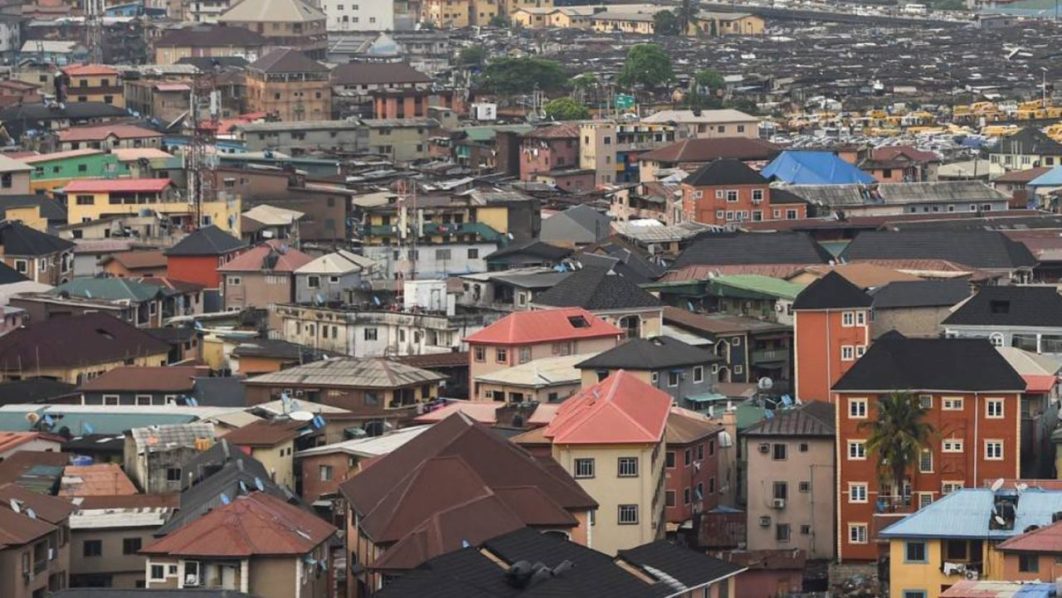
In Lagos, for instance, over 80 per cent of the city’s 20 million population are said to live in rented accommodation. This means that the rental market in the city belongs to the landlords who dictate what happens in the market. Some of them are good and accommodating while others are bad and intolerant, always exploiting tenants’ helplessness to their own advantage. This is why finding an apartment to rent in Nigeria is not just about your budget.
As a means of bringing some succor their way, some tenants, who are faced with the risk of ‘forceful’ relocation to city suburbs and rural areas as a result of the situation and the huge strain on their finances, have urged the President Bola Ahmed Tinubu administration to devise a means of putting shylock landlords across the country in check.
According to our findings, the unpleasant rent review became a general issue in January this year, considering the economic meltdown. However, between June and now, the situation has become more dire following the removal of fuel subsidy and the ensuing high inflation rate, which negatively impacted homes and businesses.
The Consumer Price Index (CPI) and Inflation Report in October 2023 released by the National Bureau of Statistics (NBS) last month showed that in the month under review, the headline inflation rate increased to 27.33 per cent relative to the September 2023 headline inflation rate which was 26.72 per cent.
“Looking at the movement, the October 2023 headline inflation rate showed an increase of 0.61 per cent points when compared to the September 2023 headline inflation rate. Furthermore, on a year-on-year basis, the headline inflation rate was 6.24 per cent points higher compared to the rate recorded in October 2022, which was (21.09 per cent). This shows that the headline inflation rate (year-on-year basis) increased in October 2023 when compared to the same month in the preceding year (i.e., October 2022),” the report said.
The report stated that on the Divisional level, Housing, Water, Electricity, Gas and Other Fuel contributed 4.57 per cent year-on-year and 0.29 per cent month-over-month to the increase in the headline index.
Following the inflationary trend, some landlords in cities like Lagos, Ibadan and Abeokuta have increased the rent for their apartments by 80 to 100 per cent, forcing many to seek alternatives.
In Ibadan, Oyo State, for instance, it was learnt that a two-bedroom apartment, which cost between N250, 000 and N300, 000 per year in January, is now N450, 000. Also, a three-bedroom apartment that initially cost N400, 000 per year now costs between N600, 000 and N800, 000 while a self-contained apartment that was rented at between N200, 000 and N250, 000 now goes for between N300, 000 and N350, 000.
In Lagos Island, a self-contained apartment currently goes for between N1.5 million and N2 million, depending on the location. In Lekki Phase 1, the average yearly rent for a three-bedroom apartment has increased from N4 million to N5 million.
At Chevron Drive, where a three-bedroom apartment previously cost N3 million, the average cost now is N4 million. In Ajah, a three-bedroom apartment, which went for N2 million earlier this year now costs N3 million while a similar apartment at Sangotedo that previously cost N1.5 million now goes N2.5 million.
In Lagos Mainland, a three-bedroom apartment that previously cost N1.5 million has increased to N2 million. The rent for the same size of apartment in Yaba also increased from N1.5 million to N2 million while in Ogba, it increased from N1 million to N1.5 million.
In Fagba and Iju areas, the rent for a three-bedroom apartment, which cost N600, 000 in January has increased to N800, 000. In Ikorodu, the cost of renting a similar apartment increased from N350, 000 to N450, 000. In Ekoro area, Abule-Egba, a two-bedroom flat, which cost between N200, 000 and N300, 000 earlier this year has jumped to between N400, 000 and N500, 000, while the cost of a three-bedroom flat jumped from N400,000 to N650,000.
In Mowe, Ogun State, a three-bedroom flat is now averagely rented at N400,000 as against N300,000 in January this year. A resident of Abule-Egba, Lagos, Mr. Tunji Mudasiru, who recently relocated to Atan-Ota in Ado-Odo Local Council, Ogun State, said his landlady increased the rent of his two-bedroom apartment from N250, 000 to N450, 000.
“I work on the Island and because I couldn’t cope with the rent, I moved to Abule-Egba, where rent is considered moderate. I moved into the house four years ago, paying N200, 000 but suddenly this year, my landlady increased the rent to N450, 000. I cannot cope with the increase, because my salary was not increased. I was forced to relocate to Atan, along Idi-Iroko road, where I still got the same apartment at the rate of N150, 000.
“It is not easy journeying from Atan to Island daily, especially now that the cost of transportation has increased, but I don’t have any option. I have devised a means of putting up with one of my friends around Oworonsoki till the weekend when I usually go home,” he said.
A civil servant in the employ of the Lagos State government, Mr. Olujimi Gabriel, lamented that his landlord jerked up his rent from N600,000 to N800,000.
“I was still struggling to pay my rent, which was N600, 000 for a two-bedroom apartment in Agege, when the landlord suddenly jerked it up early in July to N800, 000. What I did was to use the money I wanted to use to renew my rent to complete just two rooms at my site in Pakoto area of Ogun State.
“That was the only option I had, considering the fact that I have three kids in tertiary institutions. It is that bad; landlords are actually driving tenants crazy at this time,” he said.
A tenant in Meiran axis of Lagos State, who gave his name simply as Daddy Grace, said he wanted to move from his two-bedroom apartment after the landlady issued all the tenants eviction notice.
“I was paying N250,000 in my apartment, but when I went in search of another accommodation, the least I could find was N450,000, excluding agents and commission fee of N250,000. I was forced to go back to beg my landlady, who insisted on N350, 000. Even at that, the money is still much. How many people can afford this?” he queried.
Although many tenants who spoke with our correspondent blamed landlords and estate agents for the arbitrary increase in rent, an estate agent based in Ibadan, Yemisi Awoyemi, attributed the situation to high cost of building materials, increase in land use charge/tax by the government and inflation that has practically increased prices of goods. She noted that as a result of the development, there has been a mass exodus of people from the city centres to suburbs.
“The hike in rent has forced many to move from the city centre to suburb/rural areas. The development has forced some who are using let’s say three-bedroom apartments to sublet part of their apartments. Some who have uncompleted houses prefer to do just a room and move in there.
“The economic meltdown is largely responsible for this hike. Tenants and occupiers are finding it difficult to pay rent as and when due. Currently, some are paying in installments and landlords/property managers are willing to collect it like that. A lot of tenants are avoiding their landlords/property managers because of hikes in rent and no means of paying. This has also caused an increase in unoccupied apartments in cities. Though this has been happening since January, the impact became more pronounced between June and now,” Awoyemi said.
A Real Estate Investment consultant based in Lagos, Saheed Fuhad, told our correspondent that as people were being priced out of extremely expensive locations, there was a demand push for apartments in cheaper locations.
“There is a supply gap and landlords are taking advantage. Landlords also use the prevailing economic situation in the country to justify the rising rents. With the current situation, the alternative is for most people to move into more affordable locations no matter the distance. For example, many people who work in Lagos reside in the Lagos-Ogun axis for more affordable rents – areas like Akute, Alagbole, Agbado-Oke Aro, Magboro, Mowe, Sango-Ota and others.
“These areas mostly lack infrastructure (they have bad roads majorly), but people don’t care. You have situations where people leave for work on Mondays and return home on Fridays to reduce transportation cost,” he noted.
An Abeokuta-based property manager, who is the Chief Executive Officer of Flourish Properties Int’l, Prince Gboyega Onakoya, insisted that the cost of rent depends on location and facilities in the apartments.
“This question takes different dimensions. Is the cost of rent really high, though it depends on location and facilities of the apartments? Some tenants prefer urban or highbrow estates to suburbs or rural areas not minding the cost.
“Some landlords hike their rents anyhow due to economic reasons and personal gains. There are dubious agents out there who add outrageous charges on the rent. The high cost of rent depends on the location and facilities,” he said.
Though many were of the opinion that the government was not doing enough to control the activities of the landlords and agents, The Guardian investigations showed that this was due to the absence of laws about how frequently a landlord can increase his/her rent and by what percentage. Findings showed that laws about rent vary from state to state.
Under Section 37 of the Lagos State Tenancy Law, 2011, a tenant can apply to court for a declaration that the increase in his or her rent is unreasonable and the court has the power to determine whether or not the same is reasonable, taking due cognisance of the rent payable in similar apartments in the locality. If the court is satisfied that the increase is unreasonable, it can change it to an amount it considers reasonable.
Awoyemi called for urgent actions to ameliorate the agony of tenants. While blaming landlords for the situation, he acknowledged that the development is not unconnected with the high cost of building materials and increase in land use charge/tax by the government.
“The solution lies with the government,” he noted. “They should work on the economy so that the prices of things will come down. Also, the government should try and build affordable homes for the masses not homes for the elite alone because if you build a three-bedroom flat and you have to pay through your nose to own it, how can a meat, pepper seller or young graduate be encouraged to buy such? Real estate investors should consider rent-to-own affordable homes as well.”
On his part, Fuhad advised both the federal and state governments to look into the issue of housing deficit.
“Social housing from the government will help. High cost of building materials should be addressed. Crisis in the foreign exchange market should be looked into since we import most of our building materials.
“Private real estate developers should be encouraged to do more. Mortgage system in Nigeria should be activated to take care of housing needs of low and middle income earners,” he said.
On his part, Onakoya advised government to sanitise the property sector through housing regulations, adding that the Nigerian Institution of Estate Surveyors and Valuers (NIESV) should organise seminars to educate people about tenancy rules and management.