•Tinubu
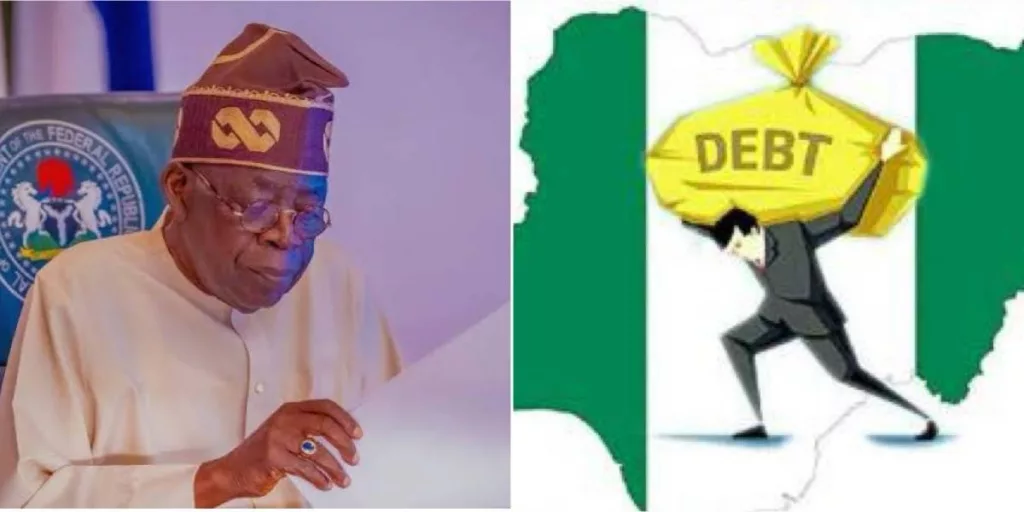
The federal government has stepped up engagement with the World Bank for a fresh $1.25bn loan to support economic reforms, job creation, and competitiveness, as findings by our correspondent showed that the facility has reached a critical stage in the lender’s approval process.
The proposed loan, titled Nigeria Actions for Investment and Jobs Acceleration, is expected to be presented for approval on June 26, 2026, about six months and 21 days before the January 16, 2027, presidential election, according to the revised timetable of the Independent National Electoral Commission.
If approved, the loan will rank as the second-largest single World Bank facility secured under President Bola Tinubu, behind only the $1.5bn Reforms for Economic Stabilisation to Enable Transformation Development Policy Financing approved in June 2024, reports The PUNCH.
At an exchange rate of N1,361.4 to the dollar, the proposed $1.25bn facility translates to about N1.70tn, showing the scale of external financing being pursued by the Federal Government amid ongoing economic reforms.
If approved and fully disbursed without any delay, the proposed $1.25bn World Bank loan, equivalent to about N1.70tn at an exchange rate of N1,361.4/$, will raise Nigeria’s external debt from N74.43tn ($51.86bn) as of December 31, 2025, to at least N76.13tn ($53.11bn).
The country’s total public debt would also rise from N159.28tn to at least N160.98tn. In dollar terms, Nigeria’s total public debt could rise from $110.97bn to about $112.22bn if the facility is eventually approved and fully disbursed.
Details of the facility were contained in a World Bank Programme Information Document obtained by our correspondent, which showed that the loan has progressed beyond the initial concept and appraisal phases.
Crucially, it was confirmed that the operation is now at the decision meeting stage of the World Bank’s project cycle, a point at which the lender’s management reviews the final appraisal package and determines whether the project should proceed to the Board of Executive Directors for approval.
This stage typically comes after appraisal and negotiations have been substantially concluded, meaning that key policy actions, financing terms, and reform commitments have already been agreed in principle between the borrower and the World Bank team.
In the World Bank process, the decision meeting represents a near-final internal clearance, after which the project is prepared for formal Board consideration, where final approval is granted.
Supporting this position, the World Bank document stated, “The review did authorise the team to appraise and negotiate,” indicating that the project has successfully passed earlier internal checks and is advancing toward final approval.
The borrower is listed as the Federal Republic of Nigeria, while the Federal Ministry of Finance will serve as the implementing agency.
According to the World Bank, the loan is designed “to support the government’s efforts to expand access to finance, digital, and electricity services, and strengthen competitiveness through tax, trade, and agriculture reforms.”
The fresh borrowing move comes amid growing scrutiny of Nigeria’s rising reliance on multilateral financing under Tinubu. Findings showed that the World Bank has approved about $9.35bn in loans and credits for Nigeria between June 2023 and May 2026.
These approvals span multiple sectors, including power, education, healthcare, agriculture, social protection, renewable energy, MSME financing, and economic reform support. Key packages include the $2.25bn RESET and ARMOR reform financing in June 2024, $1.57bn for HOPE and SPIN programmes in September 2024, and $1.08bn for education and resilience programmes in March 2025.
If the proposed $1.25bn facility is approved next month, total World Bank approvals under Tinubu would rise to about $10.6bn, reinforcing the bank’s role as a major external financier for Nigeria’s reform agenda.
However, it was observed that many of the approved loans are not immediately disbursed, as fund releases are tied to the fulfilment of specific policy and reform conditions, often resulting in delays.
Govt warns
The Accountant-General of the Federation, Dr Shamseldeen Ogunjimi, earlier warned that Nigeria may reject loan facilities from the World Bank if delays in approval and disbursement persist, saying prolonged timelines could undermine the country’s willingness to proceed with such arrangements.
The warning was contained in a press statement last week by the Director of Press and Public Relations at the Office of the Accountant-General of the Federation, Bawa Mokwa.
Ogunjimi, who spoke in Abuja during a courtesy visit by a World Bank delegation led by Mrs Treed Lane, stressed that Nigeria expects timely processing of funding requests, given that the facilities are loans and not grants.
He said, “If approvals take more than six months, the Nigerian Government may no longer honour such arrangements,” highlighting concerns over bureaucratic delays in accessing development financing.
The AGF noted that as a responsible borrower, Nigeria should not be subjected to prolonged approval processes that could affect project execution timelines and broader development objectives. He therefore urged the World Bank to “expedite the approval and disbursement of project funds to Nigeria” to support the country’s priorities.
Ogunjimi emphasised that the loans carry repayment obligations, making it imperative that disbursement processes align with project schedules and fiscal planning frameworks.
However, the Senior External Affairs Officer at the World Bank, Mansir Nasir, earlier told The PUNCH that funds for projects financed by the institution were not disbursed at once but in instalments, depending on the nature of the project and financing instruments.
It was also reported that Nigeria’s debt to the World Bank rose by $2.08bn in one year to $19.89bn as of December 31, 2025, according to an analysis of external debt stock data released by the Debt Management Office.
The figure represents an 11.7 per cent increase from the $17.81bn owed to the global lender as of December 31, 2024. The World Bank debt comprises loans from the International Development Association and the International Bank for Reconstruction and Development.
IDA provides concessional grants and loans to low-income countries, while IBRD provides financial products and policy advice mainly to middle-income and creditworthy developing countries.
DMO data showed that Nigeria’s IDA debt rose from $16.56bn in 2024 to $18.51bn in 2025, an increase of $1.94bn or 11.73 per cent. IBRD exposure also increased from $1.24bn to $1.38bn, representing an increase of $141.84m or 11.41 per cent.
The increase means World Bank loans accounted for 38.36 per cent of Nigeria’s total external debt stock of $51.86bn as of the end of 2025.
The proposed loan is aligned with the World Bank’s Country Partnership Framework and forms part of a broader package of interventions, including FINCLUDE, BRIDGE, AGROW, ARMOR, and DARES programmes.
According to the bank, the facility is expected to drive growth through multiple channels, including reduced food and input costs, improved agricultural productivity, expansion of digital services, deeper financial markets, increased private investment, improved electricity access, and stronger tax revenue mobilisation.
“The $1.25bn standalone operation builds on recent progress in restoring stability and underpins the Government’s shift toward an inclusive growth model,” the document stated.
Implementation of the programme will be coordinated by the Federal Ministry of Finance, working with key agencies including the Central Bank of Nigeria, Securities and Exchange Commission, National Agricultural Seed Council, Nigerian Electricity Regulatory Commission, and the Ministry of Power.
However, it warned that the operation carries significant risks. “Overall, the risk to this DPF is assessed as high. Political and governance risks are elevated ahead of the 2027 elections, with pressures that could delay or reverse sensitive reforms,” the bank stated.
Economists speak
Economists warn that the rising loan pipeline, while potentially beneficial for long-term development, could deepen fiscal pressures if not matched with stronger domestic revenue mobilisation and prudent expenditure management.
Lagos-based economist, Adewale Abimbola, reacting to the rising World Bank commitments to Nigeria, said loans from multilateral institutions such as the World Bank are largely concessionary, with interest rates typically below market levels and longer repayment tenors
He noted that the critical question is not whether Nigeria should be borrowing, but whether the loans are structured and deployed effectively.
“If it’s concessionary and tied to viable projects with medium-term revenue prospects, I don’t think it’s a bad idea,” Abimbola explained. “Borrowing isn’t bad; what matters is utilisation.”
He stressed that the economic impact of such loans depends on how well they are channelled into projects that can generate sustainable growth, strengthen revenue, and improve public services over time.
Development economist and CEO of CSA Advisory, Dr Aliyu Ilias, has expressed strong reservations about Nigeria’s rising debt profile amid rising World Bank loans.
While acknowledging that borrowing is not inherently bad for an economy, he questioned the rationale for taking on more debt at a time when the government claims to have higher revenues.
Ilias pointed out that, following the removal of the fuel subsidy, Tinubu had announced increased revenue inflows, further suggesting that the government should be able to fund projects without resorting to heavy borrowing.
Economist and CEO of the Centre for the Promotion of Private Enterprise, Dr Muda Yusuf, stressed that borrowing should always be backed by sound economic reasoning and clear development priorities.
Yusuf emphasised that the key issue is debt sustainability, which depends primarily on the country’s revenue capacity to service its obligations.
Without a strong cash flow to meet repayment schedules, he warned, Nigeria risks falling into a vicious cycle of borrowing to service existing loans, perpetuating fiscal vulnerability. He said it is essential that projects funded by loans directly support the economy’s capacity to repay.
According to him, Nigeria should be cautious with foreign loans due to the exchange rate risks they pose, noting that domestic debt is generally easier to manage. Excessive foreign borrowing, he warned, could put pressure on the country’s reserves and further weaken the exchange rate.
He stressed that a disciplined approach to debt sustainability will be crucial for Nigeria to avoid long-term fiscal distress.
Debt outlook fragile
Meanwhile, the Nigerian Economic Summit Group has warned that Nigeria’s debt outlook remains fragile despite signs of surface-level improvement, stressing that underlying fiscal pressures are still elevated and could worsen with continued borrowing.
In its Debt Burden Monitor report released yesterday, the NESG said while headline indicators suggest some stabilisation, the country’s debt position remains “a nuanced but concerning picture” as structural weaknesses persist beneath the surface.
The group noted that Nigeria’s Debt Burden Index declined to 70.9 points in 2024 from 83.6 points in 2023, which could give the impression that debt stress is easing. However, it cautioned that the improvement was largely driven by a temporary moderation in debt service pressures rather than any real strengthening of fiscal capacity.
It further pointed out that public debt-to-GDP rose to 40.6 per cent in 2024, reflecting continued reliance on borrowing to finance fiscal deficits and weak revenue generation, highlighting what it described as persistent fiscal vulnerability.
According to the NESG, recent data reinforces concerns, as the Debt Burden Index remained elevated and volatile throughout 2025, fluctuating within a high-stress range and ending the year at an estimated 79.2 points.
“This pattern indicates that debt pressure has not structurally eased but instead fluctuates within a high-stress band,” the report stated.
The group added that the seeming improvement in conventional debt ratios masks deeper structural imbalances, noting that valuation effects, rather than genuine fiscal strengthening, were responsible for the changes.
It warned that Nigeria has not yet made a decisive shift toward debt sustainability, stressing that the economy remains in what it described as a “high-risk fiscal environment”.