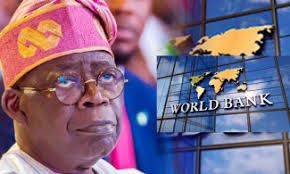
•Tinubu
The World Bank has said that the reports submitted by the Nigerian National Petroleum Company Limited (NNPCL) to the Federal Account Allocation Committee (FAAC) were inconsistent, and lacked necessary details on its operations.
This was revealed in the bank’s Accelerating Resource Mobilisation Reforms (ARMOR) Report for May 17, 2024, reports Channels TV.
According to World Bank, in addition to reduced net oil revenues, the opaque governance of NNPCL has significantly undermined the transmission of oil revenues to the federation.
“Non-transparent reporting to the Federal Ministry of Finance (FMF) and the Federation Account Allocation Committee (FAAC), make it difficult for the authorities to oversee NNPCL’s performance, calculate anticipated oil and gas revenues and determine the difference between revenues received by the Federation and NNPCL’s total revenue.
“The reports submitted to FAAC by NNPCL are inconsistent and lack information such as details on pledged revenues, the tradable value of crude oil, actual payments, and receipts from global trade, among others. As highlighted in the Nigeria Public Finance Review (2022), financial reporting is opaque due to quasi-fiscal activities such as in-kind revenues in the form of crude oil, and costs directly deducted from revenues that would have otherwise been transferred to the Federation Account,” the report said in part.
NNPCL is governed by the Petroleum Industry Act (PIA) 2021
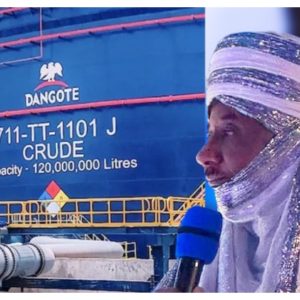
The world’s apex bank cited a case where the NNPCL pledged 35,000 barrels of crude oil per day to the owners in exchange for a 20 per cent stake in the privately owned Nigerian Dangote Refinery.
World Bank said although the total value of the contractual investments for pledged oil revenues was estimated to be worth US$5.8 billion at end-2022, the amount eventually declared by NNPCL was below expectation.
“All production sharing contracts signed by NNPC state that all fiscal payments shall be made in-kind by allowing the NNPC to lift tax oil, royalty oil, and profit oil. In joint venture operations, in which the Federation owns 55 per cent or 60 per cent of the equity oil and gas, the NNPC handles crude oil and natural gas receipts on behalf of the Federation.
However, the share of oil production in these contracts amounts to more than two-thirds of the total oil production in Nigeria.
“Nigeria’s dependence on oil and gas revenue is a source of fiscal vulnerability. During the commodity-price boom of 1996-2014, the revenue-to-GDP ratio was 12 per cent, (albeit considerably lower than the Sub-Saharan Africa (SSA) average of 21.5 per cent at that time), while a decade later, revenue-to-GDP was just 7.7 per cent in 2023.
“Despite a 116 per cent increase in international oil prices between 2020 and 2022-2023, net oil and gas fiscal revenues transferred to the Federation fell in the same period from 2 per cent of GDP to 1.8 per cent of GDP due to falling oil production and the retention of fiscal transfers to finance the gasoline subsidy.
“Oil production fell from 1.8 million barrels per day (mbpd) in 2020 to 1.4 mbpd in 2022-2023 due to insecurity and a lack of investment and adequate maintenance. The cost of the gasoline subsidy increased over this period from 0.9 to 1.6 percent of GDP, deducted directly by the Nigeria National Petroleum Corporation Limited (NNPCL)5 and reducing the net oil revenue transfers to the Federation Account.”
Additionally, World Bank said the NNPCL has retained oil and gas revenues for projects such as a gas pipeline to Morocco.
“NNPCL also entered contractual arrangements that pledge future oil and gas revenues to business partners in lieu of cash payments,” the report added.
FG Eyes Fresh $750 million World Bank Loan
The federal government is also pressing for a $750m loan from the World Bank.
This loan project is a part of the broader $2.25bn approved by the World Bank for Nigeria on June 13, 2024, to bolster Nigeria’s economic stability and support its vulnerable populations.
The other second part of the loan package was for the Nigeria Reforms for Economic Stabilisation to Enable Transformation, Development Policy Financing Programme project.
Already, an agreement for the loan has been signed between Nigeria (through the Ministry of Finance) and the World Bank.
The agreement document read in part, “The bank agrees to lend to the borrower the amount of $750,000,000 as such amount may be converted from time to time through a currency conversion (“Loan”), to assist in financing the programme described in Part 1 of Schedule 1 to this Agreement (“Programme”) and the project described in Part 2 of Schedule 1 to this Agreement (“Project”, and together with the Programme, hereinafter jointly referred to as the “Operation”).
“The borrower may withdraw the proceeds of the loan in accordance with Section IV of Schedule 2 to this Agreement. All withdrawals from the loan account shall be deposited by the Bank into an account specified by the Borrower and acceptable to the bank.”
According to the Disbursement Linked Indicators set out in the loan agreement, the loan will only be released upon achieving measurable progress in key areas.
These include raising VAT collection through improved regulations, increasing excise taxes on health and environmental products, and boosting corporate tax compliance through enhanced digital infrastructure.
Central to the ARMOR programme is the government’s plan to increase VAT rates and expand taxpayer compliance.
Some of the loan targets include increasing VAT collections to 1.8 per cent of non-oil Gross Domestic Product, unlocking $105m of the loan.
The WB said despite recent reforms, Nigeria’s non-oil tax revenues underperform due to low tax rates, poor compliance, a narrow tax base, and high tax expenditures.
Reforms introduced in 2020-2021 increased non-oil tax revenues from 2.3 per cent of GDP in 2020 to 3.7 per cent of GDP in 2023 due to a rise in Value-Added Tax (VAT) rates, improvements in tax digitalisation, and the unification of the exchange rate in 2023.
“Despite this increase, tax revenues in Nigeria remain very low compared to peers (Figure 2). Unlike most developing countries, Nigeria has yet to tap VAT (a federal responsibility to collect while sharing VAT revenues) as a significant source of revenue. In 2022, VAT revenues were only 1.2 per cent of GDP while VAT tax expenditures were estimated at 1.98 per cent of GDP in 2022 (latest available data).10 The current VAT rate of 7.5 per cent is the lowest rate in Africa, and well below the SSA average of 15.8 per cent. Under the VAT legislation, the tax operates like a sales tax, since firms are unable to recover input VAT on purchases of fixed assets, services, and general administration costs.
“Meanwhile, Corporate Income Tax (CIT) has a very narrow tax base, and although collections have increased in recent years, they represented just 1.6 per cent of GDP in 2023. By comparison, poorly designed and sometimes discretionary CIT expenditures were estimated to cost 0.4 per cent of GDP.11 Excise rates are exceptionally low by global standards, and revenues were less than 0.1 per cent of GDP in 2023.12 Personal Income Tax (PIT) is assigned exclusively to the States, where challenges persist in collection due to tax evasion and underreporting: only 13 per cent of the workforce is registered for PIT (2018) and only 2 per cent of those are reported as active.
The bank advised that the tax and customs administrations need modernising to improve efficiency.