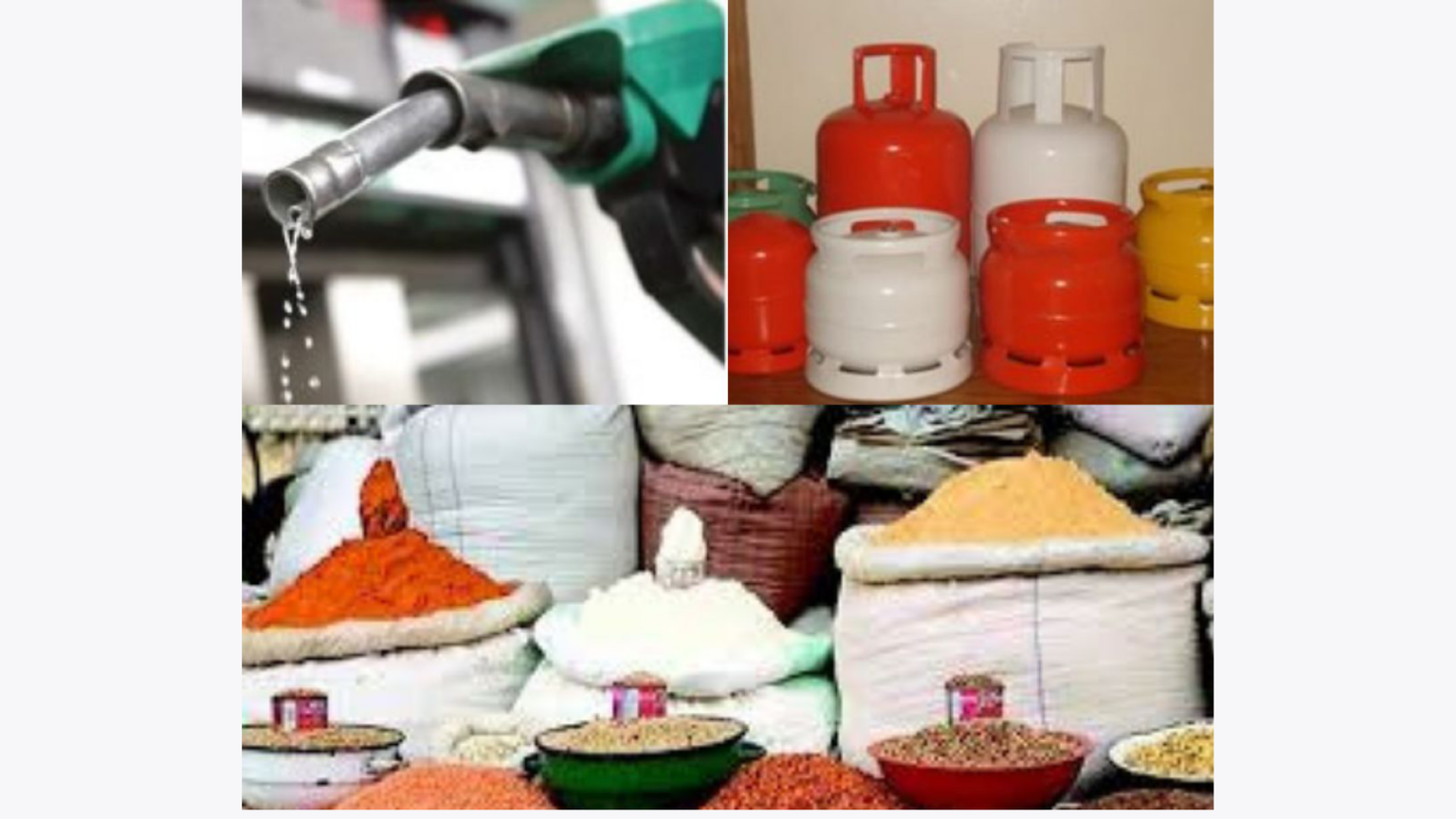
Households in Nigeria are facing yet another squeeze as the price of Liquefied Petroleum Gas (LPG) rose to N1,600 per kilogramme in Lagos yesterday, with consumers in other parts of the Southwest region paying up to N1,500, adding a fresh burden to families already grappling with a spike in transportation costs following recent petrol pump price hike.
Checks by our correspondents across Lagos, Osun, Oyo and Ogun states, however, revealed the disparity between plant and retail prices, highlighting the extent to which location, distribution and transportation costs are shaping what consumers ultimately pay for cooking gas, reports The Guardian.
At the plants, LPG sold for about N1,350/kg in Lagos, N1,300 in Osun, N1,200 in Oyo and N1,400 in Ogun, while retailers sold at about N1,600/kg in Lagos, N1,500 in Osun and N1,300 in Oyo.
At the new rate of N1,600/kg, a household in Lagos would need about N20,000 to refill a standard 12.5kg cylinder, while the same quantity would cost about N18,750 at N1,500/kg in Osun.
The latest development has added to the financial pressure on households already adjusting to higher transportation costs following the increase in PMS prices.
For consumers, the concern is not only the amount required to refill a cylinder, but the cumulative effect of successive increases in basic household expenses.
Adesola Omotosho, a consumer in Lagos, told our correspondent that households were still struggling to absorb the impact of the PMS price increase and the resulting rise in transportation costs before the latest cooking gas burden emerged.
According to Omotosho, families now have to stretch the same income across transportation, food and cooking gas, making it increasingly difficult to maintain previous consumption patterns.
“We don’t even understand what is going on. A few days ago, it was about petrol and transportation cost; now it’s gas. We should go back to using kerosene and firewood if clean energy is too expensive,” she expressed.
In Osun, Habibah Raheem also lamented the rising cost of LPG, saying the increase was becoming another challenge for households that depend on cooking gas for their daily meals.
The pressure extends beyond households to food vendors, restaurants and other small businesses that use LPG as a major production input. Any sustained increase in their energy costs could eventually be passed on to consumers through higher prices for prepared food and other services.
But while consumers are reporting higher retail prices, the Managing Director of DAPNIK Gas Plant, Olatunbosun Oladapo, cautioned against interpreting the highest retail prices as evidence of a generalised increase across the LPG market. Oladapo told The Guardian that his plant in Ibadan was currently selling LPG at N1,150/kg, adding that some outlets in Lagos could also sell around N1,100 to N1,150/kg.
He explained that the price difference was partly a function of distribution costs, particularly for consumers buying from distributors located deep inside communities.
“A distributor who went to the plant to buy also adds his own transportation, his own remuneration and everything, and he’s selling N1,300,” he said.
Oladapo said a consumer who had to travel several kilometres to buy a small quantity could end up paying more once transportation costs were considered. He therefore urged consumers and the media to distinguish between plant prices and the prices charged by distributors and retailers.
He also warned that reports of a broad-based price surge could encourage some marketers to increase their own prices simply because they believed the market was moving upwards.
“If we come out with a story and say cooking gas price is going up, you are actually telling people that this is going up. They are already selling at N1,500. Let me also increase my own,” he said.
Oladapo’s assessment contrasts with the higher prices being reported by some consumers and retailers, underscoring the fragmented nature of the LPG market and the impact of transportation and distribution costs on final prices.
Energy lawyer and oil and gas expert, Dr Ayodele Oni, however, offered a different explanation for the continuing price pressure, saying increased domestic supply had not automatically translated into lower prices for consumers.
Oni told our correspondent that LPG remained exposed to international market movements, foreign-exchange pressures and logistics costs, meaning that domestic production alone did not necessarily shield consumers from price volatility.
“Domestic volume without domestic pricing is a statistic, not a relief,” he said.
He explained that international propane and butane prices, shipping and insurance costs, the naira and domestic transportation expenses could all feed into the final price paid by Nigerian consumers.
Oni also pointed to the country’s supply gap as the Nigerian Midstream and Downstream Petroleum Regulatory Authority (NMDPRA) data showed that Nigeria supplied 565,106 tonnes of LPG between January and June 18, 2026, against a benchmark requirement of 657,072 tonnes, leaving a 91,966-tonne deficit.
The regulator’s data showed that domestic supply covered about 86 per cent of estimated demand during the first half of the year, despite local sources accounting for most of the market’s supply.
The latest market pressure also follows a major supply disruption earlier in the year. According to Argus data, Nigerian LPG demand fell to a seven-month low of 123,000 tonnes in June, almost 23 per cent below the March level, as lower domestic production and tighter import conditions affected the market during the Iran-related global supply disruption.
The disruption prompted LPG imports to rise sharply to about 46,000 tonnes in June, from 3,000 tonnes in May and zero in April, before the market subsequently received some relief as international LPG prices declined and domestic production recovered.
Marketers had attributed the movement to a combination of international energy prices, shipping and insurance, foreign-exchange exposure, domestic logistics and supply availability.
Oni said the immediate challenge was therefore not simply increasing domestic LPG production, but addressing the structure through which the product moved from producers and terminals to consumers.
He called for stronger domestic supply arrangements, greater transparency in depot pricing and improved storage and distribution infrastructure. He also warned that sustained increases could undermine Nigeria’s clean-cooking transition by forcing low-income households to reduce LPG consumption or return to charcoal and firewood.
Atiku: Rising food, fuel costs driving child malnutrition
Meanwhile, former Vice President Atiku Abubakar has decried Nigeria’s worsening child malnutrition crisis, linking it to rising food, transportation and energy costs, warning that economic hardship is increasingly affecting the ability of families to provide adequate nutrition for their children.
Atiku, in a statement issued yesterday by his Senior Special Assistant on Public Communication, Phrank Shaibu, cited recent nutrition figures showing that 41.1 per cent of Nigerian children under five are stunted, while 19.2 per cent are severely stunted. He said the situation was even more dire in the North-West, where stunting affects 58.2 per cent of children.
The Nutrition Society of Nigeria recently raised concerns over the scale of malnutrition, reporting that nearly two million Nigerian children are affected by severe acute malnutrition, with only about two in every 10 receiving treatment.
Atiku said the figures should be viewed against the backdrop of the pressures confronting households as the cost of food and other essentials continues to consume a large share of family incomes.
“This is the most heartbreaking face of the cost-of-living crisis. Behind every statistic is a Nigerian mother struggling to decide what her children can eat, how much they can eat and how often they can eat. A child does not understand inflation figures. A child only knows whether there is food on the table,” he said.
The African Democratic Congress presidential candidate further argued that high energy and transportation costs have consequences beyond the price paid at filling stations, as they affect the cost of moving agricultural produce, running small businesses and transporting goods to markets.
“When fuel becomes expensive, transporting tomatoes from the farm becomes expensive. Taking rice to the market becomes expensive. Moving children to school becomes expensive. And eventually, the additional cost arrives at the dinner table,” he added.
The National Bureau of Statistics currently puts food inflation at 19.57 per cent. The World Bank has similarly noted that higher petrol prices can reduce household purchasing power directly and transmit additional costs to other goods and services, particularly transportation.
Atiku said his proposed intervention in the petroleum sector was intended to address those cost pressures through what he described as a production subsidy rather than a return to the former system of subsidising imported petrol.
He maintained that the proposal would be capped, transparently budgeted and independently audited, with the broader objective of reducing energy and transportation costs while strengthening domestic production.
“I want the farmer to spend less getting produce to market. I want the trader to spend less transporting goods. I want the bus driver to spend less on fuel. I want parents to have more money left after transportation so that they can put better food on the table,” he added.
He further called for greater investment in the treatment of severely malnourished children and stronger maternal and child nutrition programmes, saying nutrition budgets must reach vulnerable communities.
His comments come as Nigeria continues to grapple with the social consequences of economic reforms introduced since 2023, including the removal of the petrol subsidy and foreign-exchange reforms.
The World Bank has said those reforms have contributed to macroeconomic stabilisation but also placed significant short-term pressure on households, stressing the need for stronger social protection for poor and economically vulnerable Nigerians.