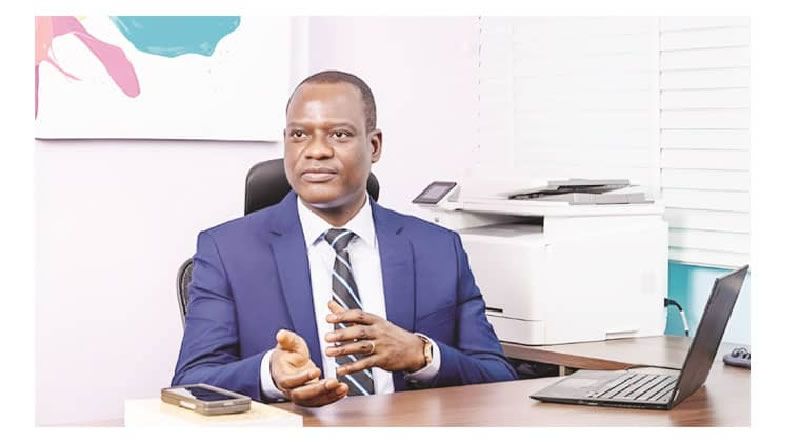
•Minister of Finance and Coordinating Minister of the Economy, Taiwo Oyedele
The federal government spent only N3.10tn on capital projects in the first nine months of 2025 despite accessing N11.89 trillion from various debt financing sources during the period, highlighting the wide gap between borrowing and infrastructure spending.
Latest data from the Budget Office of the Federation’s Third Quarter 2025 Budget Implementation Report showed that total debt financing inflows stood at N11.89tn as of September 2025, comprising N7.08tn in domestic borrowing and N4.81tn in multilateral and bilateral project-tied loans.
However, actual capital expenditure amounted to N3.10tn over the same period, representing just 26.07 per cent of total financing receipts, reports The PUNCH.
The figure was also significantly below the prorated capital expenditure target of N17.58tn for the first three quarters of the year, with actual spending falling short by N14.48tn, or 82.3 per cent.
A breakdown of the spending showed that capital expenditure by Ministries, Departments, and Agencies amounted to N1.21tn, while Government-Owned Enterprises spent N615.68bn. Grants and donor-funded projects accounted for N1.08tn.
Notably, no expenditure was recorded under the multilateral and bilateral project-tied loan component despite a three-quarter budget provision of N2.52tn for such projects.
The report attributed the slow pace of project implementation partly to administrative and cash management challenges. “Cash management bottlenecks — including bottom-up cash planning delays — continue to slow project execution and raise project cost risks,” the Budget Office stated.
The figures indicate that while the government continued to rely heavily on domestic and external financing to support budget execution, only a fraction of the borrowed funds had translated into actual capital project spending by the end of the third quarter.
A renowned economist and Chief Executive Officer of the Centre for the Promotion of Private Enterprise, Dr Muda Yusuf, earlier warned that rising federal government borrowing from the domestic financial system is increasingly crowding out the private sector, as banks favour low-risk, high-yield government securities over lending to businesses.
“The increase in credit to the government can be attributed to a number of factors.
The government has been raising money to finance the deficit. So, this financing of the deficit has led to the issuance of bonds, treasury bills, and so on, which banks also buy. The rate is also very attractive, and it’s more attractive to them than lending to the real sector,” Yusuf said.
He further urged the government to moderate its borrowing.
Also, the Director-General of the Manufacturers Association of Nigeria, Segun Kadir Ajayi, earlier said credit data from the financial system point to a clear crowding-out of private sector borrowing by government demand.
Ajayi said the trend reflects the preference of commercial banks and other financial institutions to lend to the government, given prevailing interest rates and perceived lower risk, to the detriment of productive sectors of the economy.
The MAN DG said, “The data is a trend that proves something. Usually, when you see such trends, it is indicative of the private sector being crowded out in terms of borrowing. Because when you borrow, you would repay, and so the rate at which you borrow is critical for your operations, and when commercial banks and financial institutions find it a lot easier to lend to the government rather than to the private sector.”
Ajayi noted that the manufacturing sector has been particularly affected, with many firms scaling back borrowing for expansion and raw material sourcing amid high costs and weak economic conditions.
Reacting to criticisms of the government’s growing debt profile, the Director-General of the Budget Office of the Federation, Dr Tanimu Yakubu, argued that deficit financing and public borrowing were established tools of macroeconomic management rather than signs of fiscal recklessness.
In a recent statement, he said governments were expected to intervene through borrowing and spending during periods of economic stress, noting that public expenditure on infrastructure, security, and social programmes ultimately circulated through the economy as income, business revenues, and tax receipts.
Yakubu maintained that Nigeria’s debt challenges were rooted in decades of structural weaknesses, including subsidy distortions, oil dependence, and weak revenue mobilisation, rather than the policies of the current administration alone.
He added that while debt levels remained relatively moderate by international standards, the country’s more pressing challenge was improving revenue generation and ensuring borrowed funds were deployed productively.
However, the gap between financing inflows and actual capital expenditure shows the challenges facing budget implementation.
The Minister of Finance and Coordinating Minister of the Economy, Taiwo Oyedele, recently said Nigeria could no longer rely mainly on borrowing to fund development, warning that the country must build a sustainable fiscal system capable of supporting critical sectors of the economy.
“Nigeria cannot continue to finance development primarily through borrowing. We must build a fiscal system capable of sustainably supporting critical infrastructure, quality education, affordable healthcare, security, and social protection,” he said.