

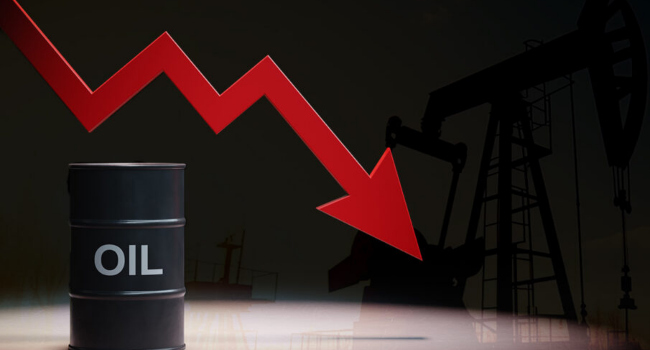
Experts have warned that Nigeria’s continued inability to meet crude oil production targets could complicate fiscal planning, particularly at a time when the federal government is relying heavily on oil proceeds to support budget implementation and foreign exchange stability.
This is coming as Nigeria’s crude oil production recorded its second consecutive monthly increase in April 2026, offering fresh optimism for government revenue and foreign exchange earnings, although analysts have warned that deep-rooted structural challenges continue to threaten the country’s ability to meet its production targets.
Latest figures released by the Nigerian Upstream Petroleum Regulatory Commission showed that crude oil production rose to 1.49 million barrels per day (mbpd) in April from 1.38mbpd in March, reports Daily Independent.
When condensate production of about 0.17mbpd is included, total oil output increased to 1.63mbpd compared with 1.55mbpd in the previous month.
The increase marked a steady recovery from the temporary production decline recorded in February, when scheduled maintenance activities at the Bonga deepwater field under OML 118 disrupted output.
Industry analysts said the latest production figures signal improved operational stability at some major oil assets, especially the Forcados export terminal, which played a central role in lifting national production.
Data from the regulator showed that output from the Forcados terminal surged by 42 percent month-on-month to 0.25mbpd in April.
The sharp rebound followed the resolution of disruptions along the Forcados Pipeline caused by a leak at the Keremor axis, which had affected production from several upstream assets between February 20 and March 25.
Analysts noted that the restoration of operations at the terminal helped Nigeria regain part of the output losses suffered during the first quarter of the year.
However, despite the improvement, the country’s crude oil production excluding condensates still fell marginally below Nigeria’s production quota of 1.50mbpd allocated by the Organisation of the Petroleum Exporting Countries.
More significantly, production levels remain substantially below the Federal Government’s oil production benchmark of 1.84mbpd and the broader target of 2.08mbpd contained in fiscal assumptions.
Energy analysts said the latest figures underscore the fragile nature of Nigeria’s oil production recovery, which remains vulnerable to infrastructure disruptions, security challenges, and operational inefficiencies.
Analysts at investment banking and research firms noted that while the Forcados recovery provided a major boost, production performance across many other export terminals remained weak during the review period.
Aside from the sharp increase at Forcados and a modest 5.1 percent rise in output at Bonny Light terminals, most other major terminals reportedly recorded production declines in April.
According to analysts, this trend highlights Nigeria’s continued overdependence on a few strategic export assets and the limited resilience of the country’s upstream production system.
Chief Executive Officer of Financial Derivatives Company, Bismarck Rewane, said the modest rebound in output is encouraging but insufficient to significantly strengthen fiscal buffers.
According to him, Nigeria still faces a major challenge in achieving sustainable production growth because of the persistent issues surrounding pipeline security, ageing infrastructure, and underinvestment in the sector.
He noted that although oil prices remain relatively supportive, lower-than-budgeted production volumes could continue to weaken government revenue projections.
“Production growth is positive, but the country is still operating below both OPEC quota and budget assumptions. Until Nigeria addresses crude theft, pipeline vandalism, and infrastructure constraints, the gains may remain temporary,” he said.
Energy analysts also stressed that many upstream operators continue to face rising operating costs due to insecurity around oil-producing areas and the need for continuous repairs on damaged infrastructure.
They explained that recurring attacks on pipelines and illegal crude tapping activities continue to reduce operational efficiency and discourage fresh investment in the sector.
Vice President at Veriv Africa, Ayodele Oni, said Nigeria’s oil sector still requires significant reforms and investment to achieve stable production growth.
According to him, recent output improvements demonstrate that production can recover quickly once operational bottlenecks are addressed, but sustaining that momentum will require stronger infrastructure protection and improved investment conditions.
He noted that international oil companies and indigenous operators are increasingly cautious about committing large-scale capital expenditure without clear assurances regarding asset security and regulatory stability.
Oil receipts remain a critical source of government revenue and a major contributor to Nigeria’s foreign exchange earnings despite ongoing efforts to diversify the economy.
The latest production figures come amid continued volatility in the global crude oil market, where prices have remained sensitive to geopolitical developments in the Middle East.
Analysts said concerns surrounding tighter global supply conditions and ongoing tensions affecting the Strait of Hormuz continue to influence market sentiment during the period under review.
The Strait of Hormuz remains one of the world’s most strategic oil shipping routes, and any disruption to movement through the channel has the potential to significantly affect global oil prices.
Analysts explained that while elevated oil prices may provide temporary support for Nigeria’s revenue position, the country may not fully benefit from higher prices if production remains below target levels.
They added that Nigeria’s inability to maximise output during periods of elevated oil prices represents a missed opportunity for improving fiscal stability and strengthening external reserves.
Economist and Chief Executive Officer of Cowry Asset Management, Johnson Chukwu, said the country must focus on achieving consistent production growth to fully take advantage of favourable global oil market conditions.
According to him, stable production growth is essential not only for fiscal sustainability but also for exchange rate stability and investor confidence.
He noted that oil production volatility continues to pose risks to government revenue forecasts and macroeconomic planning.
Looking ahead, analysts expect Nigeria’s crude oil production to continue improving gradually over the coming months as operations normalise at key terminals and maintenance activities conclude across several offshore assets.
However, they warned that production growth is likely to remain moderate unless there are major improvements in pipeline security, infrastructure rehabilitation, and upstream investment flows.
They also stressed the need for accelerated implementation of reforms under the Petroleum Industry Act to improve operational efficiency and attract long-term capital into the upstream sector.
For now, analysts believe the latest rebound offers cautious optimism for Africa’s largest oil producer, but achieving sustainable output growth sufficient to meet fiscal and OPEC targets may still require significant structural reforms and stronger operational discipline across the oil and gas industry.