Lagos is known as the commercial capital of Nigeria, however, building houses in the city is a complicated process full of permits, levies and different charges from various government agencies.
This article examines how these multiple regulatory fees are discouraging investment in housing and making accommodation increasingly unaffordable for millions of residents, reports Saturday Guardian.
Lagos is one of the fastest-growing cities in Africa. Every year, more people move into the state in search of work, business and better living conditions. But as the population keeps increasing, housing deficit has been on the rise.
According to the National Bureau of Statistics (NBS), inflation in Nigeria rose to 24.48 per cent in 2025. This rise has affected almost everything, including building materials like cement, iron rods, sand and labour costs. As prices go up, building houses has also become more expensive for developers.
At the same time, housing demand in Lagos is far higher than supply. Reports estimate that the state has a housing shortage of about 3.4 million units. This means millions of people are still looking for homes they can afford.
But beyond demand and inflation, developers say another big problem is the cost of approvals, permits and different government charges that come with building houses in Lagos.
For many of them, the process is not just about buying land and building. It is about passing through several agencies, paying different fees, and waiting for approvals that sometimes take longer than expected and while this is happening, tenants are also feeling the impact as rent keeps rising across the state.
Developers Groan
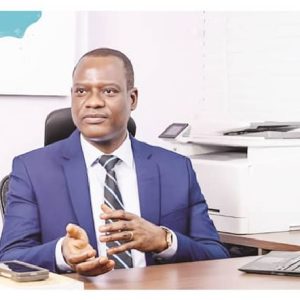
For Lagos-based developer, Olaoluwa Awolaja, what began as a routine residential development project gradually turned into a prolonged process defined by repeated approvals, rising costs and delays that stretched timelines far beyond initial projections.
Awolaja told our correspondent that his experience started with what appeared to be a straightforward step submitting building plans for approval.
According to him, that stage marked the beginning of a much longer process. “Once you submit your drawings, that is where the real journey starts. The Physical Planning Permit Authority has to review everything to ensure it complies with zoning laws and building regulations,” he said.
After that initial approval, he said the process quickly moves into additional layers of compliance such as obtaining a letter of structural stability, which must come from registered engineers and architects, and it is not something one gets without paying.
He said as construction progresses, the requirements do not ease but instead become more structured around stages of the project.
“At different points, officials come for inspections, and you are required to obtain stage certification approvals. Each stage means another round of documentation and payments before you can continue,” he explained.
He added that for larger developments, the process expands further into multiple regulatory demands. “If the building is big, you may also need an environmental impact assessment, fire service clearance, survey verification, and title documentation. Each agency has its own requirements, and you must satisfy all of them before you can move forward,” he said.
Reflecting on the financial implication, Awolaja said the cumulative burden of these charges is significant. “When you add everything together, regulatory compliance alone can take between 15 and 25 per cent of the total project cost. That is before you even talk about cement, labour or financing,” he said.
Beyond these project-specific approvals, he said developers must also contend with the Land Use Charge, a yearly property tax imposed by the Lagos State government that adds to recurring financial obligations for landowners in the state.
“It is not a one-time thing. You pay it every year, and it is on top of everything else you are already dealing with,” he said.
But beyond cost, he said delays in approvals remain one of the most frustrating aspects of development in Lagos.
“There are times you wait for approvals for months. During that period, your project is idle, but expenses are still running. If you took a loan, interest keeps accumulating. Nothing stops,” he said.
He explained that these delays often force developers to rethink timelines and pricing.
“You may plan a 12-month project, but it stretches into 18 or 24 months. At the end of the day, all those delays become part of the cost.”
“When developers finish calculating everything approvals, delays, financing they have no choice but to adjust prices. That is why rent and property prices keep going up,” he said.
The real estate developer said though the problems earlier mentioned are not without solutions, adding that meaningful change would require deliberate action from the government.
He called for the establishment of a one-stop shop where developers can process all permits through a single platform, with clear timelines and online tracking.
“Right now, you are running from one agency to another. Lagos State Physical Planning Authority (LASPPPA) and other agencies need to work more cohesively. If everything is in one place, it saves time and reduces the back and forth,” he said.
He also recommended a consolidation of overlapping levies, arguing that some charges essentially cover the same ground under different names.
“The Land Use Charge itself should be more reflective of actual property value. As it is now, it can become very burdensome,” he said.
On transparency, he stressed that unpredictability in the fee structure is one of the biggest obstacles developers face adding that the fees should be clear, consistent and fixed. Unexpected charges or arbitrary increases just add to the uncertainty.
Awolaja advocated for targeted incentives including tax breaks and reduced regulatory charges especially for developers working on affordable housing specifically to encourage more investment in that segment of the market.
He also made a case for full digitisation of the entire approval process, from application to payment to final sign-off to reduce human interference, noting that where there is less human interference, there is less room for corruption and unnecessary delays.
Another developer, Bukola Ojo, said when she was renovating one of her properties in Lagos, she assumed it would be a straightforward upgrade that would take a few weeks to complete, but the process quickly stretched into months because of approvals, site restrictions and regulatory checks that came at different stages of the work.
She said the renovation had already started when officials visited the site and raised concerns about compliance with certain levies and documentation that had to be resolved before work could continue fully.
When we started, nobody told us it would slow down like this. But later, officials came and said there were payments and levies we still needed to sort out. That was when everything started dragging.
According to her, even though the project was not a new build, the same layers of enforcement still applied, and in some cases, work was halted until certain conditions were met.
At one point, they told us to stop work on part of the building. It was marked, and we were told not to continue until everything was cleared. So the workers had to leave the site.
She said the stoppage created additional pressure on cost and time, as contractors were still being engaged intermittently and materials already purchased remained idle on site.
“When you stop working suddenly like that, it affects your planning. You are still paying some people, materials are already there, and the project just becomes longer than you planned.”
She added that even after the payments were made and the necessary steps were taken, the enforcement presence that initially slowed the work did not return to confirm or close out the process, leaving them in a difficult position as work had to continue.
After we paid, nobody came back again. We kept waiting for inspection or final confirmation, but no one showed up.
According to her, this absence created uncertainty on site, as the team could not clearly tell whether they were fully cleared to proceed without interruption.
“We didn’t get any final approval or visit after payment, so we were just in limbo. We had already stopped once, so we didn’t want another problem.”
She said the situation eventually forced them to take a practical step just to avoid further disruption to the project.
We had to paste the receipt on the wall so that if anybody came later, they would see that we had paid and done what we were asked to do. Otherwise, we could not just keep waiting while the work was standing.
Tenants bear the burden
Across many neighbourhoods in Lagos, the steady rise in rent has become a growing source of concern for residents struggling to secure affordable housing.
For many tenants, finding accommodation is becoming increasingly difficult as landlords adjust prices to reflect the rising cost of constructing and maintaining residential buildings.
A tenant in the Idimu area of Lagos, Blessing Adebayo, said rent in her neighbourhood has climbed significantly in recent years.
According to her, she paid about N450,000 for a one-bedroom apartment two years ago, but the amount increased sharply when it was time to renew the tenancy. She said her landlord raised the rent to N1.5 million, leaving her with little choice but to adjust to the new rate.
Across other parts of Lagos, similar experiences are becoming common, with tenants saying rent increases now come faster and higher than before, making it harder to plan or save for alternative housing. In some cases, residents say they are forced to leave neighbourhoods they have lived in for years simply because renewal prices jump beyond their income.
A tenant in the Ikotun axis said the pressure is not only about rent but also the quality and availability of housing within reach of average earners.
She explained that even small apartments now cost far more than they used to, pushing many people further away from their workplaces in search of cheaper options.
Multiple Costs Beyond Construction
Property professionals say building in Lagos begins far beyond buying land, with developers immediately stepping into a long chain of regulatory, financial and documentation requirements before any physical construction starts.
A Lagos-based surveyor, Sutoidem Theophilus, said land acquisition is just the entry point, after which developers are confronted with multiple layers of statutory and compliance costs tied to title perfection, approvals and government processes.
He explained that developers must first process surveys, title documents, governor’s consent, stamp duties and registration fees before even considering construction.
According to him, planning approvals, environmental requirements and development levies from both state and local government agencies further add to the financial burden.
He added that developers still have to provide basic infrastructure within their estates, including drainage systems, access roads, water supply and sometimes alternative power solutions.
Beyond that, he said professional fees for architects, engineers, quantity surveyors and other specialists, as well as financing costs, significantly increase the total project budget noting that informal costs and holding expenses also contribute to the overall financial pressure, making it difficult to determine real project feasibility at the early stage.
“Construction itself isn’t just about putting up the building. You also have to think about infrastructure; drainage, access roads, water supply, and even alternative power sources. In many cases, the developer has to handle all of that. On top of that, you’ll need professionals; architects, quantity surveyors, engineers etc. Their fees add up, and when you factor in high interest rates on financing, the overall cost climbs even higher.
There are also some less formal expenses that people don’t always talk about upfront, like payments made to local communities around the project site. By the time you add everything together; holding costs, taxes, and even marketing expenses, you start to see the full picture. It’s only after considering all these factors that you can really decide if the project is financially feasible or not.”
Theophilus said developers ultimately factor all these expenses into housing prices, meaning regulatory and financing pressures are indirectly transferred to buyers and tenants.
He explained that most developers use a cost-plus pricing model, where all expenses are calculated before a profit margin is added.
The surveyor said delays in approvals further increase costs, especially loan interest and extended project timelines.
He said in some cases, projects that initially appear viable become financially difficult once all costs are fully accounted for.
Theophilus added that some developers scale down projects while others abandon them completely due to rising compliance and financing pressure and the high development costs in prime areas like Ikoyi and Lekki Phase 1 are pushing developers towards emerging locations such as Ibeju-Lekki and Epe.
Legal concerns over overlapping charges
A real estate lawyer, John Ayeomoni, explained that developers have access to certain fiscal incentives designed to ease the burden of property development.
He noted that one of such incentives is capital allowance, which he described as a tax benefit available to developers involved in real estate investment.
Ayeomoni added that developers who consider certain levies such as Land Use Charge to be excessive may apply for tax holidays, which he said are part of government support mechanisms aimed at encouraging participation in housing delivery.
He also explained that developers rarely pursue disputes through tribunals or courts, saying such an approach is often not considered practical in resolving regulatory concerns.
According to him, developers tend instead to engage in lobbying through lawmakers, a process he said allows their concerns to be heard and considered within legislative channels.
He further noted that this approach shows an economic efficiency mindset, where developers prioritise strategies that yield practical outcomes rather than prolonged legal processes.
The lawyer also stressed that lobbying is a legitimate aspect of governance, arguing that it serves as one of the channels through which the government becomes aware of public and industry concerns.
Ayeomoni added that lawmakers are expected to represent the interests of their constituents and ensure such concerns are communicated through the appropriate policy channels.
Using the example of the Makoko community, he pointed out that when residents protested the demolition of their homes by marching to the State House in Alausa, it reflected a breakdown in representation.
He said such grievances, in principle, should be channelled through elected representatives, whose responsibility is to advocate on behalf of their constituents within government structures.
Similarly, a real estate lawyer, Titilayo Aina-Scott, said developers in Lagos face a wide range of costs before and during construction, covering land acquisition, professional services charges across different government agencies and that these expenses include land or joint venture costs, legal and professional fees, building materials, labour, as well as statutory payments required by different authorities at various stages of development.
According to her, developers are expected to pay several levies and approvals, including planning application and building approval fees, development levies, environmental impact assessment charges, emergency service levies, infrastructure charges, utility connection fees, fire service inspection fees and building control inspection fees.
She added that additional costs may arise from ground rent, consent fees where land is still under governor’s consent, as well as permits such as site signage approvals.
Aina-Scott noted that while some of these charges have clear legal backing under Lagos State planning and building control laws, others fall within what she described as a grey area, where agencies or local governments impose fees through administrative directives or bye-laws that are not always clearly anchored in legislation.
She explained that this overlap often leads to situations where developers are charged multiple times for similar requirements under different names, increasing project costs, creating uncertainty, and forcing many developers to pay to avoid delays that could stall construction timelines.
Aina-Scott also noted that planning approvals are handled by the Lagos State Physical Planning Permit Authority while construction compliance is supervised by the Lagos State Building Control Agency, but said their functions often overlap in practice, leading to duplicated inspections and compliance demands.
According to her, these regulatory complexities raise development costs, delay project delivery and reduce predictability for investors, with many developers either scaling down projects, adjusting pricing, or abandoning plans due to rising compliance burdens.
She added that the impact is especially severe for affordable housing, where tight margins make it difficult to absorb unexpected charges without passing costs to buyers or tenants, while some investors are discouraged by the uncertainty in the approval process.
On reforms, Aina-Scott called for a one-stop approval system that brings all regulatory processes under a single platform with clear timelines and transparent, fixed fees, to reduce delays and uncertainty.
She also advocated consolidating development-related charges into a single legal framework to eliminate overlapping or informal levies, and recommended clearer separation or possible merger of overlapping agency functions to reduce duplication.
She further proposed an automatic approval system where applications are deemed approved if agencies fail to meet set deadlines, alongside audits to remove duplicative charges, stressing that the goal should be a more predictable, transparent and efficient regulatory system.