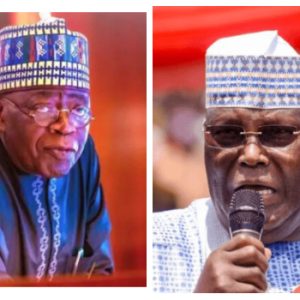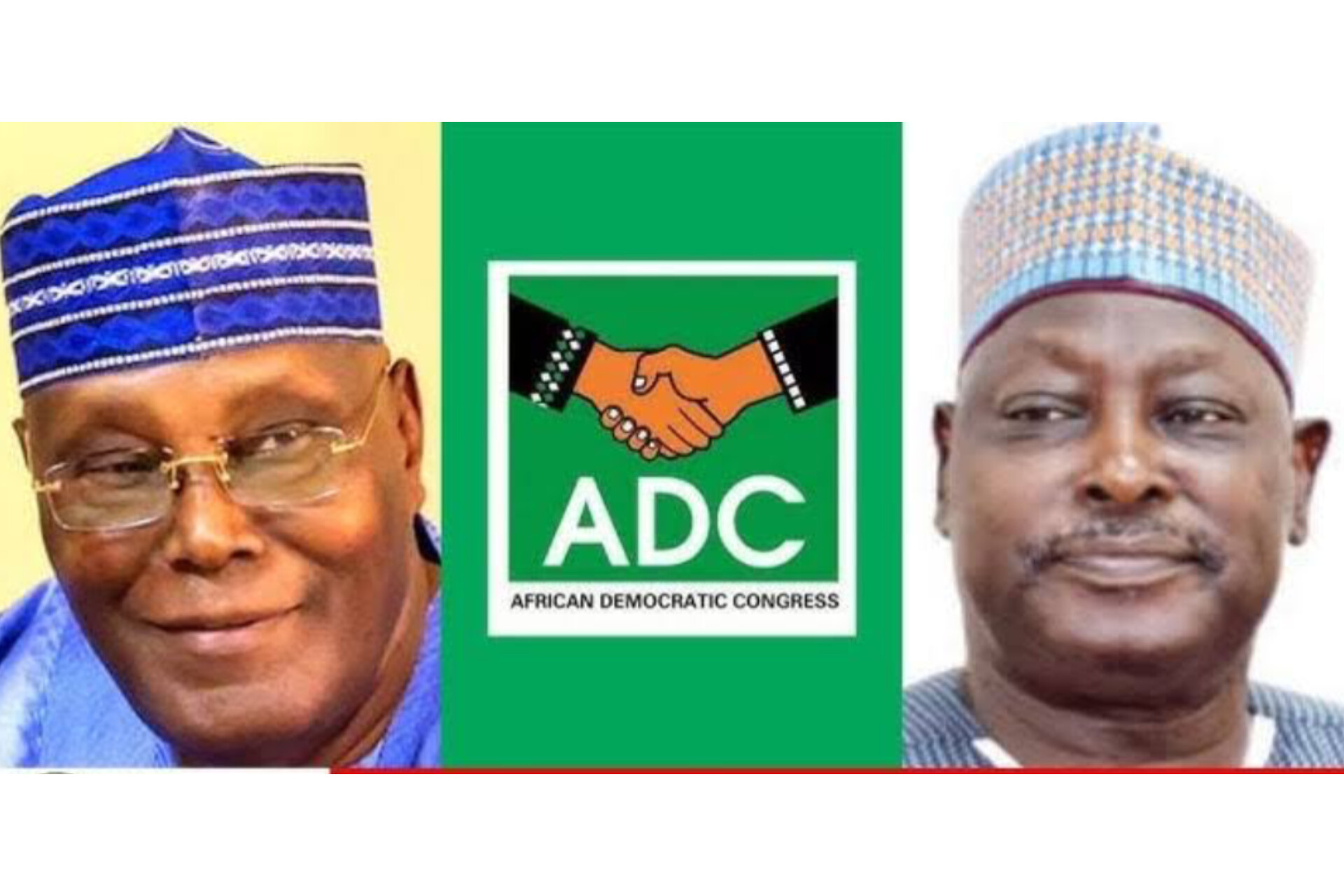
•Atiku Abubakar and Babachir Lawal
Former vice president and presidential candidate of the African Democratic Congress (ADC), Atiku Abubakar, has responded strongly to comments made by former Secretary to the Government of the Federation, Babachir Lawal, following his resignation from the party over the outcome of the ADC presidential primaries.
Lawal, who quit the ADC, alleged serious irregularities in the party’s recently concluded primaries, which he said were skewed in favour of Atiku, reports Daily Independent.

Atiku’s reaction was contained in a statement by his Senior Special Assistant on Public Communication, Phrank Shaibu.
Atiku described Lawal’s remarks as “emotionally driven” and lacking in verifiable evidence, insisting that the claims made against the party’s internal electoral process were unsubstantiated.
Atiku stated that while the party would ordinarily not dignify what he termed political grievances with a response, the seriousness of allegations raised against the integrity of the ADC primaries and its members made clarification necessary.
According to him, the primaries were conducted across structures nationwide, producing a clear outcome reflective of delegates’ participation, adding that no credible evidence had been presented to support claims of manipulation or irregularity.
He said the assertions attributed to Lawal amounted to personal opinion rather than fact-based criticism, stressing that no documents, witnesses, or verifiable proof had been provided to substantiate the allegations of electoral malpractice within the party.
Atiku also drew attention to what he described as inconsistencies in Lawal’s position, noting that while the former SGF questioned the credibility of the process at the national level, he did not raise objections in constituencies where outcomes were favourable to individuals linked to him.
He argued that such selective interpretation of electoral outcomes undermines the credibility of the claims being made, insisting that democratic contests must be assessed holistically rather than through personal or sectional interest.
The statement further addressed Lawal’s comments on political leadership and electoral conduct, urging restraint in public discourse and warning against rhetoric that could inflame divisions within the political space.
The former vice president maintained that the ADC presidential primaries were conducted within established party guidelines and reflected the participation of delegates across different levels of the party structure.
He added that dissatisfaction with outcomes does not equate to evidence of manipulation, emphasizing that disagreement is a normal part of democratic competition.
The statement also responded to Lawal’s criticism of the party’s presidential candidate, Atiku Abubakar, arguing that political discourse should focus on policies, leadership records, and national issues rather than personal attacks.
Atiku said public attention should be directed toward the country’s broader challenges, including economic pressures, insecurity, unemployment, and social welfare concerns affecting citizens across the country.
Atiku said he remains focused on national unity and economic reforms, adding that he’s a politician with a long-standing record in public service and private sector engagement.
According to him, attacks on personalities rather than ideas reflect frustration over political outcomes rather than substantive disagreement over governance direction.
The statement also referenced what it described as contradictions in Lawal’s public comments, particularly his critique of the primaries alongside expressions of acceptance of outcomes in certain constituencies involving his associates.
Atiku maintained that such positions raise questions about consistency and principle in political engagement.
He added that democracy is rooted in participation and acceptance of outcomes, noting that electoral contests inevitably produce winners and losers.
Atiku also cautioned against the use of identity-based or divisive narratives in political disagreements, stressing that such approaches do not contribute to national development or political stability.
He said Nigeria’s current challenges require constructive engagement and policy-driven debate rather than personal grievances or allegations lacking evidence.
He also maintained that political disagreements, including resignations, are part of democratic expression but should be communicated responsibly.
The controversy followed the resignation of former Secretary to the Government of the Federation, Babachir Lawal, from the ADC, citing dissatisfaction with the conduct of the party’s recently concluded presidential primaries.
In a statement issued today, Monday, June 1, 2026, Lawal alleged that the exercise was characterized by irregularities which, according to him, compromised internal democratic principles within the party.
He claimed that the process did not reflect fairness at various levels and expressed concern over what he described as silence among party stakeholders following the outcome.
Lawal said he could not remain in a political platform where, in his view, legitimate outcomes were allegedly undermined.
He stated: “I am exiting the ADC because its just concluded primaries were at all levels massively rigged in favour of Kachalla Abubakar Atiku.”
He further alleged a lack of internal resistance within the party, suggesting that acceptance of the outcome by members indicated tolerance for what he considered flawed processes.
Lawal also declared that he would not support Atiku Abubakar’s 2027 presidential ambition, arguing that such support could weaken broader efforts aimed at political change ahead of the general elections.
He expressed concern that political alignments around the former vice president could ultimately strengthen the ruling All Progressives Congress (APC) ahead of the polls.
In his remarks, Lawal questioned the direction of political leadership choices and urged a focus on competence and capacity in addressing Nigeria’s challenges, particularly insecurity and economic hardship.
He also announced a temporary withdrawal from active political participation, stating that he would consult with associates before determining his next line of engagement in national politics.