TITILOPE JOSEPH reporting
The cries of five children rescued from the clutches of a trafficking syndicate in Plateau State, echo the alarming rise of child trafficking in Nigeria. Among the rescued was two-year-old Blessing, taken from her home under the guise of being cared for by a trusted family friend, reports Saturday Independent.
Her case, along with others, now show a disturbing trend that the menace of child trafficking is no longer confined to the shadows but is now entangled with some religious leaders, organised syndicates, and complicit institutions.

In December 2024, the Nigeria Police, acting on intelligence reports busted a child trafficking syndicate operating in Jos, Plateau State. The group, led by Pastor Dayo Bernard of the End Time Army Ministry, had reportedly abducted and sold 13 children, earning millions of naira in the process.
The pastor’s involvement shocked many, as the institution he represented is one often trusted by families for guidance and protection.
Child trafficking has reached an alarming level in Nigeria, with syndicates increasingly using deceit and force to exploit vulnerable children.
Many of these children are trafficked for sexual exploitation and they are often forced into commercial sex work or used to produce child sexual abuse material.
Some are forced into child labour as they were made to work on construction sites, factories, mines, or as domestic servants under inhumane conditions while some are infused into the begging rings whereby children are placed on the streets to beg or commit petty crimes like theft.
One of the most popular trends now is the illegal adoption as infants and toddlers are stolen from their families and sold to unsuspecting couples for exploitation.
Recent incidents in Plateau State have shown how traffickers are employing the facade of religion to mask their crimes.
Pastor Dayo’s syndicate sold children for prices ranging between ₦350,000 and ₦750,000. While all 13 children were eventually rescued and reunited with their families, the trauma and scars left on these young victims remain immeasurable.
Religious leaders are seen as moral compasses in Nigerian society, often entrusted with the welfare of families and communities. However, recent revelations about some leaders’ involvement in child trafficking have shaken this trust.
The Plateau State Commissioner for Women Affairs, Mrs. Panglang Dafur, has disclosed that some religious leaders and institutions are complicit in child trafficking.
Similarly, Reverend Dr. Amos Mohzo, President of the Church of Christ in Nations (COCIN), called on religious leaders to use their pulpits to raise awareness about the dangers of trafficking and to address the societal factors that make it possible.
“Trafficking is an ungodly act,” he declared. We must protect our children and prevent this heinous crime from thriving in our communities.”
The Nigeria Police Force has played a critical role in dismantling trafficking syndicates and rescuing victims.
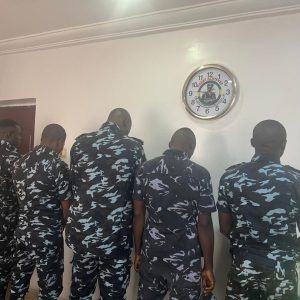
In the case of the Plateau syndicate, swift action by law enforcement resulted in the arrest of not only Pastor Dayo but also other accomplices, including Rita Agboeze, Victoria Ugwu, and Peter Ukwuani.
The Force Public Relations Officer, ACP Olumuyiwa Adejobi, commended the collaborative efforts of police units and emphasised the need for intelligence-driven strategies to combat organised crime.
“This particular operation also highlights the success of the Joint Task Force, which acted on credible intelligence to foil the syndicate’s operations.
Despite these efforts, law enforcement faces significant challenges, including inadequate resources, corruption, and the sheer complexity of trafficking networks that often span across states and even borders.
Also, the National Agency for the Prohibition of Trafficking in Persons (NAPTIP) has been at the forefront of the battle against child trafficking.
Since its establishment under the Trafficking in Persons (Prohibition) Law Enforcement and Administration Act of 2003, NAPTIP has made strides in prevention, enforcement, and victim rehabilitation.
Key accomplishments of NAPTIP include: advocating amendments to laws to increase penalties for traffickers.
Educating communities about the dangers of trafficking and the tactics used by syndicates as well as providing counseling, education, and vocational training for rescued children.
The agency has also been partnering with police, Customs, and Immigration to track and dismantle trafficking networks.
However, the agency has repeatedly called for greater support from the government and international organisations to sustain its operations.
The sharp rise in child trafficking demands a coordinated response that addresses the root causes while dismantling trafficking networks.
In curbing this menace, there is need for strengthening law enforcement; as the government must ensure that anti-trafficking laws are enforced rigorously. Complicit officials and traffickers must face the full weight of the law, with no room for impunity.
Religious and community leaders must take proactive roles in raising awareness and reporting suspicious activities. Families should be educated on how to identify and avoid trafficking schemes.
Meanwhile, poverty can be a major driver of child trafficking. There is a need for programmes that provide financial support, education, and job opportunities for vulnerable families so as to reduce the risk of exploitation.
Rescued children must also be given comprehensive care, including trauma counseling, education, and reintegration into society. This will help break the cycle of exploitation.
With trafficking often crossing borders, Nigeria must strengthen ties with other nations and international organizations to combat transnational trafficking.
Meanwhile, Governor Caleb Mutfwang of Plateau State has promised decisive action against traffickers, urging parents to take responsibility for safeguarding their children. “This is not just a crime but a betrayal of our values as a people,” he stated.
The fight against child trafficking is not just the responsibility of the government or law enforcement—it requires a collective effort from every Nigerian. Families must be vigilant, communities must hold one another accountable, and leaders must prioritise the welfare of children.
As the Plateau’s rescue operation showed, it is possible to defeat trafficking syndicates when agencies like NAPTIP, the police, and community leaders work together.
However, the scars left on victims cannot be ignored. Their stories are a reminder of the urgency to protect Nigeria’s most vulnerable citizens from this growing menace.
Child trafficking is more than a crime; it is a direct assault on the future of the nation. To end it, every Nigerian must stand united, rejecting greed, complicity, and exploitation in favour of justice, and humanity.