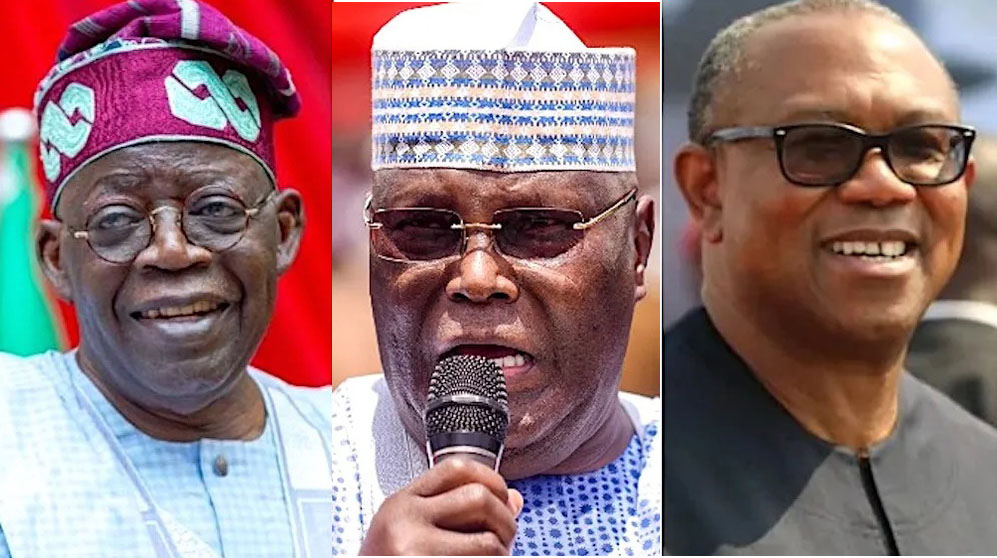
•Tinubu, Atiku and Obi
The 2027 presidential race has entered a curious phase. Although the Independent National Electoral Commission (INEC) officially opened the campaign window for presidential and National Assembly candidates on August 19, the expected political fireworks have yet to fully materialise.
With the January 16, 2027 elections barely four months away, the relative quietness has triggered questions among political stakeholders and raised concerns about whether political parties are deliberately pacing themselves or losing valuable time.
For the opposition parties, however, the apparent lull may be more deliberate than accidental, reports Daily Independent.
While the All Progressives Congress (APC) has constituted its Presidential Campaign Council and is gradually activating its campaign machinery, several opposition parties are still working on their campaign structures, alliances and strategies for confronting the ruling party.
One of the parties taking a measured approach is the Nigeria Democratic Congress (NDC), whose presidential candidate is Peter Obi.
The party says it is preparing to rewrite the conventional rules of political campaigning in 2027 by combining traditional grassroots mobilisation with technology, town-hall engagements, multimedia communication and other innovative methods.
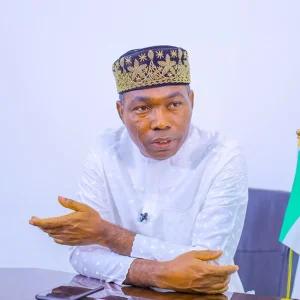
The NDC’s National Publicity Secretary, Osa Director, in an interview on the party’s preparations for the election, explained that the party had deliberately resisted the temptation to rush out its campaign structure before ensuring that all the necessary components were properly put in place.
According to him, the objective is to avoid making premature announcements that could later be reversed or altered.
“We always want to get it right. We don’t want a situation where we send out the list of our presidential campaign council and have to withdraw it,” he said.
His explanation offers an insight into why the NDC, despite the formal commencement of campaigns, has not yet unleashed the kind of nationwide rallies traditionally associated with Nigerian presidential contests.
Rather than viewing the delay as a sign of weakness or lack of preparedness, the party says it is using the period to fine-tune its structures, messaging and mobilisation strategy.
Director said the NDC wants its campaign structure to reflect the political identity it is seeking to establish and does not intend to simply replicate the methods employed by older political parties.
He said the party was carefully scrutinising its proposed campaign architecture before unveiling it publicly.
The NDC’s strategy, he stressed, will not be built solely around large rallies and massive crowds.
“We have a multimedia and multidimensional channel to do our campaign,” he said.
That strategy has already been demonstrated, according to the spokesman, by the town-hall meeting organised in Port Harcourt, which he described as an example of the type of direct engagement the party intends to pursue in reaching voters.
“You saw the town hall meeting that took place in Port Harcourt, so these are the kind of decent ways we do our campaigns and you will soon experience our campaign rallies,” Director said.
The implication is that the NDC intends to combine physical mobilisation with digital platforms and direct conversations with citizens, potentially targeting a younger electorate that increasingly consumes political information through social media and other online channels.
The party’s approach comes at a time when opposition parties are under pressure to demonstrate that they can move beyond the traditional politics of rallies, slogans and party structures and offer voters a credible alternative ahead of 2027.
AN ACE UP THEIR SLEEVE
Director was emphatic that the NDC’s campaign would not be “business as usual”
But the NDC is not alone in adopting a cautious approach.
A stakeholder in the African Democratic Congress (ADC), who spoke with our correspondent on condition of anonymity, said launching an aggressive campaign too early could expose opposition parties to unnecessary pressure from the ruling party.
According to the stakeholder, the election is still about four months away, making it strategically unwise for opposition parties to expend their political and financial resources too early.
He argued that an extended campaign could wear down the opposition before the real contest begins, particularly given the enormous resources and institutional advantages available to the ruling party.
“Starting the campaign early would amount to exposing the party. The election is still about four months away and early campaign will wear the party out before the main election,” the stakeholder said.
He added that the opposition would not want to “play into the trap” of a ruling party with access to federal structures and considerable political resources.
His position, he said, reflects the thinking among some opposition stakeholders who believe that timing could be critical to their chances in 2027.
Other opposition figures who spoke with our correspondent on condition of anonymity expressed similar views, arguing that there was little advantage in exhausting their political structures and finances several months before election day.
For them, the current period should be used to strengthen internal structures, mobilise quietly, resolve outstanding political differences and develop campaign messages before launching a full-scale offensive.
DANGEROUS STRATEGY
Political campaigns are not only about rallies. They involve introducing candidates to voters, explaining policies, establishing grassroots structures, recruiting agents, mobilising supporters and building the networks required to translate popularity into actual votes.
Every week spent preparing is also a week lost for voter engagement.
This is particularly important for opposition parties challenging an incumbent with an established national political structure.
The APC controls the federal government and has governors, legislators, ministers and party officials spread across the country. Its candidate, President Bola Tinubu, also has the advantage of incumbency and the visibility that comes with occupying the nation’s highest political office.
The opposition, by contrast, must simultaneously sell its candidates, define its alternative policy agenda, mobilise voters and convince Nigerians that it has the organisational capacity to govern.
This explains the delicate balance opposition parties are attempting to strike: campaign early enough to build momentum but not so early that their structures become exhausted or vulnerable before election day.
ONGOING TALKS
The issue is further complicated by continuing efforts among opposition parties to forge some form of cooperation ahead of the election.
The African Democratic Congress (ADC), the NDC, Peoples Democratic Party (PDP), Allied Peoples Movement (APM) and other opposition platforms have been involved in discussions around cooperation and possible strategic alliances.
The G-100 opposition initiative recently brought representatives of opposition parties together in Abuja to begin discussions on a framework for opposition cooperation and coordination. The talks have revived the debate over whether the opposition should eventually settle for one presidential candidate or allow several candidates to contest separately.
The absence of major opposition presidential contenders, including Atiku Abubakar and Peter Obi, from that particular meeting also underscored the difficulty of achieving a common opposition platform.
For the NDC, however, the immediate emphasis appears to be on building a distinctive campaign around Obi rather than rushing into the conventional campaign model.
At the centre of the party’s political proposition is its presidential candidate, whom Director presented as an alternative leadership choice capable of changing what he described as a recurring pattern in Nigeria’s political leadership.
A DIFFERENT NARRATIVE
He said the NDC wanted to offer Nigerians a fundamentally different political narrative.
“The Aso Rock Villa has been turned into a retirement home for ailing presidents and that is why we are struggling to change the narrative by presenting the brightest, smartest, perfect candidate in the race, Peter Obi. We want to be different this time around,” he said.
The statement is likely to form part of the NDC’s wider campaign narrative as the party seeks to distinguish Obi from President Tinubu and other contenders.
But while the NDC’s unconventional strategy could help it stand out, it also faces the practical challenge of translating innovation into votes.
Nigeria remains a vast and politically diverse country where physical structures, local networks, party agents and grassroots mobilisation continue to play major roles in elections.
A campaign driven by multimedia platforms and town halls may generate considerable public attention, but the NDC will still have to demonstrate that it has the organisational capacity to reach voters across the country and protect its votes at polling units.
That is the broader dilemma confronting the opposition.
UNCERTAINTIES AND DILEMMAS
Starting too early could exhaust resources and expose weaknesses. Starting too late could allow the ruling party to dominate the political space and establish an advantage that may become difficult to overcome.
The APC itself has not yet embarked on a full-scale nationwide presidential campaign despite having constituted its campaign council.
President Tinubu was named chairman of the APC Presidential Campaign Council, Vice President Kashim Shettima vice chairman, while former Zamfara State governor Abdul’aziz Yari was appointed Director-General.
The ruling party has explained its measured approach as part of efforts to properly organise its campaign strategy rather than rush into rallies.
President Tinubu’s recent foreign trip has also generated political speculation because it coincided with the early campaign period.
The presidency announced that the president travelled to Europe for a three-week annual vacation, describing it as a working vacation and stating that he would return to participate in the 2027 campaign.
There is, however, no credible evidence that the trip was prompted by a medical emergency or that it is responsible for the relatively slow start to the APC campaign. Any attempt to directly link the trip to a health crisis remains speculative.
What is clear is that the president’s temporary absence has created a period in which opposition parties could attempt to dominate the political conversation.
Whether they can exploit that opening will depend largely on how quickly they resolve their differences and activate their respective campaign structures.
ANALYTICAL LAPSES
Assistant Inspector General of Police (AIG) Nwazue Arungwa, mni (rtd), a chieftain of the Labour Party (LP) in Abia State, told our correspondent at the weekend, that parties have not been presenting to Nigerians data-driven policy directions on how they will administer the nation, if they are given the opportunity to rule.
Hear him: “Obviously opposition political parties are not articulating ideological alternatives as they are not keen in presenting coherent data driven economic, social, agriculture, security, health and educational blueprints. “Thus, the default of their campaigns is on generic criticism of the ruling party.”
Arungwa, however, stressed that there are obviously signs of something different from previous political campaigns.
This, he added, is predicated on the fact that the civil society organisations, youths, professional bodies and many influential groups are calling for an inspired political reality that has a clear understanding of the unique Nigerian complex governance that should prioritise eradicating poverty, create employment, develop agriculture, provide amenities.
Barrister Olalekan Festus Ojo, a Lagos-based human rights lawyer and a strong advocate of social justice said that the 2027 campaign season opened with a political landscape that is simultaneously more crowded, more digitally active, and paradoxically less substantively inspiring than any previous electoral cycle in Nigerian history.
TRADITIONAL PATHS
Barrister Ojo, the Managing Partner, Platinum & Taylor Hill LP, one of Nigeria’s leading law firms, who also spoke with Sunday Independent, said that what political parties are doing is largely familiar and deeply disappointing.
He described their activities so far as defection choreography, billboard wars, rally mobilisation through monetary inducements, and the recycling of political personalities whose records Nigerians already know and have already evaluated.
Ojo stated: “The APC is deploying incumbency advantages with characteristic aggression. The opposition remains frustratingly fragmented, unable to consolidate around a single credible alternative that genuinely excites the electorate.
“What is conspicuously absent, and what previous elections also lacked, is genuine policy competition. No party has presented a detailed, costed, credible economic recovery blueprint that speaks directly to the cost-of-living crisis devastating ordinary Nigerian households daily.
“However, one genuinely different dimension exists, the digital campaign space. Social media campaigning, podcasts, town halls, and youth-driven political commentary are creating unprecedented grassroots political conversations that bypass traditional party structures entirely.
“The Arise TV Town Hall demonstrated that issue-based electoral engagement is possible and popular.
“The electorate, particularly Nigeria’s enormous youth demographic, appears more politically conscious, more economically frustrated, and more capable of independent political judgment than in previous cycles.
“Whether parties rise to meet that consciousness with substance, rather than sentiment will determine whether 2027 represents genuine democratic progress or another expensive exercise in electoral theatre.”
Dr Bolaji O. Akinyemi, a Christian activist and Apostle of nation building, believes there are several activities already, although they are not fundamentally different from party to party.
Dr Akinyemi, the Convener, The Apostolic Round Table (ART) and Chairman, Board of Trustees (BoT), Project Victory Call Initiative, aka PVC Naija, stated: “Parties are becoming more visible, with policy promises around security, agriculture, jobs, education and welfare, and some candidates are beginning to sign compact and articulate measurable programmes.
“But the electorate is still waiting for something deeper: a compelling reason to believe politics can improve their lives.
“The dominant language remains rallies, alliances, personalities, and attacks, rather than sustained citizen engagements, debates, evidence and measurable commitments. The fractured opposition also limits the emergence of a truly new political narrative.
“So far, the packaging is changing more than the political culture, and what must shift is the culture, from campaign focused democracy to structured Performance Democracy.”
Professor John Ebhomien, an economist and financial expert, said with campaigns now underway for 2027 general elections, political parties are doing some things differently — but the core playbook still looks familiar.
RALLIES AND MOBILISATION
Professor Ebhomien, a chieftain of the All Progressives Congress (APC), and a former Consultant to the United Nations Office on Project Services, explained that so far the political parties are doing early mobilisation.
According to him, “They are carrying out rallies, ward tours, and digital outreach started this week, instead of waiting till late 2026. Parties are using WhatsApp, TikTok, and influencers more to reach under-40 voters.”
He also stated that the political parties are still at the issue framing stage, adding, “There is more talk on inflation, power, security, and jobs in manifestos compared to 2023.
“The subsidy and cost-of-living debate is forcing parties to at least sound policy-heavy.”
Ebhomien also spoke on youth/women optics,stressing that “More young faces are seen on campaign posters and there are more promises about tech, startups, and inclusion.”
Hon. Shola Omolola, the National Secretary of The Progressives, a grassroots mobilisation group of the All Progressives Congress (APC), stated: “Most political parties are not doing enough to inspire the electorate beyond rallies and slogans.
“The focus is still on money, endorsements, and “structure” instead of town-hall debates, policy clinics, and direct engagement with youths, women, traders, artisans and other stakeholders.”
On what will be different in 2027 from what obtained in the past, Hon. Omolola, identified three things.
First, he identified digital-first campaigns, saying, “The Digital platform is more in use now. Platforms like Facebook, TikTok, WhatsApp, TV, and influencers now lead messaging space.”
Bishop Dr Herbert Ekechukwu, a church leader and a public affairs analyst, stated: “The question is: What are the politicians doing or not doing to win election 2027?
“What are they doing? They are into digital and grassroots mobilisation. They are on Tik tok, WhatsApp and various social media mobilising and creating awareness.
“They are into personal and grassroots awareness programmes, including personal telephone calls, town hall meetings, churches and mosque mobilisation.
“Secondly, they are projecting issue-based discussions. Discussions have been centred on agriculture, economy, cost of living, job creation, insecurity and youth empowerment. Voters are demanding result demonstration.
“Thirdly, coalitions and defections have taken a more frequent turn. The mobility rate of defectors from one party to another is very high. We are also seeing cross party alliances and high-profile defections.”