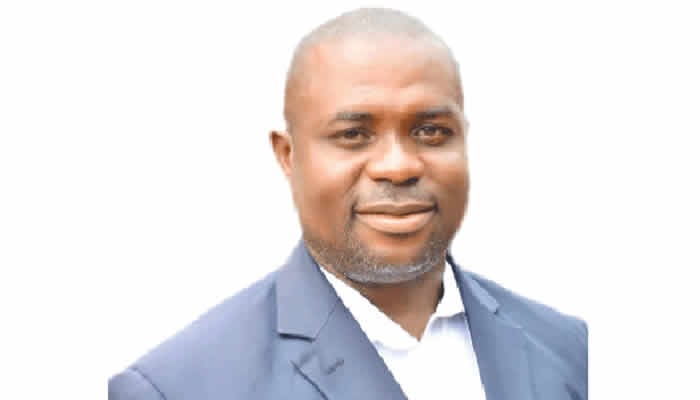
•Titus Alagba
The Continental Chairman of the Nigerians in Diaspora Organisation Africa, Titus Alagba, speaks about the challenges facing Nigerians living across African countries, reports Saturday PUNCH.
Excerpts:

What role do the Nigerians in Diaspora Organisation play in advancing the collective interests of Nigerians overseas?
The main objective of NIDO, established by the Federal Government of Nigeria during the administration of former President Olusegun Obasanjo, is to harness the skills and cultural heritage of Nigerians abroad.
Before its creation, different diaspora associations were operating under various names in different countries.
However, in 2000, a meeting was held in the United States, where stakeholders deliberated and agreed to form NIDO. It went through the National Assembly and was formally gazetted as the umbrella body for all Nigerians in the diaspora.
NIDO has a chairman for each continent. I serve as the chairman for Africa. Each African country has its own national chapter president, and there is a global coordinating chairman. We all work together with the mission of contributing to Nigeria’s development with the knowledge and exposure we have gained abroad. We have recorded notable achievements.
In fact, NIDO played a major role in advocating for the establishment of the Nigerians in Diaspora Commission.
How does NIDO differ from NIDCOM in operation?
NIDCOM serves as the Nigerian government’s liaison with citizens living abroad. There is nothing NIDO does without collaborating with NIDCOM. They partner with us at all levels, especially during Diaspora Day, which is celebrated every July 15. NIDCOM is mandated by law to coordinate the affairs of Nigerians in the diaspora. It has government funding. For instance, during the crisis in Sudan, the NIDCOM chairman facilitated the evacuation of stranded Nigerians and arranged for some students to continue their education in Nigeria. NIDCOM is also involved in rescuing victims of human trafficking. They handle several critical interventions.
There have been reports of factional disputes within NIDO. What is responsible for this?
Factional issues are not new to us. There are factions in Europe, America, and Africa. The problem is largely due to power struggle.
Some people do not want to follow laid-down rules and structures. They are impatient and ambitious. They mislead the public, but our members know the difference between genuine NIDO and impostor groups.
There are reports of Nigerians trapped in Libyan prisons or being sold into slavery. What is your take?
I’m aware of it, and it is heartbreaking. Most of these cases stem from human trafficking, which both NIDO and NIDCOM are working hard to reduce. Sadly, it is a global problem.
Some Nigerians are deceived by traffickers, who promise them a better life abroad. They are lured with sweet words, only to arrive in these countries and realise the promises were lies. They then become trapped in modern-day slavery, unable to return home.
The same thing is happening here in Monrovia, Liberia, where I live. Many Nigerians are stranded due to trafficking. In Ghana, you will find teenage Nigerian girls, as young as 15 to 17 years old, involved in prostitution. When you ask how they ended up there, they say they were promised good jobs in Nigeria by agents. It is a very sad situation.
Some Nigerians in foreign prisons are there because they violated the laws of their host countries. You cannot behave illegally in another man’s land and expect to go free. This is why I believe Nigerian immigration authorities must do better. People should be properly screened before travelling.
Similarly, some Nigerians attempt to cross the desert to reach Spain but end up stranded in Libya.
Nigerians must think carefully before embarking on such risky journeys. If an agent asks you to pay millions of naira for travel but is not going with you, ask yourself why. The two or three years people waste trying to cross the desert could be used to build something meaningful at home.
We have a case here in Liberia where a man collected N3m from someone, promising to take him to Spain, but abandoned him in a hotel in Monrovia. That was four years ago, and the victim is still stranded.
Nigeria’s orientation agencies must intensify public education. If you want to travel, do it legally and with dignity. Do not settle for illegal routes because they appear cheaper. At the end of the day, you will lose your money, your time, and sometimes your life.
Nigerians continue to face xenophobic attacks in South Africa. What measures can protect our citizens and reduce tensions?
Firstly, some of these problems are caused by our own people. Take it or leave it, Nigerians can be too boastful. We draw unnecessary attention to ourselves in host countries, and this is not only in South Africa; it happens everywhere.
These locals see you arrive in their country wearing bathroom slippers, and within two or three days, you are already sitting publicly with a table full of beers, wines, and all sorts of drinks. Where did the money come from? This kind of behaviour stirs resentment.
Some will be drinking and flirting with other men’s wives or girlfriends. Even when these women tell them they are married or engaged, they still lure them with money.
Some Nigerians engage in drug peddling. Some are fraudsters operating in another man’s land. They spend money recklessly. You cannot make legitimate money and lavish it carelessly.
The purpose of travelling to a host country should be to obey its laws, but some of our brothers break them. When you look at drug trafficking statistics, Nigerians, unfortunately, rank high. No host will tolerate strangers who destroy their home.
While we condemn xenophobic attacks against Nigerians in South Africa, our people must also be cautioned. We are in someone else’s land, not our own. We must behave responsibly.
The same applies to other African countries. I am here in Monrovia, and although there are no killings, Nigerians are misbehaving. We need to talk to them so they can be good ambassadors.
Some argue that Nigerians face hostility because they are seen as too competitive or as “taking over” jobs and businesses. How valid is this perception?
You have a point. But what I’m saying is this: as much as we are hardworking, we must also understand diplomacy. When Europeans came to Africa, they exploited us without us realising what they had taken. When we go abroad, we can make our money legally without drawing attention. There should be a limit.
We should know how to integrate peacefully, get what we need, and leave without spilling blood. But some of our people will boast to their hosts, saying, “There is nothing you can do, your country is in my pocket.” Imagine a stranger telling you that in your own country. How do you expect them to react?
Take the recent case in Ghana, how can someone go there and declare he wants to create his own kingdom? That is unnecessary noise.
I have travelled across many African countries and seen how our brothers behave. Many are not protecting our image. All forms of vice, including human trafficking, fraud, and drug smuggling by some Nigerians abroad, are tarnishing Nigeria’s image.
We are everywhere: Togo, Ghana, Ivory Coast. Two years ago, some Nigerians returned from Canada and said flight tickets were cheaper from Togo. They went there and got arrested. They were detained until one of them provided information. I had to contact NIDCOM, and they got the Nigerian embassy involved before their release. But they were already labelled as fraudsters.
Such affects our national image. At border posts, when others are being checked normally, once they see your Nigerian passport, they put you aside and search you twice. I don’t even blame them sometimes; they do it because of past experiences with Nigerians involved in drugs and other crimes.
How do you cater to the welfare of your members?
I have visited Nigerians in Sierra Leone, Togo, Côte d’Ivoire, Benin Republic, and other neighbouring countries to see how our people are living. Other NIDO presidents also send me reports from countries I cannot visit. We do this to ensure our members are safe and conduct themselves with dignity in their host countries.