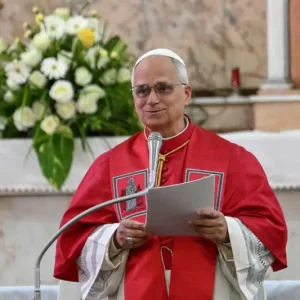
•Convicted IPOB leader, Nnamdi Kanu
Several Igbo Diaspora organisations have criticised the United Kingdom government over what they described as “silence and complicity” in the recent life imprisonment of British citizen Nnamdi Kanu by Nigeria’s Federal High Court.
The joint statement, issued by the American Veterans of Igbo Descent (AVID), Ambassadors for Self-Determination (ASD), and Rising Sun Foundation (RSF), decried the UK’s failure to respond to Kanu’s illegal rendition from Kenya in June 2021 and his subsequent trial under a repealed law, reports Daily Independent.

“The UK government has abandoned one of its own citizens,” said Dr. Sylvester Onyia, president of AVID. “A British passport holder was abducted abroad, tried under a repealed statute, and sentenced to life imprisonment, yet London remains silent. This silence is deeply troubling and undermines the credibility of the UK’s human rights posture.”
Kanu, leader of the Indigenous People of Biafra (IPOB), was sentenced on November 20, 2025, despite a binding Court of Appeal acquittal issued on October 13, 2022. According to the briefing note, his rendition violated the UK–Nigeria Extradition Treaty, the European Convention on Extradition, the UN Convention Against Torture, and Nigerian laws prohibiting the trial of renditioned suspects.
“When other governments unlawfully detain British citizens, the UK is vocal,” said Evans Nwankwo, president of ASD.
“But in this case, it is silent. The message sent to Kanu, the Igbo Diaspora, and the world is one of tacit endorsement of injustice.”
The Diaspora groups emphasised that Kanu’s political advocacy is peaceful and legally protected under UK law, noting that IPOB is formally registered in the United Kingdom. They also warned that Britain’s silence sets a dangerous precedent, implying that the rights of UK citizens can be overridden by realpolitik.
“The UK must act,” said Maxwell Dede, director of RSF.
“Immediate diplomatic engagement, consular access, sanctions review, and parliamentary scrutiny are non-negotiable. Silence here is complicity.”
The statement also criticised perceived ethnic bias, suggesting the UK’s inaction reflects long-standing neglect toward Igbo self-determination movements.
The groups drew parallels to Britain’s role during the 1967–1970 Biafran War, calling the silence “alarming” and “contrary to the country’s image as a custodian of human rights.”
While the Nigerian government maintains that Kanu’s trial followed due process and national security concerns, the diaspora organisations have called on the UK Parliament to launch an inquiry and to ensure the 2022 appellate judgment is respected. They also appealed to the international community, including the United States, to monitor Kanu’s health and detention conditions.
“This is not merely a Nigerian issue — it is a test of UK values,” Onyia added. “Due process, human rights, and protection of citizens are non-negotiable. The world is watching, and the UK must act.”