


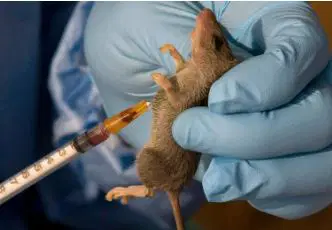
•Lassa fever
Nigeria’s health-security system is facing a fresh test as Lassa fever, cholera and diphtheria expose dangerous gaps in disease detection, laboratory capacity, treatment, immunisation, sanitation and community surveillance.
The revelation comes amid a cholera outbreak that has produced more than 65,000 suspected cases across 35 states and about 195 Local Government Areas this year, according to the Nigeria Centre for Disease Control and Prevention, reports Daily Independent.

Despite a decline in weekly cases, the NCDC has warned that transmission remains ongoing and that Nigeria could face another surge between late August and October as the rainy season continues.
Flooding, unsafe water and poor sanitation threaten to reverse hard-won gains, raising fresh concerns over whether Nigeria is adequately prepared to stop outbreaks before they become full-blown emergencies.
Similarly, Nigeria recorded 14 new confirmed cases of Lassa fever between August 10 and 16, 2026, bringing the total number of confirmed cases this year to 1,035, with 252 deaths recorded, according to NCDC.
With Lassa fever and diphtheria also placing communities under pressure, public health experts are warning that Nigeria can no longer afford a predominantly reactive approach to disease outbreaks.
Professor Sunday Olajide Awofisayo, Public Health and Biomedical Research Advocate, said the country must urgently move beyond an overreliance on emergency reaction and build a sustainable system capable of detecting, treating and containing outbreaks before they escalate.
His warning comes against the backdrop of continuing Lassa fever transmission, a recurring seasonal epidemic particularly during the dry season.
By Epidemiological Week 8 of 2026, the NCDC had reported cases and deaths across 18 states and 67 Local Government Areas, with Bauchi, Ondo, Taraba, Edo and Benue accounting for more than 80 percent of confirmed cases.
Healthcare workers have also been affected, highlighting continuing weaknesses in infection prevention and control and placing frontline responders themselves at risk.
Diphtheria presents another major threat. Nigeria recorded the highest number of diphtheria cases in the WHO African Region, with more than 12,000 suspected cases, over 8,500 confirmed cases and 884 deaths between January and November 2025.
The NCDC has also disclosed more than 10,000 confirmed diphtheria cases this year, although the case fatality rate has declined considerably compared with the same period last year.
Confirmed cases have been reported across 240 Local Government Areas in 30 states, while inadequate vaccination coverage remains a major driver of continued transmission.
Awofisayo said large numbers of under-immunised and zero-dose children represent a major vulnerability, with vaccine hesitancy, insecurity, displacement, population movement and difficulty reaching underserved communities further undermining protection.
Across the three diseases, he identified a troubling pattern of vulnerabilities: inadequate laboratory capacity and specimen transportation, limited specialised treatment and supportive care, shortages of essential medicines and vaccines, inadequate funding, weak surveillance, insufficient healthcare personnel and infection-control gaps.
The consequences can become deadly when patients arrive late.
Poor recognition of symptoms, self-medication, financial barriers and reliance on informal care continue to contribute to delayed presentation, while late recognition and treatment can significantly worsen outcomes, particularly in Lassa fever.
Cholera, meanwhile, demonstrates the limits of relying on treatment after transmission has already taken hold.
NCDC Director-General, Dr Jide Idris, said the decline in cholera deaths was encouraging but should not create a false sense of security.
He stressed that unsafe water, open defecation, damaged water infrastructure and poor sanitation in schools, markets and other public places remain major drivers of transmission.
The NCDC has strengthened surveillance, laboratory support, case management, infection prevention and control, community engagement and rapid-response operations, while cholera interventions include water-quality assessments, chlorination, rehabilitation of water sources and oral cholera vaccination in high-burden communities.
But Idris warned that federal intervention alone would not be sufficient, urging state and Local Government authorities to commit resources to high-risk communities.
Awofisayo called for continuous training of healthcare workers, expanded and adequately equipped regional laboratories, improved specimen transportation, stronger treatment readiness, real-time surveillance, contact tracing and community-based surveillance in high-risk areas.
He also demanded intensified routine and targeted immunisation, identification of zero-dose children, stronger protection for healthcare workers and predictable domestic funding for outbreak preparedness.
For Awofisayo, preparedness must also be measured by results. Governments and response agencies should publicly report diagnostic delays, laboratory turnaround times, treatment initiation, case-fatality rates, vaccination coverage, contact tracing and outbreak-response times.
Every avoidable death, he argued, should trigger a review of what happened, where the delay occurred, and what must be corrected.
The crucial message is, Nigeria cannot afford to wait for outbreaks to escalate before acting.
“Lassa fever and diphtheria are not merely medical problems; they are tests of our health-security system,” Awofisayo said, stressing the need for action before outbreaks become emergencies.