Against the backdrop of the presumed full deregulation of Premium Motor Spirit (PMS), also known as petrol, which was believed to have led to the hike in the price of the product, last week, the price may go up again very soon, experts have warned.
The experts predicted their warning on further depreciation of the foreign exchange rate and an increase in the price of crude in the international market, reports Sunday Vanguard.
“And the increase in the price of crude is a very high possibility, given what is going on now in the Middle East, the geo-political tensions, the looming war between Iran and Israel”, Dr. Muda Yusuf, a renowned economist and Chief Executive Officer of Centre for the Promotion of Private Enterprise, CPPE, said.
On his part, another economist, Mr Teslim Shitta-Bey, Managing Director of Proshare, said: “The escalation of conflict in the Middle East could lead to rising global oil and gas prices, which could further raise the local retail price of petrol in Nigeria”.
Also speaking, Eze Onyekpere, Lead Director, Centre for Social Justice, CSJ, said the rising cost of PMS will increase the misery and poverty in the country
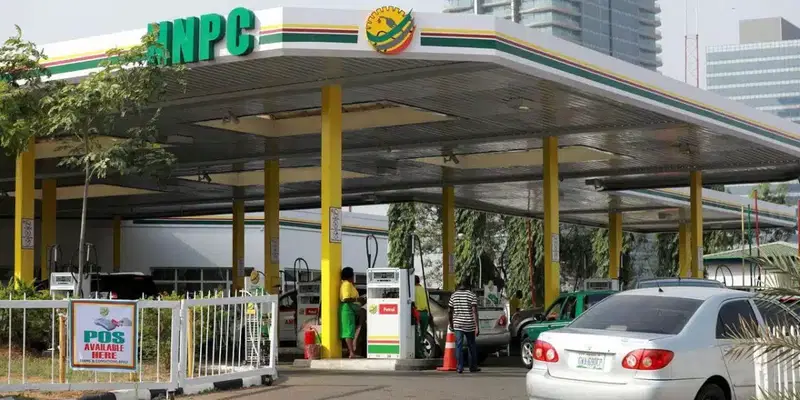
The Nigerian National Petroleum Company Limited, NNPCL, had, on Thursday, raised the pump price of PMS by 15 per cent across Nigeria.
The development confirmed our earlier report that plans were underway to fully deregulate the sector and that subsidy would no longer apply.
However, the complete deregulation effect pushed the price of the product to N1,030 per litre, from N897 in Abuja, while the price rose to N998 per litre, from N855, in Lagos.
Checks by our correspondent indicated that the Dangote Petroleum Refinery price also increased by 8.8 per cent to N977 per litre, from N898 per litre.
The latest price increase made it the second time the petrol price had been hiked in the past month.
This showed that the pump price of petrol has risen by more than 411 per cent since President Bola Tinubu came into office in May 2023.
Specifically, from N195 per litre before the President assumed office on May 29, 2023, the price of the product was increased to N448 (Lagos) and N460 (Abuja) in May 31, 2024; N557 (Lagos) and N617 (Abuja) in September 2024; N610 (Lagos) and N897 (Abuja) in September 2024 before the latest increase to N998 (Lagos) and N1,030 (Abuja) in October 2024.
The latest increase, which came against expectations that the crude-for-Naira deal between the Federal Government and Dangote Refinery might lead to a reduction in the pump price beginning from October 1, 2024, has left many citizens, especially motorists, in anger.
Oil markets
Oil markets were on edge throughout last week, dealing with rumors of an imminent Israeli attack on Iranian oil infrastructure. Ultimately, Israel’s attack failed to materialise. Consequently, Brent futures settled just below the $79 per barrel mark. “Prospects of further PMS price hikes are high if some of the major variables driving prices go up”, Yusuf told our correspondent at the weekend.
“If we see a further depreciation in the exchange rates, that may cause a further hike in price. “If there is an increase in the price of crude in the international market, that may also cause a further hike in price.
“And the increase in price of crude is a very high possibility, given what is going on now in the Middle East, the geo-political tensions, the looming war between Iran and Israel. “So, those geo-political concerns are things that can lead to a further hike in crude oil price which will invariably lead to an increase in PMS price.
“These are the risks that we face when we talk about complete deregulation of PMS price. The risk and the possibilities are very high at this time”.
Caution
Yusuf, who is the immediate past Director General of the Lagos Chamber of Commerce and Industry, LCCI, cautioned, “That is why we have to be extremely careful when we are pushing for a complete deregulation of PMS.
“The economy is highly sensitive, you know, to increases in PMS price. The citizens’ welfare is highly sensitive to movements in PMS prices.
“So, there’s a need to be extremely very careful because of the social consequences of further increases in PMS price”.
Dangote Refinery intervention
On the extent to which Dangote Refinery can ameliorate PMS price hikes, the economist said: “As to what Dangote can do, this is beyond Dangote. “Dangote Refinery is a business entity. It is the condition that we create either in terms of the foreign exchange environment or in terms of the crude oil sales to Dangote, that is what can make any difference in terms of price. “Dangote Refinery, on its own, cannot significantly determine the direction in which prices will go. “The best it can do is to try to be more efficient, try to be more competitive, and take advantage that the refining is taking place here.
“I think that is the best that can happen from Dangote. “If we want any significant impact on price through Dangote, then, the government policy must come into play.
“As to what the government should do with the removal of the subsidy, well, my take is that we should just relax all the pressures the citizens are facing, which may entail a trade-off in revenue.
“We should relax measures, especially around trade, around importation, around taxes.
“If you look at sectors that can impact welfare, on productivity, let us reduce their taxes drastically. Look at sectors that can impact the welfare of the people and business productivity.
“Let us reduce the import duty drastically. So whatever we are getting from this hike, let us give it back. Not through the Federation Account.
“But through concessions, through fiscal policy channels, that way I think the economy will be better. “There is no guarantee that if the government puts this money in the Federation Account, the benefits will cascade down to the people, there is no guarantee. “Many of these state governments have different priorities. Don’t forget, we are talking about the three tiers of government, not just the federal government.
“There’s a limit to which the federal government can dictate to the states and local governments on how they will spend their money. “So, the chances that the benefits will cascade or trickle down to the ordinary citizens that are bearing the burden of this hike in energy are very slim. “This is why I believe that it’s better to give concessions in other areas, particularly around taxes, around importation”.
Disposable incomes
Also weighing in on the issue, Shitta-Bey, addressing how PMS price hikes will impact Nigerians, said: “Rising energy costs have fed into domestic inflation with headline inflation rising to 27.5% in September 2024, according to National Bureau of Statistics (NBS) figures.
“Globally, energy costs have been volatile as a result of geo-political conflicts and changes in demand from economic powerhouses like China.
“In Nigeria, rising petrol cost will raise transport and food costs as distribution and logistics expenses rise. “Monetary policy tightening will be unable to deal with these issues because they are supply-side challenges rather than the consequences of excess money supply.
”Households are in for a harsher spell of falling real disposable incomes. This is Murphy’s law at work, that what can go bad can get worse!”
The Managing Director of Proshare projected that the escalation of conflict in the Middle East could lead to rising global oil and gas prices, which could further raise the local retail price of petrol in Nigeria. However, according to him, if Saudi Arabia and Russia raise their outputs, the rise could be tempered and domestic retail prices in Nigeria may not rise significantly.
He said, “If we can trust public officers, Nigeria’s oil output has increased from 1.4m/bpd to between 1.6m/bpd and 1.7m/bpd.
“The target is 2.3m/bpd in 2025, if this works as desired, rising dollar revenues should increase foreign reserves (roughly at $38bn) and strengthen the naira to dollar exchange rate, which should reduce domestic prices and pull down the domestic cost of PMS, other white oils and gas.
“The probabilities of any set of events occurring must be assessed independently, and objectively. Local factors will be just as important as global.
“I support those calling for a swap arrangement with Dangote Refinery.
“The government can pay for Dangote’s refined crude with unrefined or raw crude oil.
“This means that the government would not need to pay Dangote in naira, and Dangote can hedge against volatility in crude oil prices by having forward contracts in the sale of crude or refined oil with foreign third parties.
“This helps the Dangote Refinery protect itself from exchange rate and price volatility but also helps reduce rapidly changing domestic refined oil prices. “With stable domestic prices for PMS and gas, domestic households are protected from the ‘noise’ of global events as foreign reserves build up slowly, possibly rising to between $48bn and $52bn by H2 2025.
“Dangote Refinery is a for-profit enterprise, in Nigeria’s long-term interest, it should be allowed to operate commercially and viably.
“With the removal of toll-collecting non state actors from roads, transportation and logistics costs can be reduced without disrupting the economic logic of domestic oil refining by Dangote and others.
”Only the government can say how much will be saved from subsidy removal. Any other person would be engaging in speculation.
“Nobody outside the government’s inner circle of knowledge knows the cost of subsidy, so it may be fool hardy to give a figure. “However, less spending on supporting PMS consumption could be redirected to improve strategic roads to reduce farmgate-to-city travel time, increase gas powered public transportation, and improve educational and healthcare infrastructure, simple things.
“Nigerians are hardworking, smart, and entrepreneurial; with the right infrastructure and policy support, they will beat their own paths to prosperity”.
From stagflation to recession
Onyekpere, faulting the NNPCL’s increase of the price PMS, described it “as an exercise founded on dubious and mischievous foundations.”
The CSJ Lead Director, who is a lawyer with specialization in development law, electricity reforms and fiscal governance, added, “To state that the increase arose from increased price of crude oil in the international oil market is a specious argument considering that when the price of crude oil falls, Nigerians have never enjoyed a decrease in price.
“Pray, the deregulated market only applies to increase in price and can never lead to a price reduction when the price of crude oil falls.
“The rising cost of PMS will increase the misery and poverty levels in a country where over 133 million citizens were suffering from multi-dimensional poverty in 2022 before the twin policies of increase in PMS and floatation of the naira started wreaking havoc on the standard of living.
“If the geopolitics of the Israel-Iran conflict escalates, the price of crude oil is likely to increase in the international oil market, meaning that Nigerians will be required to pay more for PMS.
“A government states that it is fighting inflation through monetary policy rate/benchmark increases while at the same time increasing energy costs in PMS and electricity tariffs and still expects reduced inflation figures.
“This is a contradiction; it is absurd and shows the lack of harmony in economic policy planning and implementation.
“It is imperative to reaffirm that for an economy to create value, grow consistently and in a sustainable manner, there should be harmony between fiscal, industrial, labour, monetary, trade, etc., policies.
“This increase in the price of PMS would likely continue the gravitation from stagflation to a real recession
“Dangote Refinery can be managed to reduce the price of PMS if the government offers the refinery a production subsidy – through a slightly reduced price of crude feedstock it buys from NNPC.
“This proposed subsidy is a positive one that is different from the consumption subsidy paid on imported refined petroleum. “Now that all subsidy is gone, it is expected that government will save not less than $7 billion every year.
“It is expected that FGN, states and local governments should invest the savings in critical sectors like education, health and infrastructure rather than increased frivolities expenditure in the executive and legislature”.