The Manufacturers Association of Nigeria (MAN) has said that N3.04 trillion was spent on importation of raw materials for industrial activities in 2023, noting that the manufacturing sector is capable of contributing over 80 percent of the country’s non-oil export if the potentials are properly harnessed.
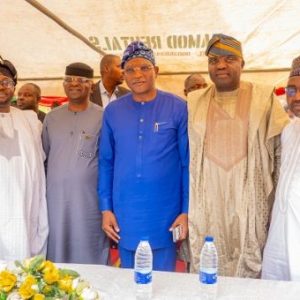
Director General of MAN, Segun Ajayi-Kadir, stated this at a Town Hall Meeting between the Minister of State, Industry, Trade and Investment, Sen. John Enoh, and members and representatives of the Organised Private Sector (OPS), reports Vanguard.
He lamented that the heavy dependence of the nation on imported raw materials for production exposes manufacturers to global market fluctuations.
The event was organised with the aim of initiating transformative conversations to drive Nigeria’s industrial growth.
Ajayi-Kadir described the manufacturing sector as the backbone of the industrial sector, noting that the sector can generate a minimum of $6.72 billion of foreign exchange (forex) for the country.
He said, for instance, that at 46.5 percent of industrial output, the manufacturing sector remains the leading contributor to Nigeria’s industrial sector.
“Despite inherent challenges, Nigeria’s industrial value stood at $118.22 billion in 2023 ranked second in Africa, all thanks to a resilient manufacturing sector which accounted for $55.74 billion.
“Clearly, manufacturing is the most vibrant sector of any industrialised economy, considering its cross-cutting linkages with all other sectors. Indeed, no economy has developed without the formidable role of manufacturing,” he stated.
According to him, manufactured goods are a significant part of a country’s exports, pointing out that “manufacturing has the capacity to contribute over 80 percent of Nigeria’s non-oil export”.
The MAN DG underscored the critical roles that the manufacturing sector play in the nation’s industrialisation and economic development, adding that manufacturing industries are labour-intensive and create numerous jobs, both directly and indirectly.
“No other job creator is bigger than the manufacturing sector,” he emphasised.
Ajayi-Kadir however lamented that despite its immense potentials, the nation’s industrial sector is continually beset with difficulties such as high inflation, poor infrastructure, electricity challenges, high cost of credit, naira devaluation, foreign exchange shortages and multiple taxation, among others.