

Nigeria’s fragile disinflationary gains face renewed pressure as a resurgence in global crude oil prices, driven by escalating military conflicts in the Middle East and disruptions around the strategic Strait of Hormuz, threatens to push up energy and transportation costs.
Analysts and investors are increasingly concerned that crude oil prices above $100 per barrel could reverse some of the progress made in bringing down inflation globally and in Nigeria, potentially forcing central banks to maintain restrictive monetary policies for longer than previously anticipated.
At the beginning of the year, expectations were tilted towards a gradual easing of monetary conditions as inflationary pressures showed signs of moderating across major economies, reports Daily Independent.
However, intensifying geopolitical tensions in the Middle East since late February have significantly altered that outlook.
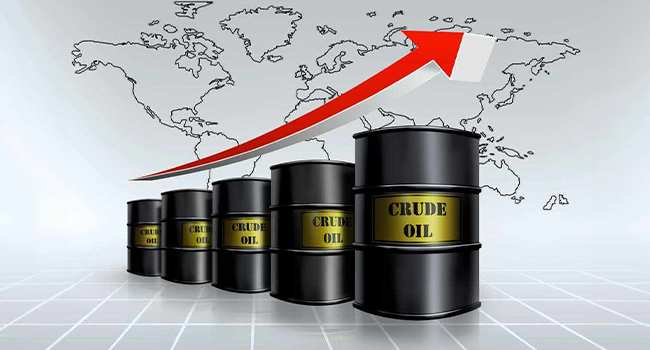
The disruption of global energy supply chains, particularly around the Strait of Hormuz, has triggered a sharp rise in crude oil prices, threatening to weaken the disinflationary momentum recorded earlier in the year.
The development has created a fresh dilemma for monetary authorities, which must now balance the need to stimulate economic growth against the risk of allowing renewed energy- induced inflation to become entrenched.
With oil prices climbing above $100 per barrel, investors have begun scaling back expectations of near-term interest rate cuts, while the possibility of central banks retaining restrictive monetary policies for longer has increased.
The renewed inflation threat has already influenced policy decisions in advanced economies.
The European Central Bank (ECB) resumed its tightening cycle last week with a 25-basis-point increase in its policy rate after pausing in July. The move reflected concerns over persistent inflation and rising risks associated with energy prices.
Similarly, fresh evidence of elevated inflation in the United States and United Kingdom could put pressure on the Federal Reserve and Bank of England to maintain, or potentially tighten, monetary conditions in their respective economies.
For Nigeria, the renewed global energy shock comes at a delicate point in the country’s inflation battle.
Headline inflation moderated for the second consecutive month to 15.43 percent year-on-year in July, compared with 15.91 percent in June, supported by lower energy costs and relative stability in the naira exchange rate.
On a month-on-month basis, inflation also eased for the fourth consecutive month, declining to 1.57 percent from 1.66 percent in June.
However, the improvement could face fresh headwinds from rising international crude prices and the resulting adjustments in domestic petrol prices.
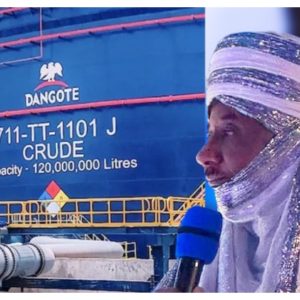
Dangote Refinery increased the retail price of petrol by a cumulative N100 per litre in August, taking its pump price to N1,265 per litre, following the renewed rise in global crude oil prices.
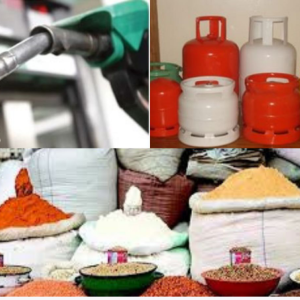
The increase is particularly significant for Nigeria because petrol prices broadly affect the domestic cost structure. Higher fuel prices feed directly into transportation and logistics costs and indirectly raise the cost of food, manufactured goods, services and other consumer products.
However, the naira’s relatively strong performance during August is expected to provide some cushion against the inflationary impact of higher international oil prices.
A stronger domestic currency can reduce the naira cost of imported petroleum products, raw materials and other goods, thereby limiting the extent to which external price shocks are transmitted into the domestic economy.
Despite this buffer, the renewed volatility in international energy markets represents a major upside risk to Nigeria’s inflation outlook.
The danger is that another sustained increase in crude prices could trigger further adjustments in domestic petrol prices, particularly if international oil prices remain elevated and associated import and supply-chain costs rise.
This could slow disinflation even if exchange-rate conditions remain relatively favourable.
For households and businesses, the implications could be significant. Higher petrol prices would increase operating expenses for manufacturers, transport operators, farmers, retailers and service providers, potentially weakening disposable incomes and corporate margins.
The broader concern is that energy prices could spread across the economy at a time when businesses and consumers are still adjusting to elevated operating and living costs.
The latest developments also complicate the monetary policy environment for the Central Bank of Nigeria (CBN).
While moderating inflation provides room to consider a less restrictive monetary stance over time, renewed energy-related price pressures could make aggressive easing more difficult.
Loosening of monetary conditions could intensify inflationary pressures if higher energy costs feed into broader consumer prices, while keeping rates high for too long could constrain credit and investment and weigh on economic growth.
Consequently, the trajectory of domestic inflation will increasingly depend not only on domestic monetary and fiscal policies but also on developments in global oil markets, exchange-rate stability and the extent to which higher energy costs are transmitted to consumers.
For now, the Nigerian inflation outlook remains one of gradual improvement rather than a decisive victory.
Although headline and month-on-month inflation have continued to moderate, the pace of disinflation is expected to remain slow amid persistent energy-related risks and volatile global market conditions.
The latest oil shock therefore presents a new test for Nigeria’s inflation fight. If crude prices remain above $100 per barrel for an extended period, the country could face renewed pressure on petrol prices and operating costs, potentially eroding some of the hard-won gains in inflation moderation.
The naira’s recent resilience may provide temporary relief, but analysts warn that sustained global energy volatility could ultimately determine whether Nigeria’s disinflationary trend continues — or suffers another setback.