

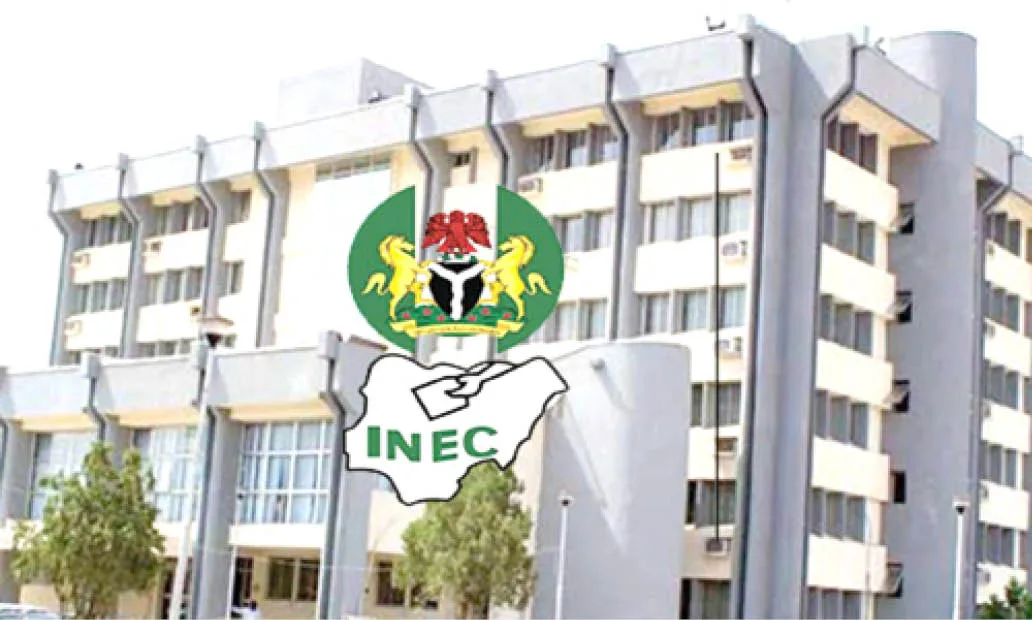
•INEC headquarters Abuja
Doubts over the qualification of some governorship and house of assembly candidates, sparked by the recent ruling of the Supreme Court, are expected to be cleared today when the Independent National Electoral Commission (INEC) releases its final list of the eligible contestants.
The apex court had, in the September 24, 2026 ruling , affirmed the constitutionality of Sections 77(5), 77(6) and 77(7) of the Electoral Act 2026 and upheld INEC’s revised timetable and schedule of activities for the 2027 general elections, reports The Nation.

In effect, anyone who participated in more than one party primary risks disqualification, while those whose names are not in a party’s register as at May 2026 are deemed not to be members of the party also risk qualification.
The ruling has sparked wild speculations and fears over the fate of candidates who switched camps close to the INEC deadline for the political parties to submit their membership registers.
Section 32(1) of the Electoral Act 2026 requires the commission to “publish by displaying or causing to be displayed at the relevant office or offices of the Commission and on the Commission’s website, a statement of the full names and addresses of all candidates standing nominated” at least 60 days before the elections.
The two elections are scheduled for February 6, 2027.
The ruling All Progressives Congress (APC) yesterday asked the Commission to immediately commence strict enforcement of the Supreme Court’s ruling mandating political parties to submit and adhere to digital membership registers ahead of party primaries, congresses, and conventions for next year’s elections.
The APC spoke 48 hours after INEC warned that political parties that field candidates whose names were not in the registers submitted to the commission will not be allowed to participate in the 2027 elections.
INEC National Commissioner for Information and Voter Education, Mohammed Haruna, told Trust TV that the affected parties would not be allowed to substitute their disqualified candidates.
Sources in INEC told our correspondent in Abuja that officials have been busy compiling the final list of the governorship and state Houses of Assembly candidates ahead of the final release.
The governorship election will take place in Lagos, Ogun, Oyo, Akwa Ibom, Cross Rivers, Rivers, Delta, Enugu, Ebonyi, Abia, Niger, Nasarawa, Kwara, Benue, Plateau, Yobe, Borno, Adamawa, Taraba, Bauchi, Gombe, Kaduna, Kano, Jigawa, Katsina, Kebbi, Zamfara and Sokoto states.
Those of Edo, Bayelsa, Ondo, Ekiti, Osun, Imo, Anambra and Kogo states are off cycle.
However, State House of Assembly election will take place in all the 36 states.
INEC Chairman, Joash Amupitan, told reporters in Abuja on Tuesday that 21 of the 22 registered political parties nominated 936 Governorship/Deputy Governorship candidates for the 28 states where the governorship elections will take place, and 9,692 State House of Assembly candidates.
The window for substitution of candidates for the governorship and state House of Assembly elections closed on Saturday, September 19, while the last day for the submission of nomination form (form EC 13A-E) closed on Saturday, September 26, 2026.
Mohammed Haruna, during his Trust TV interview said any party whose candidate is disqualified would not be allowed to substitute such candidates, because “It’s like you committed an offence. And then, you come and benefit from it.”
He recalled how the courts nullified the elections of candidates in Zamfara and Plateau states.
His words: “The parties, because they did the wrong thing, they thought they could now steal through the candidates.
“And the law was very clear. Once you do that kind of thing, you cannot benefit from it. You are benefiting from it, if you are able to substitute a candidate.
“All the candidates, all the way to the Houses of Assembly, we interviewed them. If their names are not on the party register, they were not members of the party at the time that they contested for those tickets.”