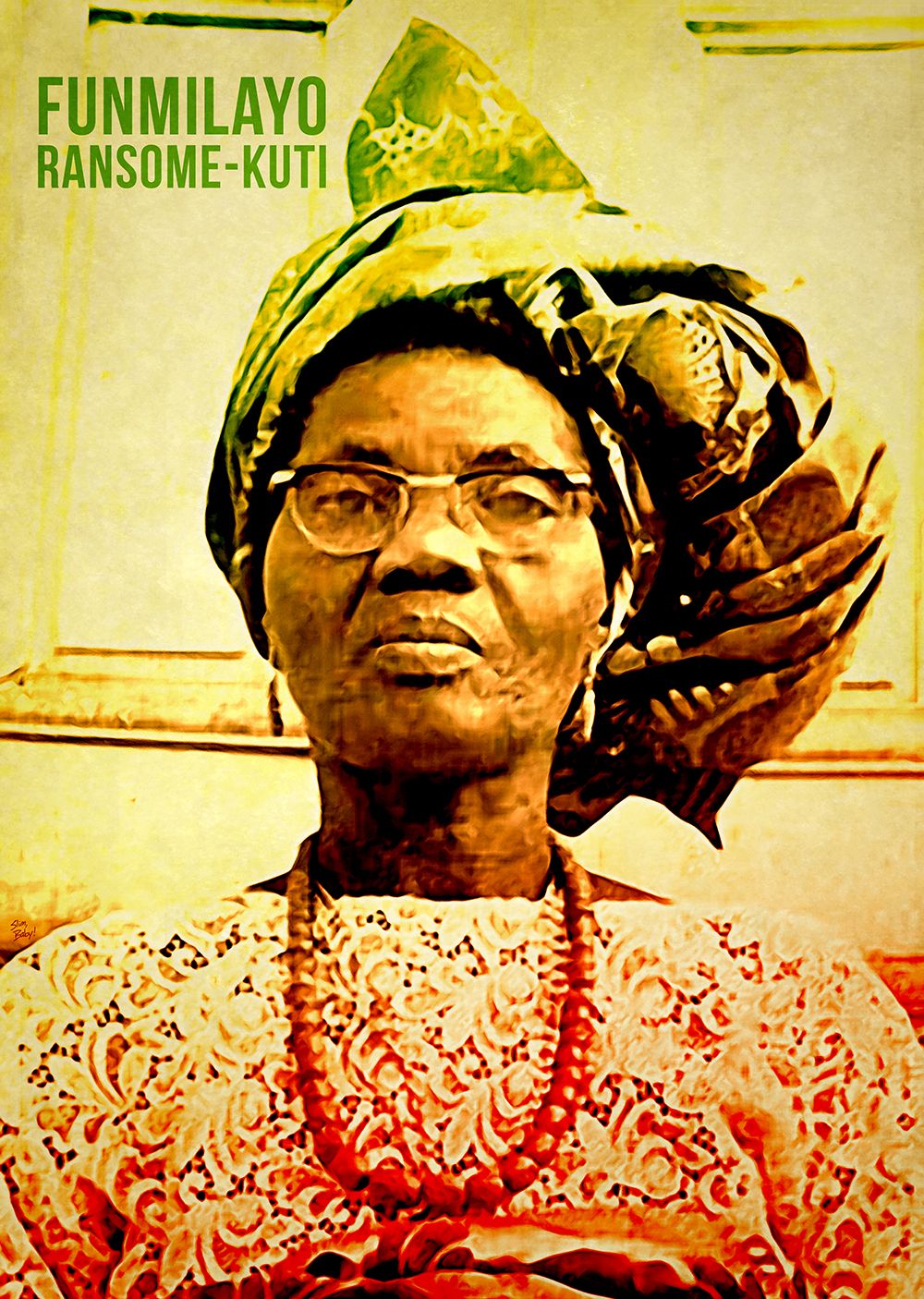
•Funmilayo Ransome-Kuti
1. Funmilayo Ransome-Kuti
Funmilayo Ransome-Kuti was one of Nigeria’s earliest and most fearless women’s rights activists. At a time when women were largely excluded from political life, she organised thousands of market women to challenge colonial taxation and unfair policies.
Through the Abeokuta Women’s Union, she mobilised women to protest against the British-backed local authorities, eventually forcing major political changes. She was also among the first Nigerian women to drive a car and travel widely for advocacy. Her activism helped open doors for women’s participation in politics and leadership.
Tragically, she died in 1978 after being thrown from a window during a violent military raid on her family home. Her son, the legendary musician Fela Kuti, later won a posthumous Grammy through the global success of Afrobeat music he pioneered.
2. Flora Nwapo
Flora Nwapa made literary history as the first African woman to publish a novel internationally in English. Her landmark book Efuru introduced global audiences to stories about African women told from an African woman’s perspective.
At a time when most African literature focused on male experiences, Nwapa highlighted the lives, struggles, and strength of women in Nigerian society. Beyond writing, she also worked in education and public service, promoting literacy and cultural preservation.
Her work paved the way for many female African writers who followed, proving that African women’s voices deserved a place in global literature.
3. Wuraola Esan
Wuraola Esan was a trailblazer in Nigerian politics and one of the first women to hold a major political office in the country.
In 1960, she became the first female member of the Nigerian Senate, marking a significant moment in the nation’s democratic history. Before that, she had already been active in education and social advocacy, encouraging women to become more involved in governance and public life. Her leadership challenged long-standing gender barriers in politics. By stepping into spaces previously dominated by men, she helped inspire future generations of Nigerian women to pursue leadership roles.
4. Margaret Ekpo
Margaret Ekpo was a passionate political leader who played a major role in Nigeria’s nationalist movement and the fight for women’s rights.
She believed strongly that women should have a voice in shaping the country’s future.
Through political mobilisation, she encouraged women to participate in elections and public decision-making. Ekpo eventually became a member of the Eastern Regional House of Assembly, where she represented the interests of women and ordinary citizens.
Her influence extended beyond politics, as she inspired many women to step forward as leaders. Today, she is remembered as one of the pioneers of women’s political participation in Nigeria.
5. Hajia Gambo Sawaba
Hajia Gambo Sawaba was one of the most courageous voices for women’s rights in Northern Nigeria. She spent much of her life fighting against forced marriage, child marriage, and the social barriers preventing girls from getting an education.
Her activism often brought her into conflict with authorities, and she was arrested and imprisoned several times. Despite these challenges, she remained committed to speaking out for justice and equality. Sawaba’s work helped change conversations about women’s rights in Northern Nigeria and encouraged many women to become more politically aware and socially active.
6. Ladi Kwali
Ladi Kwali was a world-renowned potter who transformed traditional Nigerian pottery into an internationally celebrated art form.
Growing up in a village in present-day Niger State, she learned pottery through local traditions and developed a distinctive style that attracted global attention. Her work later gained recognition through exhibitions in Europe and other parts of the world. Kwali became the first Nigerian woman to appear on the country’s currency, the ₦20 note, honouring her contribution to Nigerian art and culture.
Through her craft, she showed that traditional skills could gain global recognition and inspired many artists to embrace indigenous creativity.
7. Madam Nwanyeruwa
Madam Nwanyeruwa became a historic figure after her confrontation with colonial authorities helped spark the 1929 Aba Women’s protest.
When she resisted being counted for taxation, the dispute quickly spread across communities, leading thousands of women to rise in protest against British colonial policies.
The movement became one of the most significant anti-colonial demonstrations led by women in African history. Although she did not set out to start a revolution, her refusal to accept injustice ignited a powerful movement.