
Skip to content
Wednesday 4 November 2026
  • Home
  • Advertise with us
  • Contact
The Frontier
Click to read
The Frontier
  • News
  • Crime
  • Politics
  • Headlines
  • Education
  • Health
  • Business & Economy
  • Sports
  • More
    • International
    • Religion
    • Entertainment
    • Info Tech
    • Matilda Showbiz
      • Gists
      • Music
      • Gossips
      • Oga MAT
      • Romance
    • Arts & Culture
    • Environment
    • Opinion
    • Features
    • Epistles of Anthony Kila
    • EyeCare with Dr Priscilia Imade
The Frontier
  • News
  • Crime
  • Politics
  • Religion
  • Headlines
  • Education
  • International
  • Business & Economy
  • Entertainment
  • Sports
  • Arts & Culture
  • Environment
  • Health
  • Matilda Showbiz
    • Gists
    • Music
    • Gossips
    • Oga MAT
    • Romance
  • Opinion
  • Epistles of Anthony Kila
  • EyeCare with Dr Priscilia Imade
  • Info Tech
  • Interview
The Frontier
Click to read
Health
Health

Lassa fever, cholera, diphtheria emergencies expose gaps in Nigeria’s health system

The FrontierThe FrontierSeptember 7, 2026 1544 Minutes read0

•Lassa fever

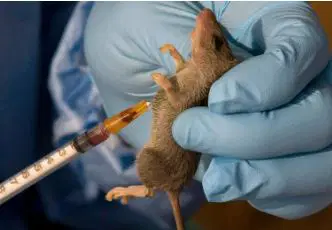
Nigeria’s health-security system is facing a fresh test as Lassa fever, cholera and diphtheria expose dan­gerous gaps in disease detection, lab­oratory capacity, treatment, immu­nisation, sanitation and community surveillance.

The revelation comes amid a cholera outbreak that has produced more than 65,000 suspected cases across 35 states and about 195 Local Government Areas this year, accord­ing to the Nigeria Centre for Disease Control and Prevention, reports Daily Independent.

SDP Poster Layout

Despite a decline in weekly cases, the NCDC has warned that trans­mission remains ongoing and that Nigeria could face another surge be­tween late August and October as the rainy season continues.

Flooding, unsafe water and poor sanitation threaten to reverse hard-won gains, raising fresh concerns over whether Nigeria is adequately prepared to stop outbreaks before they become full-blown emergen­cies.

Similarly, Nigeria recorded 14 new confirmed cases of Lassa fe­ver between August 10 and 16, 2026, bringing the total number of con­firmed cases this year to 1,035, with 252 deaths recorded, according to NCDC.

With Lassa fever and diphtheria also placing communities under pressure, public health experts are warning that Nigeria can no longer afford a predominantly reactive ap­proach to disease outbreaks.

Professor Sunday Olajide Awofi­sayo, Public Health and Biomedical Research Advocate, said the country must urgently move beyond an over­reliance on emergency reaction and build a sustainable system capable of detecting, treating and containing outbreaks before they escalate.

His warning comes against the backdrop of continuing Lassa fever transmission, a recurring seasonal epidemic particularly during the dry season.

By Epidemiological Week 8 of 2026, the NCDC had reported cases and deaths across 18 states and 67 Local Government Areas, with Bau­chi, Ondo, Taraba, Edo and Benue accounting for more than 80 percent of confirmed cases.

Healthcare workers have also been affected, highlighting continu­ing weaknesses in infection preven­tion and control and placing front­line responders themselves at risk.

Diphtheria presents anoth­er major threat. Nigeria re­corded the highest number of diphtheria cases in the WHO African Region, with more than 12,000 suspected cases, over 8,500 confirmed cases and 884 deaths between January and November 2025.

The NCDC has also dis­closed more than 10,000 con­firmed diphtheria cases this year, although the case fatality rate has declined considerably compared with the same peri­od last year.

Confirmed cases have been reported across 240 Local Gov­ernment Areas in 30 states, while inadequate vaccination coverage remains a major driv­er of continued transmission.

Awofisayo said large num­bers of under-immunised and zero-dose children represent a major vulnerability, with vac­cine hesitancy, insecurity, dis­placement, population move­ment and difficulty reaching underserved communities fur­ther undermining protection.

Across the three diseases, he identified a troubling pat­tern of vulnerabilities: inad­equate laboratory capacity and specimen transportation, limited specialised treatment and supportive care, shortag­es of essential medicines and vaccines, inadequate funding, weak surveillance, insufficient healthcare personnel and in­fection-control gaps.

The consequences can be­come deadly when patients arrive late.

Poor recognition of symp­toms, self-medication, finan­cial barriers and reliance on informal care continue to contribute to delayed presen­tation, while late recognition and treatment can significant­ly worsen outcomes, particu­larly in Lassa fever.

Cholera, meanwhile, demonstrates the limits of relying on treatment after transmission has already tak­en hold.

NCDC Director-General, Dr Jide Idris, said the decline in cholera deaths was encour­aging but should not create a false sense of security.

He stressed that unsafe water, open defecation, damaged wa­ter infrastructure and poor sanitation in schools, markets and other public places remain major drivers of transmission.

The NCDC has strength­ened surveillance, laboratory support, case management, infection prevention and con­trol, community engagement and rapid-response operations, while cholera interventions include water-quality assess­ments, chlorination, rehabil­itation of water sources and oral cholera vaccination in high-burden communities.

But Idris warned that fed­eral intervention alone would not be sufficient, urging state and Local Government author­ities to commit resources to high-risk communities.

Awofisayo called for con­tinuous training of health­care workers, expanded and adequately equipped regional laboratories, improved speci­men transportation, stronger treatment readiness, real-time surveillance, contact tracing and community-based surveil­lance in high-risk areas.

He also demanded inten­sified routine and targeted immunisation, identification of zero-dose children, stron­ger protection for healthcare workers and predictable do­mestic funding for outbreak preparedness.

For Awofisayo, prepared­ness must also be measured by results. Governments and response agencies should pub­licly report diagnostic delays, laboratory turnaround times, treatment initiation, case-fa­tality rates, vaccination cov­erage, contact tracing and outbreak-response times.

Every avoidable death, he argued, should trigger a re­view of what happened, where the delay occurred, and what must be corrected.

The crucial message is, Ni­geria cannot afford to wait for outbreaks to escalate before acting.

“Lassa fever and diphthe­ria are not merely medical problems; they are tests of our health-security system,” Awofisayo said, stressing the need for action before out­breaks become emergencies.

Tags
CholeraDiphtheriaLassa feverNigeria’s health system
FacebookTwitterWhatsAppLinkedInEmailLink
Previous post Governor Adeleke embarks on vacation to UK, probes Obaship dispute
next post Break your silence on Tinubu’s US probe — Yoruba Ronu tells Obasanjo, other elder statesmen •US advocate drags Nigerian senior govt officials
Related posts
  • Related posts
  • More from author
Health

BREAKING: All air passengers travelling to US must declare DR Congo travel history under new Ebola rules

November 3, 20260
Health

US approves cheap version of HIV prevention shot

November 2, 20260
Health

Patients suffer as equipment shortage cripples Aro psychiatric hospital

November 1, 20260
Load more
Read also
Inside Akwa Ibom Today

ARISE Projects Impact

February 9, 20250
International

Democrat Abdul El-Sayed becomes first Muslim elected US senator

November 4, 20260
Crime

17-year-old girl pushed from two-storey building dies in Imo

November 4, 20260
International

4 Nigerian-Americans win US midterm elections, 5th leading in Georgia •FULL LIST

November 4, 20260
Politics

JUST IN: ADC finally unveils venue for Atiku’s presidential campaign flag-off today

November 4, 20260
Politics

CAN disowns bishop over endorsement of Tinubu’s 2027 re-election

November 4, 20260
Politics

Don’t truncate Nigeria’s democracy — Former APC spokesman Timi Frank tells Tinubu over rising political tension

November 4, 20260
Load more

ARISE Projects Impact

February 9, 2025

Democrat Abdul El-Sayed becomes first Muslim elected US senator

November 4, 2026

17-year-old girl pushed from two-storey building dies in Imo

November 4, 2026

4 Nigerian-Americans win US midterm elections, 5th leading in Georgia •FULL LIST

November 4, 2026

JUST IN: ADC finally unveils venue for Atiku’s presidential campaign flag-off today

November 4, 2026

CAN disowns bishop over endorsement of Tinubu’s 2027 re-election

November 4, 2026

ARISE Projects Impact

0 Comments

Democrat Abdul El-Sayed becomes first Muslim elected US senator

0 Comments

5 burnt to death scooping fuel from fallen tanker

0 Comments

Naira slumps further as dollar scarcity bites harder

0 Comments

BREAKING: Appeal Court sacks Senate Minority Leader, orders election rerun

0 Comments

Follow us

FacebookLike our page
InstagramFollow us
YoutubeSubscribe to our channel
WhatsappContact us
Latest news
1

ARISE Projects Impact

February 9, 2025
2

Japa: You can’t deny workers decent wages, still forcefully keep them – NLC President Ajaero tells FG

October 31, 2024
3

Doctors’ strike hits Kenyan government-run hospitals

March 21, 2024
4

Publishers sue FG, research council over textbook ranking policy for schools

August 28, 2026
5

HAPPENING NOW: Police fire teargas at peaceful protesters in Abuja •PHOTOS

October 1, 2024
6

Group knocks Presidency for attacking former Vice President Atiku over Nnamdi Kanu

October 10, 2025
Popular
1

ARISE Projects Impact

February 9, 2025
2

Nigeria’s Top 10 Songs, with ITTY OKIM

January 6, 2024
3

After bluffing way into job, Nigerian dietician fired in UK for ignorance

March 21, 2026
4

REVEALED: 9 states delay payment of N70,000 minimum wage •FULL LIST

July 14, 2025
5

Blackout, water scarcity hit varsity as exams approach

July 2, 2024
6

Lagos workers demand ₦150,000 minimum wage

August 29, 2025

About The Frontier

The Frontier is Nigeria’s leading online newspaper. It is published by Okims Media Links Limited headed by Sunny Okim, a veteran journalist who is widely known as The Grandmaster, fondly called so by colleagues and friends for being Nigeria’s pioneer movie journalist.

Most viewed

ARISE Projects Impact

February 9, 2025

Lagos judiciary deepens virtual court hearing for justice delivery

January 14, 2026

PDP slams APC over Governor Oyebanji’s endorsement for second term

July 3, 2024

INSIDE AKWA IBOM TODAY: AKSG donates land for Air Force base

August 1, 2025

Varsity insists no return of Okada as students battle transport crisis

April 20, 2026
Top posts

Categories

  • News5215
  • Politics4974
  • Crime4694
  • International3292
  • Sports2641
  • Business & Economy2405
  • Headlines2305
  • Education1463
  • Matilda Showbiz1062
  • Health981
  • Entertainment903
  • Africa627
  • Religion508
  • Environment412
  • Special279
  • Info Tech271
  • Arts & Culture246
  • Inside Akwa Ibom Today244
  • Hunger protests in Nigeria224
  • Interview202
  • Opinion161
  • EyeCare with Dr Priscilia Imade140
  • World Cup 202695
  • Advert36
  • Trends25
  • Epistles of Anthony Kila19
  • Local News5
  • The Surge4

© 2026 The Frontier, Published by Okims Media Links Limited.

designed by winnet services

  • Home
  • Advertise with us
  • Contact