

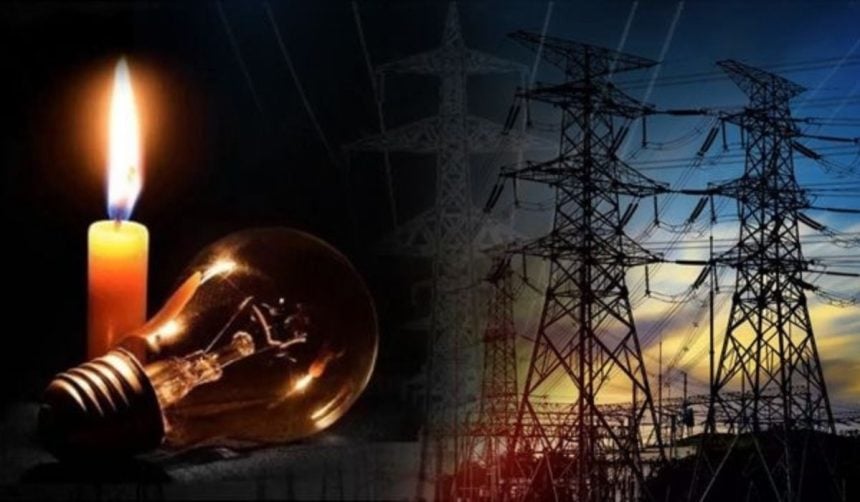
•Blackout
The worsening electricity supply situation across several parts of the country has heightened the hardship residents face amid the recent heatwave.
From Lagos to Abuja, Kano, Maiduguri, Ondo State, Kwara, and other states, residents have lamented declining electricity supply, with some reporting outages lasting days or weeks, reports Daily Trust.

The situation has forced many households to adopt uncomfortable and, in some cases, risky measures to survive the heat, while businesses dependent on electricity are counting their losses.
In Lagos, the frustration over persistent blackouts recently spilled onto the streets as residents of Lagos Island staged a protest, demanding an immediate restoration of electricity to their communities.
The demonstration, which took place on Tuesday, involved mainly women from Lewis, Okesuna, Beecroft, Simpson and Sandgrouse streets, who expressed anger over prolonged power outages and the discomfort caused by rising temperatures.
They called on the electricity distribution company to address their plight.
The residents said the absence of electricity had compounded the discomfort caused by intense heat, leaving households struggling to sleep, preserve food and carry out daily activities.
The situation has been attributed in some areas to constraints in power generation and reduced electricity allocation from the national grid.
In August, Eko Electricity Distribution Company (EKEDC) reportedly said its allocation had fallen from 486 megawatts to 347 megawatts, forcing it to adjust electricity supply to some feeders.
The latest demonstration also followed a warning by the Lagos State Government about the possibility of extreme heat as the dry season approaches and the El Niño climate pattern strengthens.
Following the El Nino weather pattern, it has been projected that Nigeria could record an additional 31,400 heat-related deaths between September 2026 and February 2027.
The projection by the Climate Impact Lab places Nigeria among the countries expected to suffer the highest number of additional heat-related deaths globally during the six-month period of El Niño, with nearly half of the 66,800 deaths projected across the Sahel region expected to occur in the country.
However, the combination of high temperatures and unreliable electricity has heightened residents’ concerns, especially over their ability to keep homes comfortable and businesses operating.
The situation is no different on Lagos Mainland, where residents have been without electricity supply for the past few days.
The Ikeja Electricity Distribution Company, which serves the Lagos Mainland and some parts of Ogun State, has been sending apologies to the residents over the blackout.
It was gathered that most of the areas on Band A, with supply of at least 20 hours of electricity on a daily basis have been getting less than 10 hours in recent times.
A resident of Ojodu, Kehinde Joju, said the supply has been epileptic in recent days. He said he had to buy a solar-powered standing fan because of the heatwaves.
Paul Oyewusi, another Lagos resident, lamented the absence of electricity, describing the situation as unfair, especially during the period of intense heat.
He said residents who previously enjoyed relatively stable electricity supply were now struggling to cope with the prolonged outages.
Abuja residents battle sleepless nights, dehydration
The situation is no different in the Federal Capital Territory (FCT), where residents of several communities have complained about worsening electricity supply, saying the combination of prolonged blackouts and intense heat has made life increasingly unbearable.
Reacting to the persistent epileptic power supply, a resident of Kurudu in the Abuja Municipal Area Council, Usman Nalado, said many households were struggling to cope with almost daily blackouts.
He said some residents had been forced to sleep outside their homes because of the inability to power air conditioners and electric fans.
For Laraba Nura, who lives in the Kpeyegi area, the situation is even worse. She said some of her neighbours had reported dehydration and dizziness due to excessive heat resulting from poor electricity supply.
For residents within the Abuja metropolis, electricity supply has dropped drastically in the last few weeks, worsening the discomfort associated with the prevailing heat.
Michael Eze, a resident of Kpana, said the frustration caused by the intense heatwave being experienced across the country was becoming unbearable.
“I read a report that ‘super El Niño’ is driving significant shifts in temperature and rainfall across Nigeria through late 2026 and early 2027. Government should do something urgently to reduce the effect of the prediction on Nigerians,” he said.
A resident of Utako, who simply identified himself as Abayomi, lamented that erratic electricity supply had also increased water scarcity, while the high cost of fuel had made it difficult for him to cope with the harsh weather conditions.
He said the inability to pump water regularly, alongside the rising cost of alternative energy, had further compounded the challenges facing households.
Ogala Samson, a Jikwoyi resident, said the cost of petrol had made an already difficult situation worse for households, as many could no longer afford to fuel their generators to provide electricity.
Abduljalal Usman Nggu, a resident of Guzape in Abuja, said the problem of electricity supply in Nigeria had become something that people could only pray about.
He added that ordinary Nigerians had yet to experience the improvements being claimed by the government.
“When they say there has been progress, where exactly is that progress? Unless they are simply making statements to defend what is indefensible, I do not see any improvement,” he added.
Kano residents turn to solar, consider alternatives
In Kano, poor public electricity supply is forcing many residents to seek alternative power sources to meet their daily needs.
Although the weather in Kano is relatively mild compared with some other parts of the country, poor electricity supply is taking a toll on households, particularly those that depend on the national grid rather than alternative energy sources.
Aminu Ahmed, a retired public servant, said his neighbourhood had been without public electricity for the last four days, adding that his solar system had helped to fill the gap.
Abdul Jalal Muhammad, another resident, said his water-pumping machine only functioned when there was public electricity supply. However, in the last couple of days, supply had either been epileptic or completely unavailable.
Muhammad said he had exhausted the water in his tank and could no longer pump water because of the electricity shortage.
He said although he had a solar electricity system in his house, it only powered his lighting points, a few fans and a television, leaving him unable to pump water.
He appealed to the Kano Electricity Distribution Company (KEDCO) to address the problem and restore normal supply to Kano to enable residents to enjoy a better quality of life.
For Malam Ladan, a tailor, the disappointment caused by poor electricity supply has prompted him to seek a permanent solution to the power problem.
He noted that buying fuel to power his generator was no longer a cheaper option because of rising fuel prices. He would therefore consider upgrading his solar system to accommodate his sewing machines and other equipment in his shop.
Responding to complaints by consumers, KEDCO’s Head of Corporate Affairs, Sani Bala Sani, said the recent electricity supply shortfall was primarily attributable to gas supply constraints affecting thermal power generation, reduced generation output and transmission network limitations.
These challenges, he explained, had resulted in inadequate power allocation to distribution companies nationwide.
He said the situation in Kano remained challenging as the distribution company continued to experience reduced energy allocation, affecting electricity supply across Kano, Katsina and Jigawa states.
“These challenges have been further compounded by transmission network constraints and recent maintenance activities on critical transmission infrastructure,” he said.
Borno residents lament
In Borno State, residents of various neighbourhoods have expressed frustration over a severe deterioration in electricity supply, with some households reportedly receiving power for only five hours every two days.
The situation has compounded the hardship of living through intense heat, forcing residents to adopt desperate measures to cope with the uncomfortable weather.
Sunday Bitrus, a resident of Abuja New City in Maiduguri, lamented that electricity distribution had dropped drastically.
Bitrus also described how he and his family had to take security risks just to get some ventilation while sleeping at night.
“I normally open my room’s windows and, at times, the door before I could sleep. And it’s very risky in Maiduguri, but we don’t have an option,” he said.
Another resident of Pompomari Bypass, Suleiman Prince, said the epileptic electricity supply, coupled with severe weather conditions, had left residents vulnerable.
“So, those with better financial standing are now installing solar systems in their homes to escape the hardship. It’s not easy to cope with the heat, and everyone is praying for the cold season to set in,” he said.
Another resident, Buhari Lawan, who lives along Damboa Road, linked the sudden drop in electricity supply to the installation of prepaid meters in his area.
Ondo
In Ondo State, residents of several communities also lamented prolonged electricity outages amid the prevailing heatwave, saying the situation has affected their health, sleep and livelihoods.
Oluwasogo Bidemi said residents of some communities in Ondo State were also experiencing prolonged blackouts without any explanation from the Benin Electricity Distribution Company (BEDC).
Bidemi said the situation had affected residents’ ability to preserve food and drinks, adding that those without solar power or inverters were particularly vulnerable because they could not afford alternative sources of electricity.
She urged the government and BEDC to intervene, warning that residents should not have to stage protests before their electricity supply could be restored.
Bidemi said she had resorted to drinking plenty of water to remain hydrated and prevent the heat from aggravating other health challenges.
Dolapo Oguntuase, a small business owner, said the lack of electricity had affected her ability to keep bottled water and drinks cold, despite increased demand for chilled products during the hot weather.
She said customers were less willing to patronise her business when cold drinks were unavailable, adding that the cost of electricity had become increasingly difficult to sustain.
Oguntuase disclosed that she spent more than N20,000 monthly on electricity, despite struggling to recover the cost from sales of drinks alone.
Efforts to reach the Benin Electricity Distribution Company (BEDC), Ondo chapter, over the cause of the recent electricity supply shortage were unsuccessful, as calls and text messages sent to the company were not answered.
Low power generation puts Nigeria in blackout
It was gathered that Nigeria is currently witnessing lingering blackouts in most of its cities on account of gas shortages to thermal plants, causing a persistent drop in power generation by service providers.
It was gathered that the power plants are getting only 40% of the gas they need to function optimally.
Power generation dropped to 3,940MW on Wednesday, which is below the 4000MW required to make it stable.
There are fears that power distribution companies may commence load shedding or power rationing soon in order to manage the scantily available power in their networks.
In a statement, the Transmission Company of Nigeria confirmed that power allocation to distribution companies had dropped due to gas constraints to thermal generation companies.
“TCN is doing everything possible in collaboration with stakeholders in the power sector to ensure that it continues to keep the grid intact despite the current low power generated into the system.
“Consequently, given the current load on the grid, load distributed to the distribution load centres have also reduced, as TCN can only transmit what is generated,” the statement said.
Power distribution companies contacted by our correspondent also confirmed low allocation on account of gas constraints, and appealed to their customers for understanding pending when it is fixed.
At a recent Nigeria Energy Leadership Summit, in Lagos, Power Minister Joseph Tegbe lamented that gas supply constraints, overstretched transmission infrastructure, distribution losses and N3.3 trillion legacy debts are crippling improved power supply to Nigerians.
He added: “Of an estimated N3.3 trillion owed to operators, N1.23 trillion has been paid, while leakages are being blocked to stop fresh debts.”
A former Power Minister, Prof. Barth Nnaji, said Nigeria had the capacity to generate about 13,000 megawatts, but only between 4,000 and 5,000 megawatts was available on the national grid.
Speaking at a Lagos Country Club Forum, he identified inadequate gas supply and poor transmission infrastructure as major constraints causing businesses to expend about N1.34 trillion on alternative power generation.
An electrical engineer, Yakubu Isa Al-Jasawi, said the progress of any country was closely linked to the amount of energy it consumed, including electricity, gas and other forms of energy.
He said energy consumption remained one of the indicators used to measure the level of development of countries, arguing that Nigeria’s electricity challenges required more than government assurances and official claims of improvement.
According to him, ordinary Nigerians should be the ones to determine whether the country’s energy crisis has been resolved based on their everyday experiences.
He said, “If you examine developed countries, one of the indicators used to measure their level of development is the amount of energy they consume.
“In Nigeria, when we talk about ending the energy crisis, the ordinary Nigerian should be the one to tell us whether the problem has been resolved, not politicians or government officials”.
Al-Jasawi argued that electricity generation was not technically impossible, given the technology available globally, adding that the major challenge was ensuring that generated electricity could be transmitted and distributed to consumers.
“The electricity we are talking about is not technically impossible to generate. It is not particularly difficult to produce electricity with the technology available today.
“You will agree that electricity cannot be generated in Kainji and transported to Jos or Abuja without transmission lines”.
He said the country’s persistent electricity challenges raised questions about the commitment to addressing the crisis, particularly given the investments made in the power sector over the years.
“That is why, given the current situation, one can begin to suspect deliberate sabotage”.
The engineer recalled that some state governments had attempted to establish their own electricity generation projects during the administration of former President Olusegun Obasanjo, with substantial investments made in projects that had considerable generation capacity.
“There were states that attempted to establish their own electricity generation projects as far back as the administration of former President Olusegun Obasanjo. They invested substantial amounts of money, and some of those projects had considerable generation capacity”.
He called for a more decentralised approach to electricity generation, urging the government to encourage Nigerians, including students, to acquire the knowledge and skills required to generate electricity.
“What we want now is for people, including students in every local government area, to be taught how to generate electricity”.
He also cited the increasing adoption of solar energy in Kano, saying the growing reliance on alternative energy sources reflected declining public confidence in government electricity supply.
“If you look at Kano city today, you will discover that almost half of the electricity being used in some areas comes from solar energy because people have gradually lost confidence in the government,” he said.