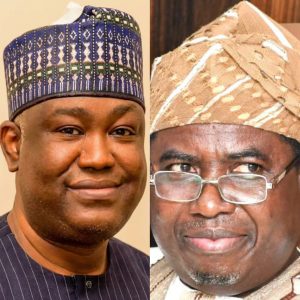
•Salihu Lukman
Former National Vice Chairman, North-West, of the All Progressives Congress (APC), Dr. Salihu Lukman, has disclosed why hardship persists in the country and why it will be difficult to back down on the planned August 1 protest.
Lukman, who said that the impatience and arrogance of President Bola Ahmed Tinubu crashed everything in the past one year, added that Nigerians have never been pushed to the wall as they are today, reports Daily Independent.
He called on Nigerians to rise up and kick against the deployment of military to suppress protesters, adding that the way President Tinubu is failing to directly engage the organisers of the scheduled August 1 protest and mobilising traditional rulers, religious leaders and even the military high command against the protest confirm his new conservative and repressive disposition.
Lukman, in a statement titled, ‘Defence of the Indefensible,’ said if President Tinubu wants to recover whatever is left of his democratic credentials, he should listen to the cries of Nigerians and respond by way of reviewing his policy decisions especially withdrawal of subsidy and floating the naira.
Lukman said that the scheduled August 1 protest promises to be the most popular protest in the country since independence, adding that the warning by the security agencies against the planned protests is old tactics that is already defeated, even as he warned that often, the response of the security agencies through attempts to forcefully disperse protesters is the source of violence.
He said: “In all past experiences, irrespective of these so-called appeals, which threatened organisers of the protests, protests still take place and in varying degrees recorded success. As someone who is privileged to have organised protests in the country, one can say without any fear of contradiction that Nigerians, across every part of the country, have never been pushed to the wall like they are today. Within one year, virtually everything has crashed, all due to the impatience and arrogance of President Asiwaju Tinubu. If President Asiwaju Tinubu has turned out to be an impatient leader who is in a hurry to implement policies that has impoverished citizens, why should citizens be patient with him?
“For those of us who were associated with President Asiwaju Tinubu and campaigned for him to become president, it is a big disappointment. We did campaign for him with the conviction that he is a strategic politician who is an excellent talent hunter. The magic of how Lagos State was transformed under his leadership was our reference point.
“Sadly, more than one year at the helm of affairs as the president of Nigeria, it is a different Asiwaju Tinubu we have who is becoming an excellent hunter for political mercenaries. He has become more strategic in taking decision without looking at the problem, which could be why he promised Nigerian workers living wage, but his negotiation skills could only retain the old starvation minimum wage.
“So far, President Asiwaju Tinubu is turning out to be the most inaccessible president in Nigeria’s political history. Even Gen. Sani Abacha wasn’t as much inaccessible.
“In addition, having reduced the National Assembly to a rubber stamp and made it incapable of checking the excesses of the executive, President Asiwaju Tinubu has crashed all available democratic structures capable of enabling Nigerians to influence decisions of his government.
“While acknowledging that one is not in any way related with the organisers of the August 1 protest, they must be commended for summoning the courage to mobilise Nigerians and confront the administration of President Asiwaju Tinubu to change the way it is managing affairs of the country.
“The government must recognise that within one year, it has created more problems for Nigerians so much so that the hunger in the land has threatened virtually all citizens. If President Asiwaju Tinubu wants to recover whatever is left of his democratic credentials, he should listen to the cries of Nigerians and respond by way of review his policy decisions especially withdrawal of subsidy and floating the naira exchange rate.