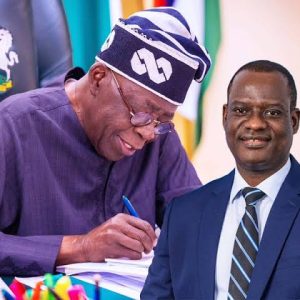
•Minister of Agriculture, Abubakar Kyari.
The federal government, yesterday, announced a 150-day duty-free import window for food commodities as it stepped up efforts to tackle rising inflation which had impoverished many Nigerians.
The government also expressed its decision to collaborate with states to expand land cultivation across the country, reports The PUNCH.
Consequently, the government suspended duties, tariffs and taxes for the importation of certain food commodities through land and sea borders.
Among other things, the latest directive is expected to reduce demand for forex by food importers.
In 2023, Nigerians spent $2.13bn to import food items from foreign countries.
The quarterly statistics of the Central Bank of Nigeria showed that the country exported large amounts of food from foreign countries despite being touted as the food basket of Africa.
The high food import bill is a concern for the government. The country has a large agricultural sector, and there have been efforts to boost local production to reduce the dependence on food imports.
However, factors such as inadequate infrastructure, insecurity, and climate change have hindered progress in the sector.
But the latest directive allowing free food imports, experts say, is a clear demonstration that the Nigerian government is yet to put the nation on the right path of eradicating hunger by 2030 as stipulated by the United Nations Sustainable Development Goals.
The government had earlier ruled out the importation of food as part of strategies to address the high costs of foodstuffs and the economic hardship troubling the country.
Speaking at the press conference held in Abuja, the Minister of Agriculture and Food Security, Abubakar Kyari, said that 150 days of duty-free imports would be valid for commodities including maize, husked brown rice, wheat, and cowpeas.
The initiative which is part of the Presidential Accelerated Stabilisation and Advancement Plan would also enable the Federal Government to import 250,000 metric tonnes of wheat and 250,000MT of maize.
It explained that the imported food commodities in their semi-processed state would target supplies to the small-scale processors and millers across the country.
Kyari said, “To ameliorate food inflation in the country caused by affordability and exacerbated by availability, the government has taken a raft of measures to be implemented over the next 180 days:
“A 150-day duty-free import window for food commodities, suspension of duties, tariffs and taxes for the importation of certain food commodities (through land and sea borders). These commodities include maize, husked brown rice, wheat and cowpeas. Under this arrangement, imported food commodities will be subjected to a Recommended Retail Price.
“I am aware that some good citizens might be concerned about the quality of the would-be imported food commodities as it relates to the trending worries around the genetic composition of food. I am glad to reiterate that the government’s position exemplifies standards that would not compromise the safety of the various food items for consumption.”
The minister stated that in addition to the importation by the private sector, the “Federal Government will import 250,000MT of wheat and 250,000MT of maize. The imported food commodities in their semi-processed state will target supplies to the small-scale processors and millers across the country.”
Kyari explained that the advancement plan was an initiative of President Bola Tinubu to bring about food security and economic stability to Nigeria.
He noted that over the past several months, “we have all been witnesses to the escalating cost of food items in all parts of the country. There is virtually no food item that has not had its price raised to a level higher than what a good many Nigerians can afford.”
The minister stated that the affordability crisis in our food security system had been indexed by the data from the National Bureau of Statistics which by the last count, had put food inflation at 40.66 per cent.
Nigerians have battled high food prices since the president announced the removal of petrol subsidies and also floated the naira so the value of the Nigerian currency can be determined by market forces in 2023.
The policies led to an increase in the prices of basic food, with 50kg of rice increasing from about N20,000 to over N70,000 in one year.
Similarly, the rising cost of poultry products has made basic protein such as eggs unaffordable for many. An egg which was selling for N100 last year is currently sold for N200 and above, depending on its size.
The continuous increase in the prices of goods and services over the past year has made some farm owners close shops, while many farmers (both crops and livestock) have already cut down on their production amidst inflationary pressure, insecurity and extreme weather conditions ravaging rural communities.
“We have heard the cries of Nigeria over the prices of food items and condiments, with some now describing tomato as gold and proposing a variety of recipes to prepare soups and dishes with some of the overly priced food items.
“What in the past was regarded as common items such as yam, plantain, and potato now command excessively high figures and Nigerians are right to wonder how and why things are the way they are.
“As a government under the leadership of President Tinubu, members of the Federal Executive Council and indeed all other operatives in the MDAs are fully aware of the hardship occasioned by the high cost of food items in our country. There is no doubt that food inflation is a direct consequence of several factors,” Kyari stated.
He said agricultural production activities had been hampered in some parts of the country by several factors resulting in the inability of smallholder farmers to contribute optimally to the country’s food basket.
This, he said, had opened a new dimension to the food challenge from affordability to availability of sufficient food commodities.
“As you may recall, earlier in the year, there were several interventions by the federal government to make food available and to dampen their prices. Those interventions include the release of 42,000MT of assorted food commodities from the National Strategic Food Reserve, 58,500MT purchase of milled rice from the Rice Processors Association of Nigeria and an additional 30,000MT of rice.
“Regrettably, prices have continued to escalate, and in some cases these days, food items are becoming unavailable. The Government cannot allow this situation to persist. While there are ongoing agricultural initiatives, programmes and projects under the Federal Ministry of Agriculture and Food Security, and state governments also have theirs, we must respond to the creeping availability crisis,” he said.
“As the government continues to encourage agricultural production on a sustainable and profitable basis for farmers, the time lag between cultivation and harvest makes it inevitable for the government to kick in stop-gap measures that will bring tremendous relief to Nigerians.
“For instance, harvest for 2024 wet season farming will not be due until October-November. On the one hand, while the measures aim to alleviate immediate food shortages, we will strengthen domestic production capabilities to enhance long-term food security,” the minister added.
Kyari pointed out that the causative factors in the country’s food inflation figures include infrastructural challenges, multiple taxes and levies, and the sheer profiteering by marketers and traders.
Speaking further, the minister added that the government would collaborate with state governments to identify irrigable lands and increase land under cultivation.
The government further pledged to ramp up production for the 2024/2025 farming cycle, through, “Sustained support to smallholder farmers in the ongoing wet season farming through existing government initiatives, strengthen and accelerate Dry Season Farming across the country.
“Embark on aggressive agricultural mechanization and development to reduce drudgery, drive, reduce the cost of production and boost productivity, collaborate with Sub-National to identify irrigable lands and increase land under cultivation and work closely with the Federal Ministry of Water Resources and Sanitation to rehabilitate and maintain irrigation facilities under river basin authorities across the federation.
“Development of a strategic engagement for youth and women across the federation for immediate greenhouse cultivation of horticultural crops such as tomatoes and pepper to increase production volume, stabilize prices, and address food shortages.
“Fast-tracking ongoing engagements with the Nigerian Military to rapidly cultivate arable lands under the Defence Farms Scheme, while encouraging other Para-Military establishments to put secured available arable lands to cultivation.”
Organised Private Sector reacts
Reacting, the National President of the Nigerian Association of Chambers of Commerce, Industry, Mines and Agriculture, Dele Oye, commended the federal government on the move to suspend taxes on food imports.
He said, “We commend the federal government’s decisive action to suspend duties, tariffs, and taxes on the importation of key food commodities. This initiative, announced by Honourable Minister Abubakar Kyari, represents a significant step towards mitigating the severe food inflation currently impacting Nigerian households.
“The 150-day duty-free import window for essential items such as maize, husked brown rice, wheat, and cowpeas is a commendable move that will likely stabilize food prices and provide much-needed relief to millions of Nigerians.
“By addressing the multiple factors contributing to rising food prices, including infrastructural challenges and market profiteering, this policy demonstrates a comprehensive approach to ensuring food affordability.”
He, however, noted that while these measures were applauded, it was imperative that the government immediately engaged with stakeholders across the agricultural value chain.
He added, “This engagement is crucial to ensure that Nigeria is not turned into a dumping ground for commodities where we already have reasonable self-sufficiency.
“Protecting local investments and sustaining the growth of our agricultural sector must remain a priority.
“NACCIMA stands ready to support the government in these efforts, ensuring that the strategic importation of food commodities complements rather than undermines our domestic agricultural production. Together, we can secure a balanced approach that safeguards both the immediate needs of our citizens and the long-term sustainability of our agricultural economy.”
A member of the Nigerian Economic Summit Group, Dr Ikenna Nwosu, said Nigeria’s domestic food supply had yet to meet domestic demand.
He posited, “So, reduction in the cost of imported food is a justifiable temporary stabilisation measure to meet market demand imperatives.”
The National Vice President of the Nigerian Association of Small-Scale Industrialists, Segun Kuti-George, said it was a welcome development.
He said, “Like it was stated in the minister’s speech, it is a 150-day kind of relief. 150 days, we are talking about five months. So we are talking between now and December. The goal will be to bring down the cost of essential food items in the market. You will see that they are attached to those items that are either consumed directly or used in the production of one thing or another.
“It is a welcome development. Like I said, it can be a long-term thing. What would be a long-term solution? It would be for us to boost our agri-production. We should find ways and means to encourage local cultivation and planting of all these things. One of the ways to do that is to fund the agri-sector.
“Another way is to provide security for farmers, or generally to improve the security architecture of the country. A situation whereby people go to farm and plant, and then some rebels or whatever they call them come around to kill them on their farms, or the cattle rearers come to bring to eat up their crops. It is a major cost of this food scarcity. We have fertile land all over the place.”
Kuti-George asserted that Nigeria was almost a million square kilometres, 70-80 per cent of which was agri-friendly.
He added, “So if that is the case, we shouldn’t be talking of the food shortage. Another way to go about this is to avail the farmers of tools that are necessary for massive cultivation. A situation whereby we are still using cutlasses and how to cultivate land in a country of over 200 million people in the 21st century, leaves much to be desired. Governments should identify farmers, and cooperative societies, and fund them and avail them with the kind of tools, modern tools, machines, that are required to cultivate land massively. Cultivate land massively, be able to tend the crops, be able to harvest. You have harvesters not harvesting by hand.
“We should also encourage processing, and exporting raw agri-products. Exportation of raw agri-products is not acceptable at this time and age. We should be able to process whatever we have harvested, even if we are going to export them. Another issue here is that of lack of storage. A lot of our agri-produces get destroyed, they get spoiled. You harvest tomatoes, but you cannot conserve them for a long time, they get rotten away. Mangoes, fruits, all these peppers, there are no preservation facilities for our agri-produces. And that is again compounded by the fact that we lack the necessary infrastructures to get our harvest quickly to the market, to the extent that almost 50 per cent of centi-harvests get destroyed before they get to the market. That’s also part of what is causing, contributing to this scarcity that we’re talking about.
“If crops are harvested on the farms that are far away from the market and there are no good roads, no good means of transportation to bring them to where they will be sold, it’s also another major problem causing the kind of scarcity and high prices that we are experiencing. But going back to the point that we started with, the tariff removal is a good step in the right direction, but it is only a temporary solution.”
Meanwhile, the National President, Association of Small Business Owners of Nigeria, Dr Femi Egbesola, said while the move would help arrest food inflation, it might end up weakening the country’s agricultural sector.
According to him, players in the food sector may find it difficult and unprofitable to compete against importers of foods.
He advised, “It will be wise if government at all levels can declare a state of emergency in our food sector and put all hands on deck to stimulate and intervene proactively in the sector. We should be able to produce what we eat and eat what we produce. That is the only sustainable food model.”
He asserted that the importation of food would not only result in job losses for workers in the agriculture value chain but would always significantly affect our overall health.
He added, “As many of these imported foods are genetically modified and synthetic foods which do not support good healthcare and wellbeing.”