

No fewer than four state governments have set up their own airlines in the last seven years, spending an estimated N500 billion in the carriers’ set-up and fleet acquisition.
Apart from the four states, at least three others – Ogun, Anambra and Lagos – are at different stages of establishing their own carriers, with a promise to provide jobs for hundreds of their indigenes and Nigerian aviation professionals, reports The Guardian.
The emergence of state-owned airlines has further increased the number of scheduled carriers to about 15, serving a stagnant 15 million passengers over almost a decade, except in 2021, when the country recorded about 16 million travellers locally and on international routes.

The emerging trend has raised questions among aviation experts on the logic and viability of state governments investing billions in airline operations at a time of pressing basic infrastructure deficits, healthcare challenges, educational funding gaps, and rising expenditure.
Moreover, only a handful of Nigerian states can survive on internally generated revenue (IGR), while the majority depend on monthly disbursements from the Federal Allocation Account Committee (FAAC) to pay salaries and cover other essential spending.
Recall that the first state-owned airline was Imo Air, launched in January 2017 by the past Imo State governor, Rochas Okorocha, in partnership with the former Dana Air.
Despite the fanfare that accompanied the launch, the 10-year partnership deal between Dana Air and the Imo State government did not stay in the air long before it was eclipsed. And none of the plans itemised for the airline’s growth materialised.
Okorocha had promised to acquire five airplanes under the Imo Air project within a year, while hundreds of the state’s indigenes were also promised employment.
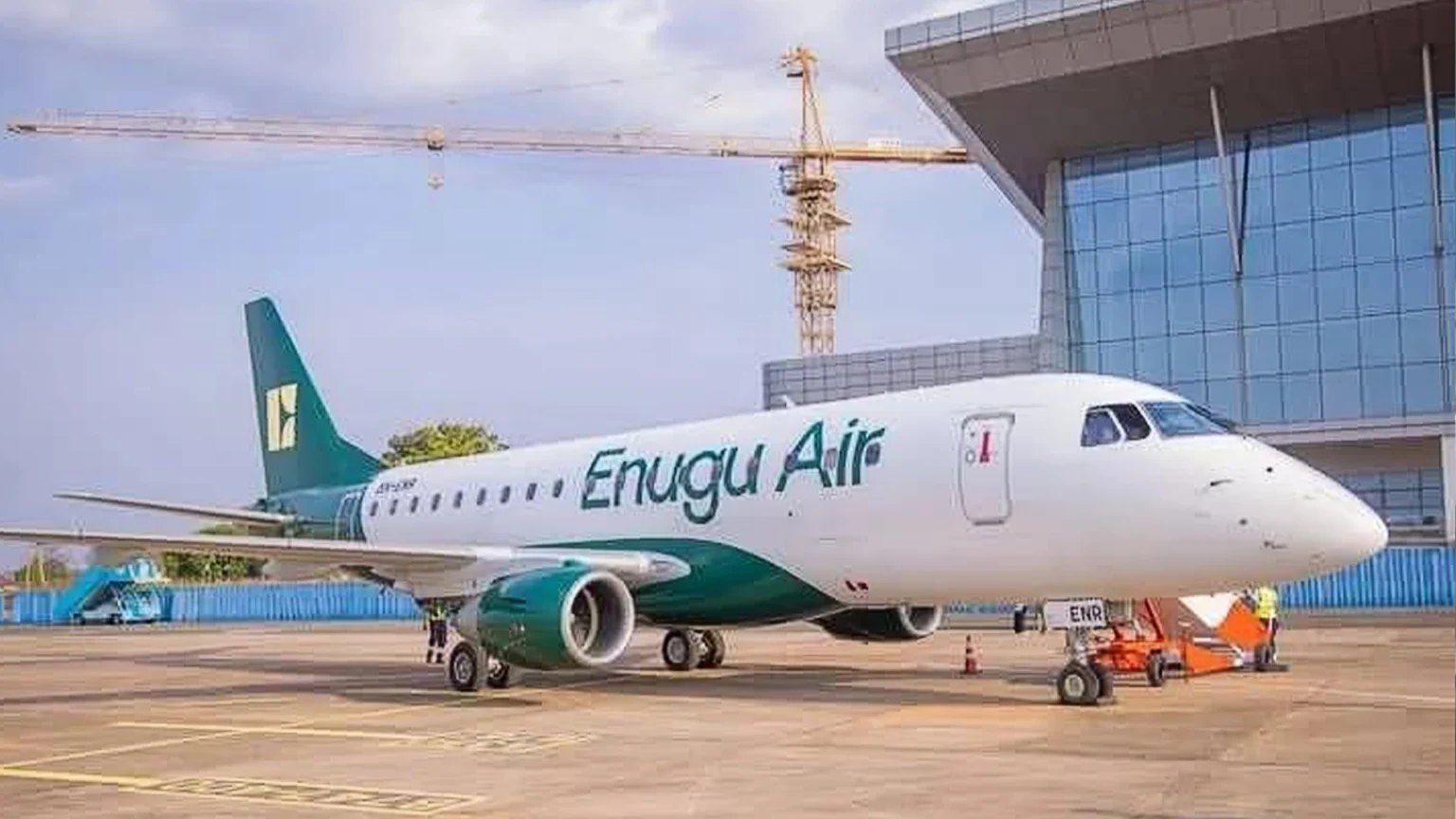
Today, state-owned airlines in the country include Ibom Air (owned by the Akwa Ibom State Government), Cally Air, backed by Cross River State, Enugu Air (the Enugu State government’s carrier) and Bayelsa State’s newly launched Pioneer Airline.
Ibom Air was launched in 2019, while Cally Air (operated by Aero Contractors and later ValueJet was unveiled in 2020.
Also, Enugu Air (operated by XeJet) was established last July, while Pioneer Airlines was born last month.
In 2019, the Akwa Ibom State government claimed to have spent over N10 billion on Ibom Air during its startup phase and fleet acquisition, including three leased Bombardier CRJ900 aircraft.
Also, in February 2023, the Akwa Ibom State Executive Council approved a major capital injection of N14 billion to recapitalise the airline and prepare it for regional flight expansion across Africa.
The Akwa Ibom State government’s overall investment has grown significantly over time as it has made heavy capital commitments, including a commercial agreement to purchase 10 brand-new Airbus A220-300 aircraft to drastically expand the airline’s operations, valued at several billion naira.
For Cally Air, the Cross River State government said its initial acquisition of two aircraft cost it about $32.5 million. It has also expanded its fleet with an additional two aircraft, but has not made the cost implications public.
Also, the Enugu State government spent an initial N62 billion on startup and fleet acquisition for the establishment of Enugu Air, while plans were laid to further expand the fleet in subsequent budgets. The initial fleet was financed in partnership with a commercial bank in Nigeria.
The Bayelsa State government budgeted about N25 billion to purchase aircraft for commercial operations for Pioneer Air. The state government recently acquired two aircraft – ATR 72-600 turboprops for non-scheduled flight operations.
The costs are not static, as state governments continue to increase their spending on state-owned airlines by ordering brand-new aircraft.
Of all the state-owned carriers, only Ibom Air has opened its books to the public, while Enugu Air and others are projecting profits.
At its maiden Annual General Meeting (AGM) in June 2025, Ibom Air reported N96 billion in revenue and N16.6 billion in operating profit, with net profit of N6.8 billion.
Imo also planned to divest some of its shareholding and bring on board new investors.
Earlier in the year, the Enugu State government projected a net profit of N60 billion for Enugu Air over four years.
The state’s Commissioner for Transportation, Dr Obi Ozo, said that setting up the airline and acquiring the three Embraer jets through outright purchase cost the government between $28 and $40 million, with plans for a gradual increase in the fleet.
Ozo also said that Enugu State owns 100 per cent stake in the airline with a management agreement with Xejet Airline.
According to him, the airline forms part of the state’s broader economic development strategy aimed at transforming Enugu into a major investment and tourism destination.
All the state governments have expressed optimism about the success of the new airlines and the projected contributions to their economic development.
But despite the optimism, concerns continue to mount over whether Nigeria’s aviation market is large enough to sustain the growing number of operators.
Also, experts are concerned about continuity and transparency, especially when the costs of acquiring some equipment are not made public by the State governments.
The Managing Director of Mainstream Cargo Limited, Seyi Adewale, in an interview with our correspondent, said that Nigeria’s air passenger growth remained tied to the expansion of Nigeria’s middle class.
According to him, the upper-income segment of the population already flies regularly and contributes a stable share of passenger traffic.
Adewale stated that, irrespective of the number of indigenous airlines, as long as the middle class remained stretched, the sub-sector would continue to record low traffic.
He, however, argued that the country needed more airlines to serve yet-untapped routes across the country.
He said, “The good thing about it is that we are connecting the dots and expanding the potential and the capacity to move ourselves around. When the middle-class blossoms, you see a quick jump in that passenger number. It is because we are correcting our economy that it appears stagnant, but when we stabilise, and the middle class begins to grow, then you will see an increase in passenger numbers.
“Now, why are they setting up airlines? Because they have seen models that work. It will not surprise you that when the Lagos State government builds its own airport, it will definitely set up its own airline to support it.
“As a state government, you can create your own routes in partnership with other state governments. This is the potential that we have to create new markets.
“Also, even the state governments have large numbers of workers who travel. So, they have travel needs. They can channel those needs to those airlines that are dedicated and will be the ultimate beneficiaries for them. Where I think people should have concern is when a state decides to run an airline. That won’t work because they are not experienced enough to do that.”
Adewale emphasised that Ibom Air has been a success story since its inception. He attributed this to the airline’s independence and the state government’s appointments of proven professionals, such as George Uriesi, to critical managerial positions within the airline.
“So, the airline is being run like a business. Even Pioneer Air is being run like that. You have professionals at the helm. Also, those airlines may have private investors who are likely to be from the states,” he said.
Also, the Chief Executive Officer of United States-based aircraft Brokerage, Nigame Aircraft Consultancy, Olufemi Adeniji, said that airlines are an engine of economic development for any country.
Adeniji, however, added that for state governments that could not maintain their citizens, pay salaries and embark on critical developmental projects, it was a waste of resources.
Adeniji expressed doubts over the sustainability of the airlines by their promoters, maintaining that the country generally lacked a maintenance culture.
He further expressed scepticism about air passenger traffic, maintaining that the volume was too small to sustain the number of airlines currently operating in the country.
He, however, agreed that some of the existing carriers have demonstrated operational efficiency, but insisted long-term survival, rather than short-term performance, was important.
“Aviation is an industry where you spend billions of naira to make a few millions of naira. But in the long run, if it’s properly operated and maintained, then you make your money and break even.
“Generally, we lack a maintenance culture in Nigeria. How do you want to maintain your aircraft? And the concept outside Nigeria is that any aircraft from Nigeria, it’s paper maintenance. The impression out there is that Nigeria doesn’t actually carry out maintenance on its aircraft.
“They just show documents that they’ve done, but you ask for documentation to prove the maintenance, and where the maintenance was done, it becomes storytelling,” he said.
In place of airline sole proprietorship, Adeniji proposed collaboration among three or four state governments to establish airlines, maintenance, repair, and overhaul (MRO) facilities, and other technical areas of airline operations.
Mohammed Badamasi, a pilot with the defunct national carrier, Nigeria Airways, questioned the practicality of having multiple state-owned airlines competing within a relatively small domestic market.
Badamasi argued that many states may not have sufficient passenger demand to justify airline operations.
According to him, the viability of any airline depended on route economics, passenger volumes and sustainable demand.
He cited examples of states with relatively low traffic volumes and questioned whether they could generate enough passengers to support regular scheduled services.
He warned that governments should avoid treating airline ownership as a prestige project.
Instead, he suggested that resources would be better directed towards airport infrastructure, tourism promotion and support for existing private airlines.
Badamasi also warned that future political office holders in some states may not share the same commitment to airline projects initiated by their predecessors.
He expressed worry that such shifts could affect funding, management stability and strategic direction.
Badamasi said, “Let us assume that Lagos, Ogun, Oyo, and Osun states have their own airlines. What will their route network look like? What will be their flight frequency from their home base to the two most viable airports in the country?” he queried.