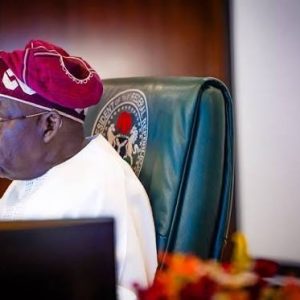
•Akpabio, Tinubu and Abbas
A nation’s executive and legislature are like two oars propelling the same canoe. If one oar pulls with force while the other drifts lazily, the canoe spins in circles. If both row in opposite directions, the vessel tilts dangerously, and progress stalls. But when the oars dip and pull in rhythm, the canoe glides forward with speed and stability.
This is the image that comes to mind when looking at the current relationship between Nigeria’s Executive led by President Bola Ahmed Tinubu and the National Assembly under Senate President Godswill Godswill Akpabio.

The synergy is clear for everyone to see. The tone is cooperative without being compliant. The result is a smoother flow of governance where policy initiatives move more quickly from conception to law, and oversight questions are handled in a way that seeks solutions rather than political theatre.
It is not perfection. One may even say it is not yet Uhuru. But it is an encouraging change from some turbulent chapters in Nigeria’s democratic journey.
Lessons from the past
Nigeria’s democratic history is littered with bruising confrontations between the two arms of government under focus. In the early years of the Fourth Republic, the fierce battles between President Olusegun Obasanjo and Speaker Ghali Umar Na’Abba led to stalled bills and endless impeachment rumours and threats.
Similarly, the rift between President Goodluck Jonathan and Speaker Aminu Tambuwal froze legislative progress for months. The protracted cold shoulders between President Muhammadu Buhari and Senate President Bukola Saraki meant that major budgets arrived late and key reforms stalled.
Those moments remind us that while confrontation can be a safeguard for democracy, unchecked hostility is costly for the advancement and stability of the nation. The economy slows. Investor confidence dips. Ordinary citizens wait longer for essential services. This is why the present collaborative climate, if maintained, could be one of the most significant enablers of national stability, growth and opportunities.
Cooperation without capitulation
To be clear, cooperation today does not mean the National Assembly has become a rubber stamp to the Executive. Recent sessions have shown lawmakers asking hard questions. The Senate’s grilling of the Nigerian National Petroleum Company Limited on the use of savings from the removal of fuel subsidy was both firm and focused.
Additionally, the House of Representatives’ probe into electricity tariff hikes forced the Ministry of Power and the Nigerian Electricity Regulatory Commission to explain policies in plain terms. The Akpabio-led Senate summoned the Central Bank of Nigeria to defend its measures on foreign exchange stability and new bank charges.
Furthermore, it should be noted that there have also been pushbacks. Certain budgetary proposals from the Executive had been revised after legislative scrutiny. The National Assembly resisted attempts to rush through the passage of sensitive loan requests without proper documentation.
The Aviation Ministry faced tough questioning over delays in airport concession agreements. Even agencies like the Nigerian Ports Authority and Nigerian Communications Commission have been compelled to submit overdue reports.
Such moments show that a cordial relationship does not erase the Legislature’s constitutional duty to check excesses. Instead, it channels disagreements into productive dialogue rather than destructive stalemate.
Shared goals, national gains
It goes without saying that when the Executive and Legislature work in concert, the delivery of democracy dividends becomes more achievable. Policy implementation is faster because enabling laws pass without unnecessary delay. Oversight reports lead to policy adjustments that are timely rather than reactive.
Under Akpabio’s leadership of the National Assembly, appropriation bills have been passed in good time, enabling the Executive to keep fidelity to budget implementation. Constituency projects have been better aligned with national development priorities. Collaboration has also aided in passing laws that advance infrastructure growth, youth empowerment, and regional balance.
One example is the Nigerian Steel Development Act, a legislative milestone that supports the revival of the Ajaokuta Steel Complex and other steel projects. Another is the creation of development commissions for the geo-political zones, designed to address decades of marginalisation. These initiatives may be executive-driven, but without legislative commitment, they would have languished on the order paper.
The Akpabio doctrine: Pragmatism over politics
The 10th National Assembly’s style under Senate President Godswill Akpabio reflects a political craftsmanship that prizes results over theatre. As a former governor and minister, Akpabio understands the constraints the executive faces, but he also wields legislative authority with a measured firmness that demands accountability.
Working closely with Speaker Tajudeen Abbas, Akpabio has redefined the tone of engagement between the two arms of government, replacing confrontation with dialogue focused on finding solutions.
Economic reforms have been handled with a calm efficiency that belies their complexity.
An example of how this has worked in practice is the Central Bank Act (Amendment) Bill, vital to stabilising the naira and strengthening monetary policy oversight. The bill was passed within months rather than languishing for years.
Similarly, tax reforms, initially a lightning rod for criticism, were refined through a series of consultations with stakeholders instead of being rushed through Parliament.
In the same vein, security policy has been treated as a shared national burden rather than an executive-only responsibility.
When the presidency sought emergency funding to address terrorism and banditry, the Senate approved it without delay, but not without conditions.
The package was tied to commitments for holistic approaches, including job creation and community policing, signalling that the legislature expected a comprehensive strategy beyond military action alone.
Meanwhile, oversight has been firm but fair, grounded in the belief that transparency improves governance rather than embarrasses officials. The Senate’s scrutiny of incentives granted to the Dangote Refinery, its audits of several ministries and agencies, and its probing of subsidy utilisation have been conducted in a tone that invites solutions rather than fuels political drama.
It is a style that rejects needless grandstanding in favour of mature statecraft. As Akpabio, who is Chairman of the National Assembly, once remarked during a plenary debate, “Our duty is to govern, not to grandstand.”
The cost of discord
On the issue of disagreements between the executive and the legislative arms of government, the question is not whether there will be friction or not. It is simply unavoidable as we are talking about human beings, and friction is a part of human relations.
Moreover, a healthy democracy thrives on debate, dissent, and the exchange of strong arguments. The problem comes when such friction turns into open warfare between the arms of government.
The last thing Nigeria needs is a return to the days when budget defence sessions became shouting matches, or when political manoeuvring blocked appointments for months on end.
In today’s challenging economic climate, prolonged executive-legislature feuds could derail the Renewed Hope Agenda before its foundations are secure. Inflation remains high, insecurity persists in several regions, and the need for foreign direct investment is urgent. Stability at the top of governance is not a luxury; it is a socio-economic necessity.
The significance of this moment
Nigerians should not underestimate how rare this level of institutional harmony is in our democracy. It has not come by accident.
The leadership style of Akpabio is a blend of assertiveness and tact. He has chosen the path of engagement rather than confrontation, of quiet negotiation rather than noisy standoff.
President Tinubu, on his part, has embraced a hands-on approach that listens to legislative concerns rather than dismissing them.
Of course, there will be moments when this harmony is tested. The real measure will be how both sides handle inevitable disagreements. Will they return to the canoe and row together, or will they risk spinning in place while the river of national challenges rushes past?
Rowing towards an uncommon legacy
For now, Nigeria’s governance canoe is moving forward. It is not yet at full speed, but it is no longer stuck in the rapids of mutual suspicion. The oars are in the water, pulling with some measure of rhythm, and a lot of the credit has to go to Senate President Godswill Akpabio because of his pragmatic approach to governance.
If this partnership is sustained, the result could be faster delivery of infrastructure, more effective economic reforms, and more tangible gains for citizens.
In the end, good governance is not about who shouts loudest in the chambers or who claims victory in the headlines. It is about whether the two oars of Nigeria’s democracy can keep pulling together long enough to carry the country to safer, more prosperous shores. That, more than anything else, will determine whether this moment in our political history is remembered as a transformative turning point or a missed opportunity.
*Ken Harries Esq is an Abuja based Development Communication Specialist.