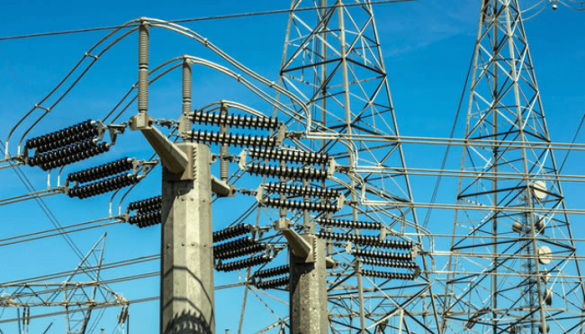
•Power transmission line
After decades of reforms, heavy investments, and repeated declarations of a turnaround, Nigeria’s power sector remains trapped in a cycle of underperformance.
Each reform era has arrived with high expectations —promising reliable electricity, lower costs, and improved productivity — yet the lived reality for households and businesses tells a different story, reports Daily Independent.
The national grid continues to falter under the weight of chronic collapses, weak infrastructure, and deep structural flaws, leaving Africa’s largest economy struggling with unreliable and insufficient power supply.
Electricity is not merely a public utility; it is a foundational driver of economic growth, industrialisation, and competitiveness.
In Nigeria, however, its persistent inadequacy has become a major constraint on productivity. Businesses are forced to operate below capacity, operational costs are inflated, and profitability is steadily eroded.
The scale of the problem is underscored by the Central Bank of Nigeria’s (CBN) Business Expectations Survey, which ranks epileptic power supply as the third most severe challenge facing businesses, behind only insecurity and high or multiple taxation. That electricity still ranks so highly, despite years of reforms, speaks volumes about the depth of the crisis.
The national grid’s fragility is at the centre of the problem. Frequent system collapses and inconsistent generation have made grid power unreliable at best and nonexistent at worst. Even when electricity is available, it is often unstable, damaging equipment and disrupting production schedules.
For manufacturers, service providers, and even small retail operators, power uncertainty has become a built-in risk, shaping investment decisions and discouraging expansion.
Faced with this reality, households and firms have increasingly turned away from the grid and towards alternative power sources. Solar hybrid systems, inverter-and-battery solutions, and diesel or petrol generators have become near-ubiquitous across urban and semi-urban Nigeria. These alternatives have helped bridge supply gaps, but at a steep cost. Rather than solving the electricity problem, they have shifted its burden directly onto consumers and businesses.
Generator dependence, in particular, has become a defining feature of Nigeria’s energy landscape. While generators provide immediate relief from blackouts, they expose businesses to volatile fuel prices, especially in the wake of downstream sector deregulation.
Fuel costs now fluctuate sharply, making it difficult for firms to plan and manage expenses. Beyond fuel, generators require frequent maintenance, spare parts, and skilled technicians, further driving up costs.
The environmental and health implications — air pollution, noise, and carbon emissions — add another layer of concern, especially in densely populated commercial hubs.
Solar and inverter systems, often promoted as cleaner and more sustainable alternatives, are not without challenges.
Although they reduce reliance on fossil fuels and offer long-term savings, they demand significant upfront capital investment.
For many businesses, particularly small and medium-sized enterprises (SMEs), these costs are prohibitive. In an economy already grappling with high interest rates and limited access to affordable credit, investing millions of naira in energy infrastructure places additional financial strain on firms that are simply trying to stay afloat.
These coping mechanisms, while necessary, highlight a deeper failure within the power sector itself. Beneath the surface of unreliable supply lies a web of structural weaknesses that continue to undermine performance. Gas supply constraints limit generation capacity, while financial illiquidity across the value chain prevents timely maintenance and investment.
Transmission bottlenecks restrict the amount of power that can be delivered, even when generation improves. At the distribution level, inefficiencies are magnified by poor metering, energy theft, and low consumer trust.
Recent data from the regulator’s Q3 ’25 report illustrates the severity of these challenges. During the period, distribution companies (DisCos) billed N706.6 billion out of a total energy offtake value of N854.5 billion, translating to a billing efficiency of about 82.7 percent.
While this suggests some improvement in billing performance, it also reveals significant losses within the system. More troubling is the gap between what is billed and what is actually collected. Total revenue collected by DisCos stood at N570.3 billion, well below the N706.6 billion billed, highlighting persistent liquidity pressures across the electricity value chain.
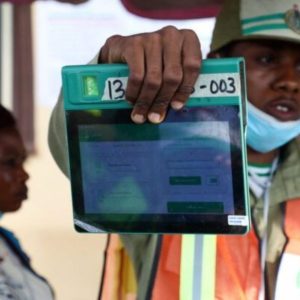
This revenue shortfall is not accidental; it is driven by long-standing issues that remain unresolved. The metering gap is perhaps the most visible. As of Q3 ’25, only 6.7 million out of 12.0 million active registered electricity customers were metered, representing a metering rate of 55.4 percent.
This leaves 44.6 percent of customers unmetered, relying on estimated billing that often fuels disputes, non-payment, and deep mistrust between consumers and DisCos. In such an environment, energy theft thrives, further eroding revenues and weakening the system’s financial viability.
Weak consumer confidence compounds the problem. Many customers are reluctant to pay for a service they perceive as unreliable and unfairly priced. This creates a vicious cycle: low revenue collection limits DisCos’ ability to invest in infrastructure and service improvement, which in turn perpetuates poor supply and further undermines willingness to pay.
Against this backdrop, the assent of the Electricity Act 2023 represents a potentially transformative moment for Nigeria’s power sector. The Act establishes a new legal framework that decentralises the electricity market, empowering states to generate, transmit, and distribute power within their jurisdictions.
By opening the door to greater state and private sector participation, the reform aims to break the monopoly of a centralised, underperforming system and encourage innovation, competition, and investment.
Yet legislation alone cannot fix decades of structural decay. For the Electricity Act 2023 to deliver meaningful change, stakeholders must confront the sector’s deep-rooted challenges head-on. This includes addressing gas supply constraints, closing the metering gap, strengthening transmission infrastructure, and restoring financial discipline across the value chain. Without these fundamentals, decentralisation risks replicating existing inefficiencies at the subnational level.
Nigeria’s power sector stands at a crossroads. The cost of failure is already evident in stunted industrial growth, weakened competitiveness, and rising business closures. While alternative power solutions have kept the economy running, they are an expensive and unsustainable substitute for a functional grid.
Until the promise of reform is matched by consistent execution and accountability, Nigeria’s power paradox will persist—billions spent, hopes raised, and yet businesses and households remain, quite literally, in the dark.