•Farmers
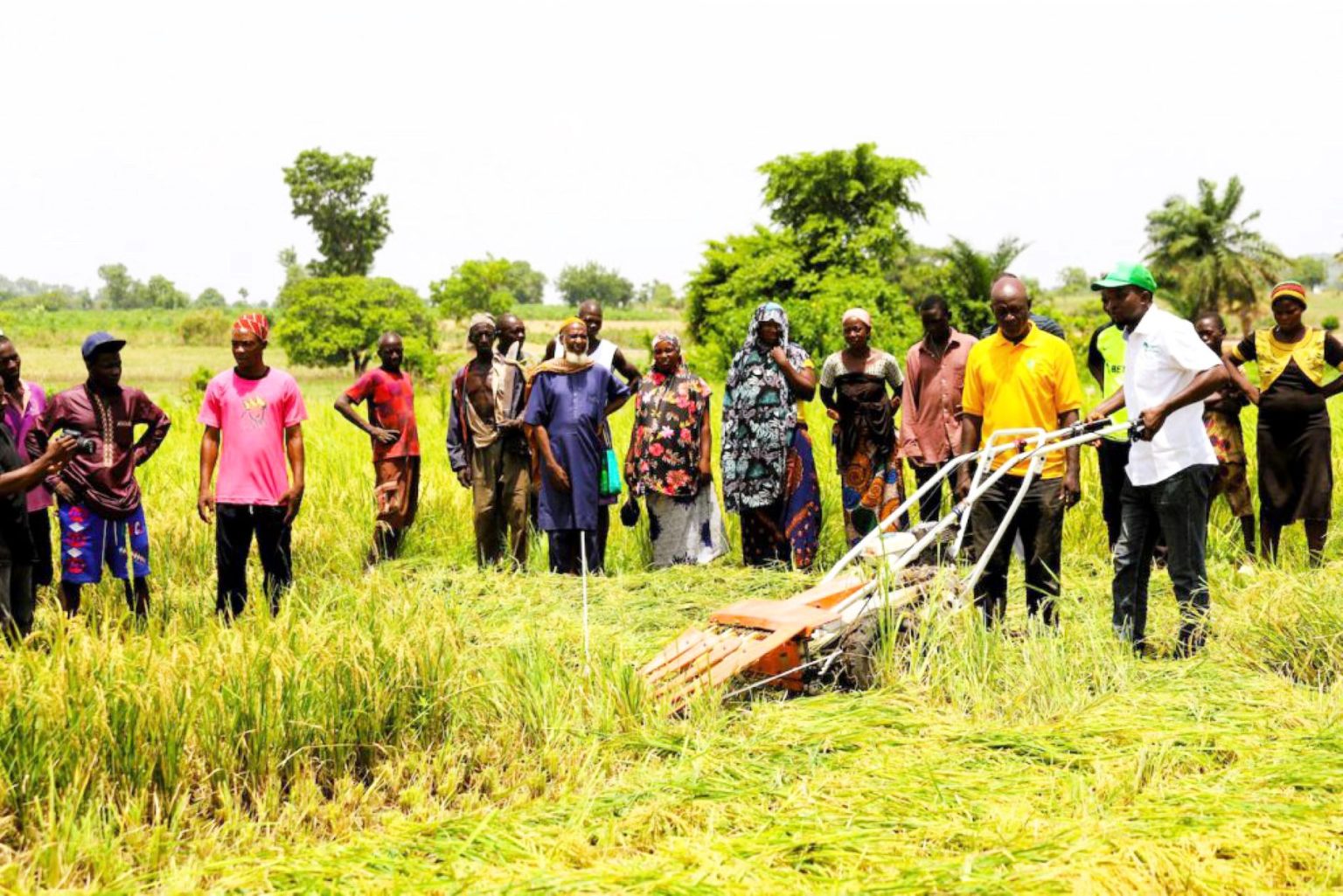
A huge number of farmers, cutting across arable crop sector, tubers, tree crops and others may exit farming this year after incurring estimated losses running into several billions of Naira.
This is due to the declining price of food commodities, which have caused serious dislocations in the agricultural investment ecosystem and inflicted severe hardship on farmers, weakened incentives to produce, and undermined Nigeria’s broader food security objectives, reports Saturday Guardian.
According to the latest Selected Food Price Watch released by the National Bureau of Statistics (NBS) early this week, the average price of locally produced rice fell 10.94 per cent year-on-year to N1, 841.83 per kilogramme, while brown beans plunged 48.65 per cent to N1, 262.43.
Onion and tomatoes also recorded yearly declines of 17.87 per cent and 5.25 per cent, respectively, pointing to easing pressures in selected food categories. However, crayfish rose sharply by 39.07 per cent, underscoring persistent volatility in protein prices.
The price decline in selected food price follows a series of federal government’s interventions aimed at expanding supply and moderating inflationary pressures. In the second half of 2025, the Federal Government approved temporary food import measures, including duty waivers on selected staples, while reopening key land borders to improve inflows.
In addition to the interventions, the exchange rate stability has improved following the Central Bank of Nigeria (CBN) monetary reforms, helping to reduce imported input costs and pricing uncertainty for traders.
Following this policy adjustment, the market has responded swiftly. Prices of major staples such as rice, maize, cassava products, tomatoes, and vegetable oils have declined. For millions of Nigerian consumers, this has brought much-needed relief.
However, beneath this welcome price moderation lays a more troubling reality for local farmers and agriculture value chain investors, one that calls for urgent and careful attention.
Industry players said this scenario, where farmers sell produce at declining prices while production costs remain elevated, has created widespread distress across agricultural ecosystems, with the effect being felt across all segments of agriculture.
Reports from producing states indicate that about 3,500 rice farmers are contemplating exiting rice cultivation after incurring estimated losses of over N93b, just as cassava farmers are facing a similar crisis.
Cassava, long regarded as a resilient and dependable staple, is currently experiencing a market collapse in several producing zones. Tubers are selling at prices that barely cover harvesting costs, leaving farmers helpless and unable to recover their investments.
In some cases, cassava is being left unharvested because the cost of transportation exceeds the value of the produce.
Tree crop farmers are not insulated from these shocks. Vegetable and edible oil producers are under pressure as imported vegetable oil brands reduce demand for locally processed brands. Cocoa farmers continue to battle price volatility in international markets, while shouldering rising domestic costs of labor and farm maintenance.
At the downstream level, the effects extend to agro-processing and value addition. Soybean farmers supplying processors for vegetable oil production are experiencing reduced demand and lower prices. Small- and medium- scale processors are squeezed between cheaper imports and the high cost of energy, packaging, and logistics. This threatens not only farm incomes but also rural employment and agro-industrial development.
It was learnt that many farmers had invested heavily in land preparation, irrigation, seed, fertiliser, and labour, only to face a market flooded with cheaper alternatives. The result has been depressed produce prices that fall below the cost of production.
In his reaction, the Managing Director Foremost Development Services Limited, Dr. Fatai Afolabi, lamented that the developments raise a critical question about food security, noting that food security is not solely about ensuring that food is available and affordable today, but also about safeguarding the capacity of local producers to continue producing tomorrow.
He added that if sustained losses force farmers out of production, Nigeria risks increasing its dependence on imports, exposing itself to global supply shocks, foreign exchange pressures, and long-term vulnerability in its food system.
“Other countries offer valuable lessons on how to balance consumer protection with farmer sustainability. In India, for example, food imports are sometimes used strategically during shortages, but they are carefully timed and complemented by strong domestic support systems.
“Farmers benefit from minimum support prices, government procurement programmes, and substantial investments in irrigation, storage, and extension services. Imports act as a temporary buffer, not a permanent substitute for local production,” he said.
Dr. Afolabi stressed that for Nigeria, the implication is clear, as the current food import policy can play a useful stabilising role, but it must be complemented by deliberate measures that protect local producers.
On his part, the Chief Executive Officer, Centre for the Promotion of Private Enterprise (CPPE), Dr Muda Yusuf, said there is an urgent need to strike a sustainable balance between two critical national objectives – keeping food affordable for consumers, while protecting farmers’ incomes and safeguarding investment in agriculture.
“This development presents a major policy dilemma that demands urgent attention. Nigeria cannot afford a policy regime that undermines confidence and discourages investment in agriculture—one of the most strategic sectors of the economy, a major source of livelihoods, and one of the country’s largest employers of labour.
“There is therefore an urgent need for policy recalibration and rebalancing to ensure that farmers remain productively engaged, rural incomes are protected, and investor confidence across the agricultural value chain is sustained — without compromising the equally important objective of keeping food affordable for Nigerian households,” he said.
He noted that recent import surges of food crops —especially staples such as rice, maize and soybeans —have caused serious dislocations in the agricultural investment ecosystem, which has inflicted severe hardship on farmers, weakened incentives to produce, and undermined Nigeria’s broader food security objectives.
Dr Yusuf hinted that though consumers have welcomed the decline in food prices, the long-term consequences are adverse: farmer incomes fall, production declines over time, investment confidence weakens, and the country risks returning to cycles of scarcity and higher prices.
He said: “The Centre for the Promotion of Private Enterprise (CPPE) is of the firm view that Nigeria urgently requires a clear, rules-based and market-friendly Farm Price Stabilisation and Farmer Income Protection Framework.
“Such a framework should prevent import-induced price crashes, reduce harvest-time price collapse, discourage distress sales, protect farmer livelihoods, strengthen value chains, and provide stable supply conditions for processors and consumers. There is a need for a coherent programme grounded in global best practices and adapted to Nigeria’s fiscal and governance realities.”