

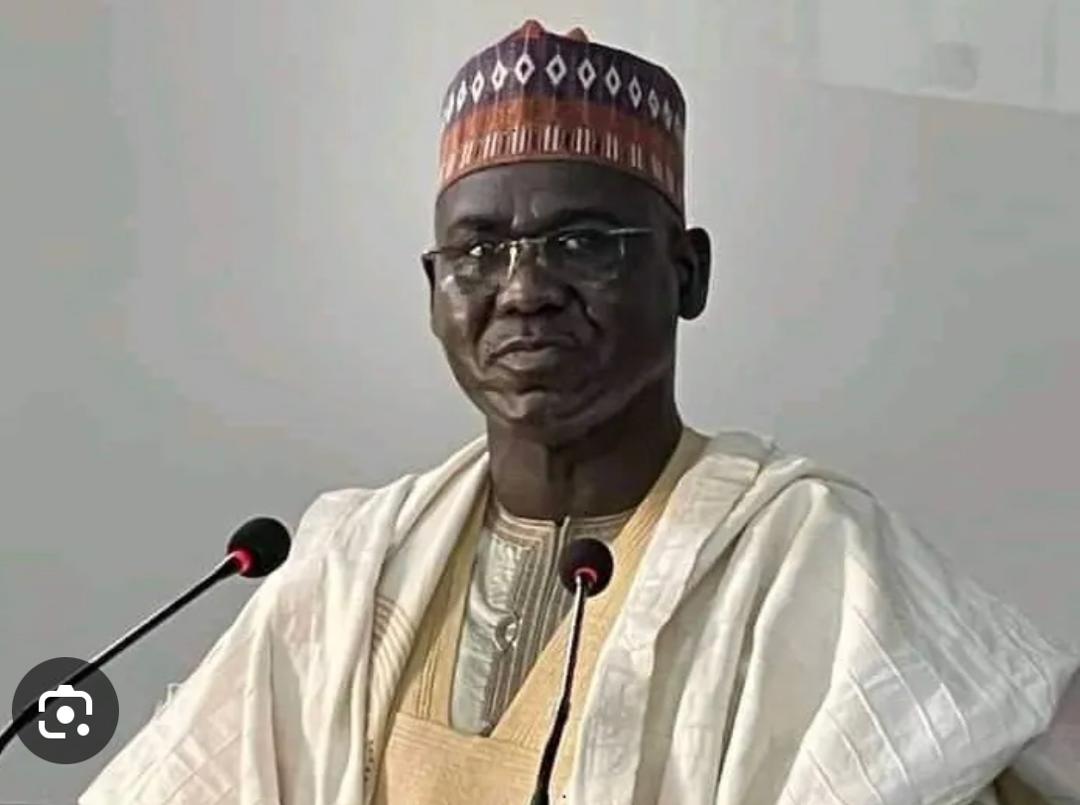
•General Tukur Buratai (rtd)
Former Chief of Army Staff, Lt. General Tukur Buratai (rtd), has said the $1billion approved for defence procurement during his tenure as Army Chief was released to the Ministry of Defence.
Buratai stated this at the Defence Correspondents’ Association of Nigeria (DECAN) Conference in Abuja today.

According to the former COAS, the funds approved by the National Economic Council did not pass through his hands or the accounts of the Nigerian Army, reports Daily Independent.
Delivering a lecture with the theme, “Beyond Kinetic Warfare: Harnessing Technology and Intelligence -led Operations for Nigeria’s National Security,” Buratai described the allegations surrounding the funds as “political and malicious,” saying they first emerged during the 2019 election period when the opposition alleged that the money had been diverted for electoral purposes.
According to him, “The $1 billion was approved by the National Economic Council for defence procurement. Not a single dollar of that fund passed through my hands or through the accounts of the Nigerian Army, Navy, or Air Force.
“The funds were released to the Ministry of Defence, and the entire procurement process was handled by that ministry. The Army, Navy, and Air Force never had a single dollar from that fund to make procurement directives. I have described these allegations as political and malicious. They first surfaced during the 2019 election period, when the opposition alleged the funds had been diverted for electoral purposes-a claim the federal government publicly refuted. Yet the stain remained, attached to the Service Chiefs rather than the institution that managed the funds.”
Buratai said the federal government publicly refuted the allegation at the time but lamented that the controversy continued to affect the reputation of service chiefs.
He faulted the ministry for publicly explaining how the funds were disbursed or how contracts were awarded.
“The ministry then, on its own, had not publicly explained how funds were disbursed or contracts awarded. Accountability must be properly located,” he said.
Buratai, however, called for greater transparency in military procurement, recommending the establishment of a defence procurement transparency portal to publish information on contracts awarded, contracting entities and delivery timelines, subject to national security considerations.
“The Ministry of Defence must own its procurement record. The $1 billion arms procurement controversy festered because the institution that managed the funds, the Ministry of Defence, remained silent while Service Chiefs absorbed criticism.
“I recommend a Defence Procurement Transparency Portal that publishes, within national security limits, broad categories of contracts awarded, contracting entities, and delivery timelines. When the media asks where the money went, the answer should come from the ministry that spent it, not from military officers who never touched it,” he said.
He further proposed quarterly accountability bulletins summarising court-martial outcomes relating to human rights violations and operational conduct, provided the publications did not compromise the rights of accused personnel or ongoing military operations.
On allegations of human rights violations by members of the Nigerian security forces, Buratai said credible claims should be investigated and, where substantiated, prosecuted.
“I have always maintained that where credible allegations exist, they must be investigated and, where substantiated, prosecuted. The military is not above the law,” he said.
He acknowledged the need for the military to demonstrate that its disciplinary processes were credible, transparent and capable of addressing allegations at all levels.
The retired army chief said improved communication by the military and the Ministry of Defence would help address public concerns and ensure that media reports reflected the full context of security operations.
Meanwhile, the President of DECAN, Odita Sunday, in his opening address, called for the inclusion of modern technologies such as artificial intelligence, data analytics, satellite surveillance, unmanned systems and secure communications in the counterterrorism operations.
According to him, this could “significantly enhance the capabilities of our security agencies.”
However, Odita noted that technology alone is not enough; according to him,”It must be supported by competent personnel, adequate training, effective institutions, inter-agency cooperation and sound policies,” he said.