•Visual art work
This is a visual art work produced in Yoruba, one of the major tribes and languages in Nigeria and subtitled in English for the quick understanding of non Yoruba ethnic speakers.
Its target is for Africans both at home and in the Diaspora to know more about African traditions, culture and beliefs especially as it concerns the girl-child and road to her independence and emancipation.

The artist Olamide Adegboye carefully chose his language and artistic drawings and portraits to draw home his point, reports The Guardian.
The art work set in a real traditional African background and titled Ara Ní ń Rántí, Ẹ̀mí Ní ń Rí translated into English as (Body Remembers, Spirit Sees) is a six-part visual testimony on the architecture of the Black race, where the body holds what society refuses to name and the spirit insists that truth be carried with dignity.
Presented as the six chapters of Black Witness, the series is an investigative journey into memory, identity, and authorship within the African diaspora. It serves as a visual archive of the spiritual energy, inherited histories, and lived experiences that shape Black existence.
Moving like a rhythmic pulse, the work traces a path from the forced silences of trauma and cultural erasure to the reclamation of joy, agency, and divine presence.
Through carefully constructed portraits, African aesthetics are treated not as trends, but as a precise and living language.
The series explores the tension between inherited cultural expectations and the individual’s right to self-definition, examining how identity is negotiated, protected, and transformed across generations.
The images used in the art work are more than portraits; they are a material language of value, protection, and remembrance. They document untold histories, preserving them as a permanent part of African cultural memory.
Each chapter bears witness to experiences often overlooked, asking viewers to engage not as passive observers but as participants in a broader act of accountability.
This is not art created for consumption alone. It is an act of cultural preservation and testimony a reality check for a world that frequently celebrates Black aesthetics while overlooking Black witness. Through this work, memory becomes archive, archive becomes evidence, and evidence becomes a pathway towards dignity, healing, and recognition.
The artist in order to buttress his point on the maltreatment of the girl-child employed an artistic expression, he called Ọmọbìnrin, Má Dákẹ́ which means (Girl Don’t Be Silent in English).
His purpose of doing this is to expose the cultural and traditional belief that the girl-child should be seen and not heard.
He went further to illustrate the maltreatment the girl- child goes through in her everyday life without questioning, since she is supposed to accept her condition as normal and the norms of the society she finds herself.
In doing this, he tried to prove that the girl-child in many traditional African societies face violence of enforced silence, conceal her pains out of respect and obedience and many at times, the society pretend as if such violence does not exist.
A critical look at Olamide Adegboye’s work, shows that the paint covering the skin functions as a second skin, beautiful enough to attract the viewer, yet unsettling enough to accuse.
It symbolises the layers of protection, performance, and concealment that often surround unspoken harm. What appears decorative on the surface becomes evidence of a deeper reality, challenging viewers to look beyond aesthetics and confront what remains hidden.
Behind the subject stands a tree, serving as a traditional witness. Across many African communities, trees act as silent keepers of memory, holding stories, judgments, secrets, and histories that people are unwilling or unable to speak aloud. Here, the tree becomes a living archive, bearing witness to experiences that remain unresolved and unrecorded.
The artist’s decision to conceal the subject’s mouth with another person’s hand was intentional.
Knowing fully well that silence is rarely voluntary; it is often imposed through power, fear, expectation, or social conditioning.
Rather than depicting violence directly, the gesture communicates its psychological weight. It becomes a visual metaphor for interrupted voices, suppressed truths, and stories.
Ẹ̀wọ̀n Inú (Prison of the Mind)
Ẹ̀wọ̀n Inú explores the architecture of internal captivity the psychological spaces we construct when escape is impossible in reality. It is a study of self-containment, examining how trauma, shame, and memory can become invisible walls that shape our inner lives long after an event has passed.
Presented in black and white, the image strips away the distraction of colour, leaving only form, shadow, and emotional weight. This visual reduction mirrors the experience of trauma itself, where the richness of life is muted and the individual is left negotiating with memory in isolation.
Rather than focusing on the spectacle of pain, the work honours the quiet and often unseen labour of healing.
The bed becomes a symbolic courtroom where shame and silence are the only witnesses. It is a private space transformed into a site of judgement, reflection, and survival, where the subject confronts the burdens carried within the mind.
The decision to lower the light and conceal the subject’s face was intentional. Trauma is often difficult to explain; the mind can be overwhelmingly loud while remaining invisible to others. By obscuring identity, the image shifts attention from the individual to the universal experience of psychological struggle.
As part of Ara Ní ń Rántí, Ẹ̀mí Ní ń Rí (Body Remembers, Spirit Sees), this chapter recognises healing as an act of courage and resilience, giving visual form to battles that are rarely seen but deeply felt.
Ibojú Kì í Tani (The Mask Does Not Lie)
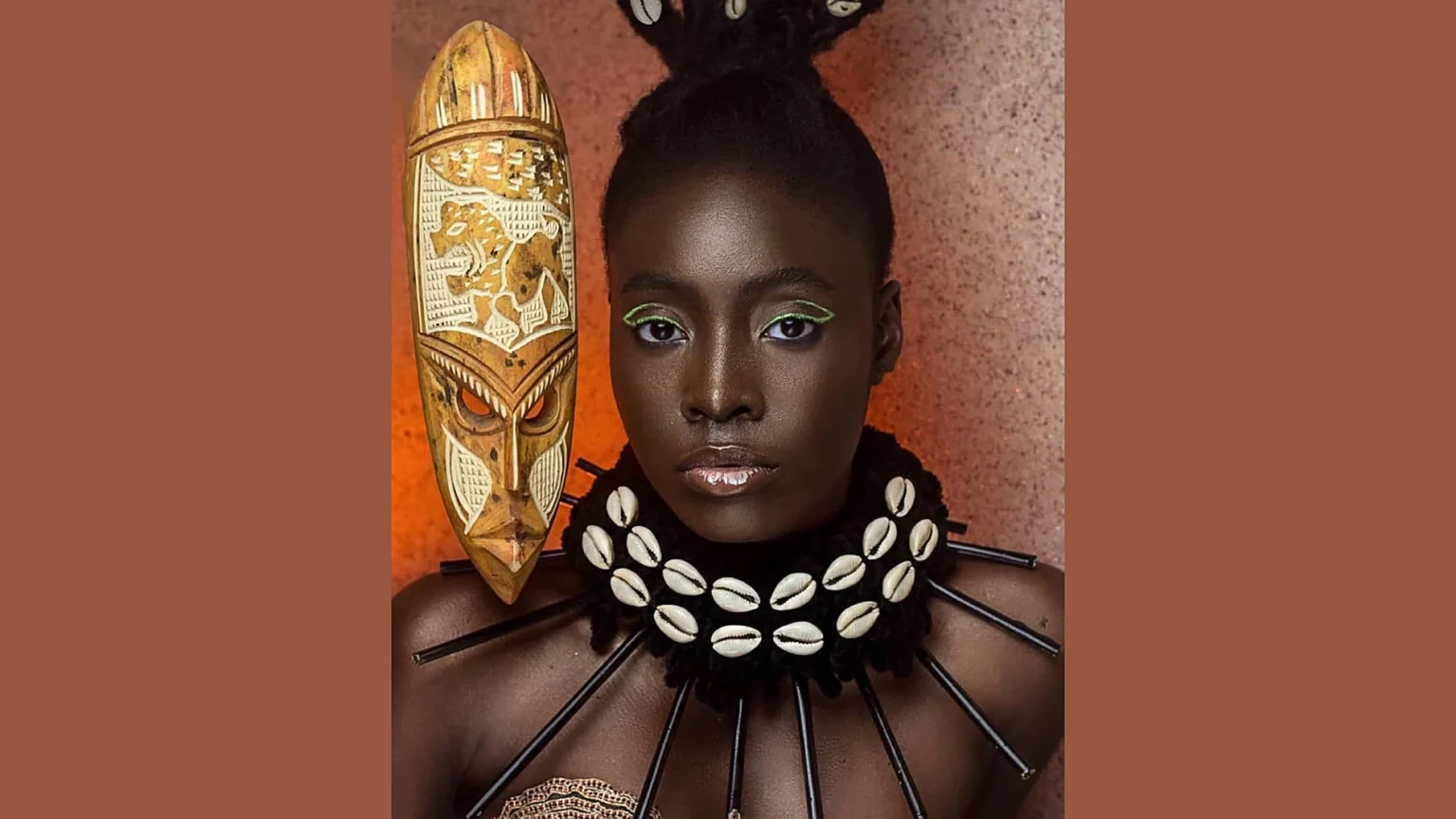
Ibojú Kì í Tani examines the mask as a symbol of authority, protection, and survival rather than an object of display. It questions who is recognised as fully human and who is reduced to an “exotic culture” for observation, challenging the ways African identities are viewed, consumed, and archived.
Placed beside the subject, the mask represents a duality. It is both a sacred vessel carrying ancestral knowledge across generations and a shield concealing silences, burdens, and unresolved truths within families and communities. It speaks to what is revealed and what remains hidden.
At the subject’s throat, cowrie shells serve as a language of value, protection, and inheritance. Long before colonial economies, they held social, economic, and spiritual significance across West Africa. Their presence reflects cultural systems that endured trade, displacement, and historical erasure.
The mask’s position close to the subject but not touching her is intentional. The ancestors are present as guides, not costumes. The space between them creates a dialogue between inheritance and individuality, suggesting that tradition can shape identity without fully defining it.
As part of Ara Ní ń Rántí, Ẹ̀mí Ní ń Rí (Body Remembers, Spirit Sees), this chapter invites viewers to look beyond aesthetics and engage with the histories, responsibilities, and memories carried within cultural symbols.
Àmi Lórí, Ìtàn Lẹ́nu (Marks on the Face, History in the Mouth)
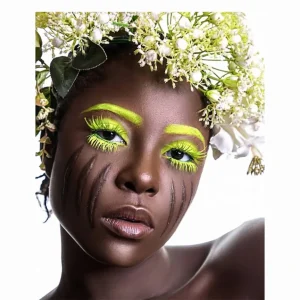
Àmi Lórí, Ìtàn Lẹ́nu explores the face as a living archive of lineage, memory, and survival. It reclaims tribal scarification from the tourist gaze, presenting it not as a curiosity or relic of the past, but as a complex inheritance shaped by history, belonging, and identity.
The work brings tradition and futurism into dialogue. Tribal marks act as signatures of home, carrying ancestral memory and cultural continuity, while the neon lashes introduce a disruptive futurist element. Together, they Black Witness, the series is an investigative journey the notion that African identity exists only in the past, suggesting that heritage and innovation can coexist within the same body.
Flowers surrounding the subject introduce softness and innocence, yet the markings insist on history. They remind viewers that beauty does not erase memory and that gentleness can carry the weight of truth. The contrast between the delicate floral elements and the permanence of the marks creates a tension between vulnerability and resilience.
•Visual art work
The pairing of tribal marks and vibrant flowers is intentional. It affirms that softness does not diminish history. We can carry beauty, tenderness, and joy while still holding the truths of where we come from.
As part of Ara Ní ń Rántí, Ẹ̀mí Ní ń Rí (Body Remembers, Spirit Sees), this chapter asserts that identity is not fixed in the past but continually reimagined through memory, inheritance, and self-definition.
Àwọ̀ jẹ́ Ohùn (Colour Is a Voice)
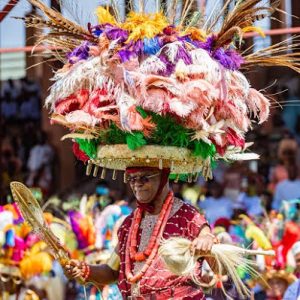
Àwọ̀ jẹ́ Ohùn presents colour as a language of survival, memory, and resistance. The spectrum flowing across the subject is not decorative. It represents the Sovereign Spectrum: the refusal to be reduced to a single narrative of suffering and the reclamation of joy, abundance, and self-definition as acts of power.
This chapter positions joy as a form of resistance. Across the African diaspora, communities have preserved identity, meaning, and hope through expressions that survived displacement, erasure, and oppression. Here, colour becomes a testimony to what endured when language, history, and agency were threatened.
The sculpted headpiece functions as a halo of spiritual abundance and celebration. It presents joy not as escapism but as evidence of survival, inviting viewers to recognise beauty, creativity, and happiness as forms of cultural resilience.
The colours are deeply personal. They honour those who have endured hardship yet continue to move through the world with dignity, grace, and light.
As part of Ara Ní ń Rántí, Ẹ̀mí Ní ń Rí (Body Remembers, Spirit Sees), this chapter affirms that joy is not the absence of struggle. It is proof that the spirit remains sovereign despite it.
Ọlọ́run Ní Nú Mi (The Divine Lives in Me)
Ọlọ́run Ní Nú Mi concludes Ara Ní ń Rántí, Ẹ̀mí Ní ń Rí (Body Remembers, Spirit Sees). It is a meditation on spiritual sight, accountability, and the enduring presence of witness beyond the human world. Where earlier chapters explore memory, identity, and resilience, this final work arrives at a simple truth: nothing is truly unseen.
The pupil-less eyes represent a vision older than the body itself. They suggest ancestral consciousness observing what history, institutions, and individuals often choose to ignore. The image asks who bears witness when society fails to protect its most vulnerable.
This chapter proposes that accountability extends beyond human judgement. What is hidden, denied, or carried in silence remains visible within a larger spiritual framework. Truth persists even when recognition is delayed.
The removal of the pupils was intentional. I wanted viewers to experience the unsettling feeling of being observed, as though the universe itself keeps a record of what people claim not to have seen. The blank eyes transform the subject into a vessel of witness, memory, and truth.
As the final image in the series, Ọlọ́run Ní Nú Mi affirms that while bodies remember and spirits see, the divine remains the ultimate witness.