•Flooding
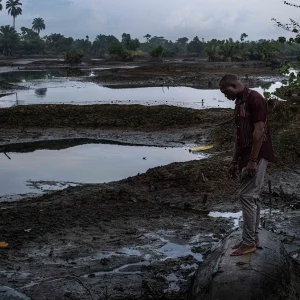
More than N109.5bn has been released from Nigeria’s Ecological Fund in three years. Yet, as the 2026 rainy season approaches, fear is creeping back into homes, farms, and riverine communities across the country, reports Sunday Trust.
Figures obtained from the Office of the Accountant-General of the Federation show that between July 2023 and December 2025, a total of N109,516,046,114.35 was disbursed to tackle ecological challenges, particularly flooding.

The spending has steadily climbed. In the second half of 2023 alone, N21.1bn was released. That figure rose to N34.78bn in 2024 and jumped to N53.62bn in 2025.
A closer look at the monthly breakdown tells an even more detailed story of consistent spending. In 2023, disbursements ranged from N3.3bn in July to N4.1bn in September, before closing the year at N3.83bn in December.
In 2024, allocations fluctuated, peaking at N4.73bn in February but dipping sharply to just N127.4m in August and N127.2m in October.
By 2025, monthly releases consistently stayed above N3bn, climbing as high as N6.08bn in September, the peak of the rainy season. Still, despite the rising financial commitment, the anxiety on the ground is hard to ignore.
For farmers like Lagos-based fish farmer, Mohammed Alagangan, the conversation is no longer about how much has been spent, but whether it will make any difference when the rains come.
Speaking to our correspondent, Alagangan said changing climate conditions, particularly the shortening and irregularity of the Harmattan season, are clear indicators that rainfall patterns are becoming increasingly unstable.
“Scientifically, there is what is called climate change and it is real. The seasons are no longer regular,” he said, noting that Harmattan, traditionally spanning from October to January, now lasts only a few weeks in some cases.
According to him, the shift suggests a similar compression in rainfall periods, which could result in intense downpours within a short timeframe.
“We are now looking at a very short period of rain that might lead to flooding, there is a very high possibility of flooding, so we should not rule that out,” he added.
Alagangan cautioned that heavy rainfall driven by accumulated atmospheric moisture could trigger severe flooding, with significant economic consequences, particularly for farmers operating in flood-prone areas.
He urged governments at all levels to intensify sensitisation efforts and prepare for looming risks.
“We should just put all machinery in place and make sure that all our flood plains are not too engrossed with economic activity,” he said.
Highlighting the vulnerability of agricultural investments, he stressed the need for farmers to adopt climate-resilient practices.
He pointed to practical mitigation techniques in fish farming, such as the use of reinforced netting systems in ponds to prevent stock loss during floods.
“A lot of farmers don’t have access to this kind of information, and the cost is also high, but using part of your investment to fortify your activity will go a long way,” he noted.
Alagangan also called on state governments to improve drainage systems and water channelisation to reduce flood impact.
While acknowledging ongoing efforts in Lagos, he said more needs to be done to open up waterways and direct floodwaters into the lagoon.
“If the government refuses to do the needful, people will continue to suffer losses year in, year out,” he warned.
He advised farmers without the technical capacity to mitigate flood risks to avoid flood plains altogether, stressing that prevention remains the most effective safeguard in the face of growing climate uncertainty.
Annual Flood Outlook
Minister of Water Resources and Sanitation, Joseph Terlumun Utsev, recently warned that 14,118 communities across 266 local government areas in 33 states and the Federal Capital Territory face a high flood risk in 2026.
Presenting the Annual Flood Outlook in Abuja, he said the forecast offers “evidence-based predictions to help governments, stakeholders and communities prepare ahead of the flood season.”
The risk window stretches from April to November, threatening agriculture, infrastructure, and already fragile livelihoods.
Major cities likely to experience flash and urban flooding include Abakaliki, Abeokuta, Abuja, Asaba, Benin City, Birnin Kebbi, Calabar, Ibadan, Kaduna, Kano, Lagos, Makurdi, Nguru, Onitsha, Osogbo, Port Harcourt, Sokoto, Warri, and Yola. Coastal and riverine flooding is also expected in Bayelsa, Cross River, Delta, Lagos, Ogun, Rivers, and Ondo states due to rising sea levels and tidal surges.
Further compounding concerns, the Council of Registered Builders of Nigeria warned of increased risks to buildings and infrastructure during the 2026 rainy season.
In its advisory based on the seasonal climate prediction by the Nigerian Meteorological Agency, CORBON highlighted longer-than-normal rainy seasons in several states, above-normal rainfall in key regions, and severe dry spells in others.
The chairman of CORBON, Dr. Samson Opaluwah, noted that these conditions heighten the likelihood of flooding, erosion, roof damage, foundation distress, and service disruptions nationwide.
He urged building owners and estate managers to undertake preventive measures such as clearing drainage systems, reinforcing roofing structures, inspecting foundations, and elevating electrical systems above potential flood levels.
“Preventive maintenance is far more cost-effective than emergency repairs,” he said, warning that blocked drains and poor site management significantly increase flood risks.
The juxtaposition of rising Ecological Fund disbursements and expanding flood risk has renewed scrutiny over the utilisation and impact of the fund, particularly as Nigeria braces for another severe flooding season in 2026.
Effect of flooding
In 2025, the former Permanent Secretary of the Federal Ministry of Environment, Mahmud Kambari, reportedly said Nigeria recorded losses estimated at ₦11.5 billion in agricultural produce due to widespread flooding.
Kambari disclosed this in Abuja during a Technical Committee Meeting on the National Flood Insurance Policy and Implementation Framework, where he highlighted a growing pattern of flood incidents across the country.
He attributed the trend to climate change, rapid urbanisation, and inadequate infrastructure, warning that the impact of flooding is becoming increasingly severe.
He recalled the 2024 flooding in Borno State caused by the collapse of the Alau Dam, which submerged about 70 per cent of Maiduguri, displaced over 419,000 people, and led to more than 30 deaths.
According to him, the United Nations described the incident as the worst flood in the region since 1994, affecting over one million people. In Kogi State, he added, more than two million people were displaced, with over 200 communities submerged and about 60,000 hectares of land impacted.
Kambari further revealed that flooding in Anambra State affected 54,422 people across seven local government areas, displacing 21,083 residents and resulting in 29 deaths. He also noted that Kwara State experienced significant flooding earlier in the year, particularly in farming communities.
A final situation report by the International Federation of Red Cross and Red Crescent Societies detailed the devastating impact of the 2022 floods in Nigeria, describing it as the worst the country has experienced in a decade.
According to the report released in November 2025, the floods displaced more than 1.4 million people, claimed over 603 lives, and left at least 2,400 others injured as of October 2022. The disaster also damaged over 82,000 homes and affected more than 332,000 hectares of land.
The report noted that while seasonal flooding is common in Nigeria, the 2022 incident stood out due to its scale, surpassing similar events since the 2012 floods. By October 2022, more than 200,000 houses had been either partially or completely destroyed.
A particularly tragic incident occurred on October 7, 2022, when a boat carrying people fleeing the floods capsized on the River Niger, resulting in 76 deaths.
The flooding was attributed to a combination of heavy rainfall, climate change, and the release of water from Cameroon’s Lagdo Dam, which began discharging water on September 13, 2022.
In total, 33 out of Nigeria’s 36 states were impacted, with homes, infrastructure, and farmlands severely damaged. About 2.8 million people were affected overall, while an estimated two million were forced to flee or evacuate from high-risk areas.
Many of those displaced ended up in overcrowded and poorly equipped shelters, raising serious protection concerns and exposing them to heightened risks. Months after the floods, many victims were still in urgent need of food, clean water, shelter, sanitation, and support to rebuild their livelihoods.
The report also highlighted medium-term consequences, including disease outbreaks, respiratory illnesses, and rising malnutrition, alongside broader economic disruptions, particularly in agriculture and trade.
Meanwhile, urban planner and former president of the Nigerian Institute of Town Planners, Nathaniel Atebije, blamed recurring flooding on failed infrastructure and poor planning.
“We had an agreement with the Republic of Cameroon, where there is a bigger dam on the River Benue. It was agreed that there should be a middle-level dam to be constructed between Adamawa and Taraba States to contain flooding from Cameroon any time water is released,” he said.
“Now, these things are not done. These medium-level dams are not done. And so, whenever water is released from the dams, the people who are downstream will greatly suffer flooding. It has taken so many lives. It has destroyed millions or billions of infrastructure. It has destroyed billions of food crops and has thrown quite a lot of places into lack of food,” Atebije added.
“Flooding, in my understanding, can be described as a natural or man-made environmental catastrophe caused by the carelessness of man to organize his environment through rational physical planning,” he said.
“Urbanization is on the increase, population is on the increase, and the activities of human beings are on the increase, but we do not seem to care to organize this environment. So water is not guided to pass through the places it should go; therefore, they overrun their bounds,” he warned.
“The need for the control of development becomes very, very important. We make sure that wrong things are not built to block water channels. We make sure that development is properly guided through development control.
“We throw our solid wastes and refuse into drainage channels. And when they block the channels, it becomes difficult for water to flow. And when it cannot flow, flooding occurs,” he said.
“The River Niger has collected quite a lot of silt over the years. For example, some time ago, there was a contract given for desilting or dredging of the River Niger. I don’t know how far we have gone with it, but to date, it appears as if the job has not been finished. Almost every year now there is flooding,” he add.
“We have a very weak institutional response, which is capped off by corruption. So many institutions have been created either in the name of environment, watershed management, or migration management. A lot of budget is given to them every year, but only God knows how well this is applied,” he said.
“If we want to ensure that we minimize flooding, it is important that we embark on urban planning. Let our urban areas be planned by professionals. Let us set up institutions that will manage the process of development, and let the institutions be empowered with political backing and funds. When these things are done, we shall have fewer of these challenges of flooding,” he said.
The International Society for Social Justice and Human Rights also blamed governance failures for Nigeria’s recurring flood disasters, warning that the country remains dangerously unprepared despite over billions released from the Ecological Fund since 2023.
Speaking with our correspondent, the organisation’s chancellor, Jackson Omenazu, described the situation as “not only disturbing but indicting,” noting that more than 33 states remain at high risk this year.
“Environmental disasters in Nigeria are no longer natural occurrences, they are governance failures,” he said.
The group argued that persistent flooding reflects systemic weaknesses rather than a lack of funding, citing poor accountability, weak institutional coordination, and ineffective urban planning.
“Despite consistent warnings, there has been little evidence of proactive or preventive action across the three tiers of government,” it added.
Calling for reforms, the organisation urged a forensic audit of ecological fund disbursements between 2023 and 2026, alongside stronger legislative oversight and enforcement of urban planning laws.
“It is with a profound sense of urgency that we must transition from reactive measures to a proactive and sustainable approach to flood risk management,” the statement said.
It also stressed the need for investment in critical environmental infrastructure and stronger inter-agency coordination, warning that continued displacement, loss of livelihoods, and destruction caused by flooding amount to violations of citizens’ rights.