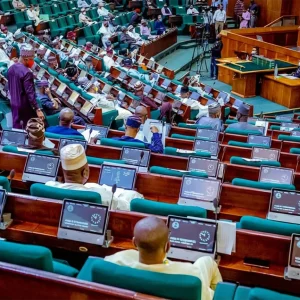
•National Assembly Complex, Abuja
In the corridors of power at the National Assembly, what should have been a routine harmonisation of the Electoral Act Amendment Bill has transformed into a defining moment in Nigeria’s democratic journey.
Nigeria’s fragile democratic confidence is once again under strain following the Senate’s passage of amendments to the Electoral Act that stop short of mandating live electronic transmission of election results.
This move has triggered outrage, renewed protests and urgent negotiations between the two chambers of the National Assembly, reports Sunday Vanguard.
With the 2027 general elections fast approaching, public pressure, protests, threats of mass action and vociferous demands from civil society have thrown the legislative process into a tense national focus.
At the centre of the storm is Clause 60(3) of the amended Electoral Act Bill, which now provides for both manual and electronic transmission of results but removes explicit reference to “real-time” uploads from polling units a key reform many Nigerians consider critical to credible elections.
The House of Representatives had earlier passed a version mandating direct, real-time electronic transmission to the Independent National Electoral Commission (INEC) Result Viewing (IReV) portal.
The House says the clause must mandate real-time electronic transmission of results; the Senate initially resisted which set up a political firestorm.
The Senate, however, after public outcry, opted for a flexible model, citing concerns over possible network failures during elections.
Conference Committee under pressure
To resolve the disagreement, both chambers have constituted 12-member Conference Committee each to harmonise the bill before transmission to President Bola Tinubu for assent.
The Joint Conference Committee is to harmonise their versions of the bill, a constitutional requirement before final passage and presentation to President Bola Tinubu for assent.
From the Senate, a 12-member delegation was appointed by Senate President Godswill Akpabio during an emergency plenary session amid ongoing backlash.
The team is chaired by Senator Simon Bako Lalong and includes Senators Mohammed Tahir Monguno, Adamu Aliero, Orji Uzor Kalu, Abba Moro, Asuquo Ekpenyong and Aminu Iya Abbas, Tokunbo Abiru.
The House of Representatives counterpart, also numbering 12, is chaired by Rep. Adebayo Balogun with members including Reps Fred Agbedi, Sada Soli, Ahmadu Jaha, Iduma Igariwey Enwo, Saidu Musa Abdullahi and Dr. Zainab Gimba.
The balanced composition reflects political priorities with both chambers seeking parity and a credible outcome that can withstand public scrutiny.
Senate VS House: Where they differ
The core divergence lies in how election results are handled electronically.
In December 2025, the House of Representatives passed a version of the bill with an explicit requirement that results be uploaded electronically in real time from polling units directly to the Independent National Electoral Commission’s IReV portal.
This reform, widely championed by civil society groups, was intended to strengthen transparency and limit manipulation.
But on February 4, 2026, the Senate removed the words “real-time” from the clause, insisting that electronic transmission should remain mandatory in principle, but allowing for flexibility in implementation.
Critics argue this dilutes accountability and opens a back door to result manipulation.
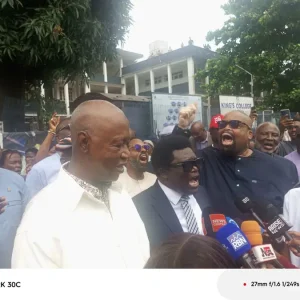
The Senate’s approach sparked widespread outrage, leading to protests, including the #OccupyNASS demonstration in Abuja and warnings from the Nigeria Labour Congress (NLC) of nationwide industrial action and election boycotts if the final law does not enshrine real-time uploads.
Senate Committee on Media and Public Affairs Chairman, Senator Yemi Adaramodu, defended the chamber’s posture: “We don’t do something that we just wake up, on impulse… you have to be very thorough… It must be so painstakingly done that the flaws… don’t repudiate whatever trust Nigerians have in our system.”
CSOs renew battle
Meanwhile, civil society organisations such as the Youth-led Electoral Reform Project (YERP-Naija) Consortium have blasted the Senate for undermining transparency by rejecting the House’s clearer stance. “The refusal to make real-time electronic transmission mandatory weakens statutory certainty and limits transparency safeguards,” said YERP-Naija in a statement.
CISLAC: Ambiguity opens door to rigging
Reacting sharply, the Executive Director of the Civil Society Legislative Advocacy Centre (CISLAC), Comrade Auwal Rafsanjani, accused the Senate of weakening electoral safeguards.
“I’m deeply saddened by what has happened,” Rafsanjani told our correspondent.
“What was passed provides for both manual and electronic transmission but excludes live transmission. The excuse is that there may be no network during elections. But this argument does not hold water.”
He warned that the amendment introduces dangerous ambiguity into the legal framework.
“When you create uncertainty and lack of clarity in the law, you open opportunities for manipulation. Many Nigerians see manual transmission as one of the major ways elections are rigged. What the Senate has done is to give with one hand and take with the other.”
Rafsanjani argued that virtually all communities now have access to network services from one provider or another.
“To say there will be no network is simply an excuse to retain room for electoral fraud,” he added.
However, he urged Nigerians not to disengage from the democratic process.
“We may not get 100 percent reform immediately, but citizens must remain vigilant. Register, vote, monitor the process and demand accountability. Democracy cannot thrive without participation.”
INEC: Clarity in law is critical
When contacted, a senior INEC official, who requested anonymity pending formal Commission briefing, said the electoral body would implement whatever framework the National Assembly eventually passes but stressed the importance of legislative clarity.
“The Commission’s position has always been that technological deployment must be clearly backed by law,” the official said.
“Electronic transmission enhances transparency. However, operational realities, including connectivity challenges in certain terrains, must also be considered. What is most important is that the law provides clarity and does not create room for conflicting interpretations.”
INEC insiders say ambiguity in legal drafting often becomes the focal point of post-election litigation.
Constitutional questions loom
A constitutional lawyer and Senior Advocate of Nigeria (SAN), who spoke with Sunday Vanguard under anonymity, warned that the wording of the final amendment could face judicial scrutiny.
“The Constitution vests INEC with the power to organise, undertake and supervise elections,” he explained.
“If the Electoral Act introduces ambiguity regarding the mode of result transmission, litigants may argue that such ambiguity undermines transparency and the constitutional right of citizens to participate in free and fair elections under Section 14 and Section 153 read together.
“Where the law is unclear, courts are often forced to interpret legislative intent. That is risky in an election cycle. Ideally, the National Assembly should eliminate uncertainty now rather than leave it to post-election tribunals.”
Mr Nwafor Ikechukwu, an Abuja-based legal scholar, noted that dual transmission models, manual and electronic, are not unconstitutional per se, but become problematic if the hierarchy between the two is not clearly established.
“If manual results contradict electronic uploads, which one prevails? That question must be settled in the law itself,” he said.
Public trust at stake
Civil society groups, labour unions and youth movements have warned that weakening real-time electronic transmission could erode voter-confidence ahead of 2027.
The NLC has already threatened protests if the harmonised version fails to guarantee credible safeguards.
Political analysts say the Conference Committee now faces a defining test: produce a reconciled draft that restores public trust or risk deepening cynicism about Nigeria’s electoral integrity.
What is likely to happen?
According to Ikechukwu, a compromise, one that affirms electronic transmission as the primary mode while retaining manual backup in clearly defined exceptional circumstances.
“Such a middle ground may calm immediate tensions, but the damage to public confidence may already require significant institutional reassurance”, he said.
“For now, one fact is clear: The battle over Clause 60(3) is no longer merely legislative. It is about trust. And as Nigeria inches toward 2027, the credibility of its democracy may well depend on how this moment is resolved.
What happens next?
As the Conference Committee convenes, all eyes are on how negotiators will reconcile these conflicting positions.
Political analysts say several outcomes are possible:
Harmonised Real-Time Clause – A compromise could adopt the House’s wording on mandatory real-time transmission, placating civil society and labour pressure.
Hybrid Model – The committee might craft a middle ground that prioritises electronic transmission while allowing manual back-ups for technical failure language similar to what the Senate has recently signaled.
Senate’s Preferred Draft – If lawmakers resist full House terms, the final version could retain flexibility for the Independent National Electoral Commission, potentially disappointing reform advocates.
Despite the high stakes, some believe it does not end with the electoral law.
“It is not just about an election law,” said, Henry Ojo, a senior civil society advocate. “It is about the credibility of our elections, trust in our process, and the future of democracy in Nigeria.”
Whether the Conference Committee produces a harmonised bill that bridges the divide may well determine whether Nigerians head into 2027 with renewed confidence or deepened cynicism about the integrity of their ballot box.