

•Jollof Rice
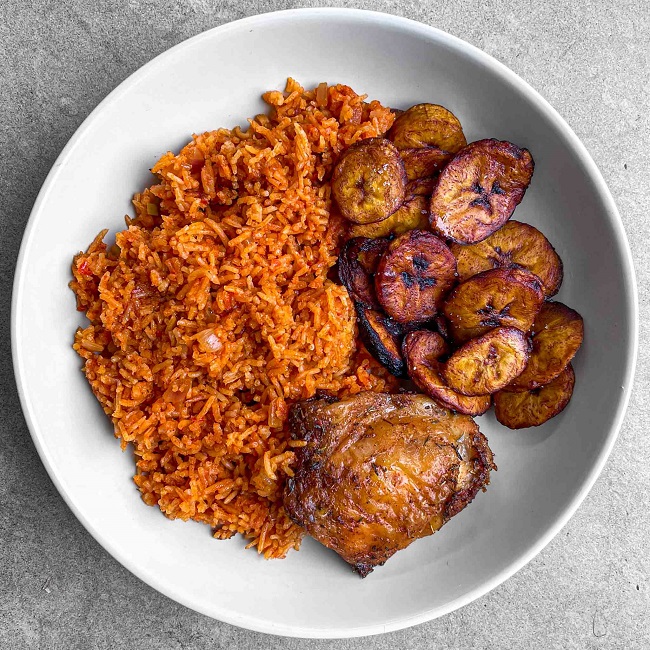
The rising food inflation rate has increased the average cost of cooking a pot of jollof rice in Nigeria from N20,274 in June to N21,300 in September, reflecting a 5.1% increase.
A report tagged ‘Crisis On The Menu: The SBM Jollof Index Q3, 2024′, said the prices of key ingredients such as tomatoes and peppers, remained high in July, although the Index recorded only a minor reduction of N200.
The previous index highlighted how the prices of ingredients like tomatoes and peppers had surged by over 300% in June, and this only slightly relieved in July, reports Channels TV.
By August, the national average cost of making a pot of jollof rice rose by an additional N390 and increased further by N1,181 in September.
While the cost of tomatoes and peppers eased from over N100,000 to a range of N18,000 to N30,000 in August and September, other staple food items saw continued increases.
For instance, the price of a 50kg bag of long-grain rice rose from around N85,000 in July and early August to about N100,000 by September.
This price hike occurred despite the government’s plan to distribute over 600,000 bags of rice at a subsidised rate of N40,000 per 50kg, highlighting the gap between policy intentions and actual market realities.
Nigerians have witnessed persistent price increases across essential items, making it increasingly difficult for households to meet basic dietary needs.
According to the report, protein sources, in particular, remain costly, which hinders many families’ ability to maintain adequate caloric intake.
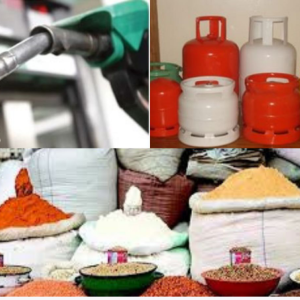
High energy costs and insecurity have further compounded these challenges. Electricity tariffs for Band A users have increased by over 300% since April, and cooking gas prices have steadily risen from around N14,200 in July to N15,500 in August, reaching about N16,500 in September.
Petrol prices also rose, from N830.46 in August to N1,030 in September, driving up transportation and food storage costs, thus impacting food prices across the country.
Natural disasters have also worsened conditions. Between July and August, 29 states experienced severe flooding, exacerbated by heavy rainfall and the collapse of the Alan Dam in Borno. The disaster affected at least one million people, claimed 311 lives, and injured over 3,17414, adding another layer of hardship for communities already grappling with inflation and limited resources.
Usman Abdullahi, an Abuja-based commodities trader, told SBM that the dam flooded thousands of farms, washing off harvest gains.
“This is why food prices have not come down drastically as expected. A lot of food may not be recovered because of the floods. Many farmlands in Bauchi, Gombe, Jigawa and Niger were seriously affected, reducing the availability of crops and food that would have been sold in the market,” he said.
While June recorded an all-time high for jollof rice prices, September saw some relief in certain markets, although inflationary pressures persisted in others. The national average price rose by 5.1%, from N20,274 in June to N21,300 in September, underscoring the sustained impact of food inflation on Nigerian households.
Markets with Price Declines
Several markets experienced a decline from the June peak.
Onitsha Market recorded the most substantial decrease, with prices dropping by 13.2%, from N22,350 in June to N19,400 in September.
This sharp reduction reflects a temporary market correction or improved local supply. Kano also saw a decrease of 3.5%, from N19,710 to N19,020, suggesting some price relief in the region.
Awka and the Trade Fair Market in Lagos saw slight decreases of 1.9% and 0.4%, respectively, indicating modest adjustments in food costs.
Markets with Price Increases
On the other hand, several markets continued to experience inflationary pressures. Nyanya Market in Abuja had the sharpest increase, with prices surging by 29.5%, from N21,850 in June to N28,300 in September.
This significant rise could be attributed to disruptions in local supply chains or increased transportation costs.
Balogun Market in Lagos recorded a notable 15.8% increase, from N17,700 to N20,500, indicating rising costs in the commercial capital.
The cost of essential items have reached the rooftops in Nigeria in recent months.
The Municipal and Bayside Mbakpa markets in Calabar saw substantial increases of 14.5% and 14.0%, likely influenced by seasonal supply chain challenges and climate impacts affecting produce availability.
In Ibadan’s Bodija Market, moderate increases (7.7%) were also observed, where prices rose from N19,660 to N21,170, and in Dugbe Market (6.6%), prices climbed from N20,330 to N21,670. Wuse II Market in Abuja, known for premium pricing, experienced a 12.0% increase from N23,150 to N25,920, reflecting the continued strain in urban centres.
Stable Markets
A few markets showed stable or minimal price changes.
Port Harcourt recorded a minimal 0.5% increase, from N20,300 to N20,400, signalling some stability in food prices. The data from this quarter reflects mixed trends, with some markets experiencing much-needed price relief from the June high while others continue to grapple with inflationary pressures.
These variations highlight the complex landscape of food inflation across Nigeria, where factors like regional supply dynamics, transportation costs, and climate impacts drive fluctuations in staple food prices, underscoring the growing challenge for Nigerian families striving to afford meals like jollof rice.
Data shows a consistent upward trend in the cost of preparing a pot of jollof rice in both the Nyanya and Wuse II markets from June 2024 to September 2024. In the Nyanya market, the price increased from N21,850 in June to N22,350 in July, N2,950 in August, and N25,920 in September. This represents a substantial increase of 18.6% over the review period, highlighting the intensifying food affordability challenges in the outskirt areas of the city.
Similarly, the Wuse II market witnessed a steady price increase over the same period.
Starting at N23,150 in June, the cost of preparing jollof rice rose to N23,650 in July, N24,150 in August, and reached N28,300 in September.
This marks a 22.2% increase from June 2024 to September 2024, indicating a more pronounced impact of food inflation in the region’s metropolitan areas.
The month-on-month analysis reveals that Abuja’s Nyanya Market saw a price increase of 2.3% from June to July, rising from N21,850 to N22,350. Prices rose by 2.7% from July to August, reaching N22,950, then surged by 12.9% from August to September, ending at N25,920.
In the Wuse II Market, the cost of preparing jollof rice increased by 2.2% from June to July, from N23,150 to N23,650. This was followed by a 2.1% rise from July to August, reaching N24,150, and a further 17.2% increase from August to September, reaching N28,300.
The price rise can be attributed to increases in the cost of essential ingredients, including tomatoes, pepper, seasoning, vegetable oil, beef, and turkey. Additionally, the Northcentral region continues to grapple with high energy costs and ongoing farmer-herder conflicts, which disrupt agricultural productivity and transportation.
These factors contribute to rising crime rates in the city and its suburbs as families struggle with food affordability.
This quarter’s data underscore the escalating food inflation in the Northcentral region.
Both Nyanya and Wuse II markets experienced significant price hikes, reflecting the financial strain on households in these areas.
The data reveals a fluctuating trend in the cost of preparing a pot of jollof rice in the Kano market from June 2024 to September 2024, with some price relief observed mid-quarter before a slight increase. In June, the price was N19,710, which dropped to N18,920 in July and August before rising slightly to N19,020 in September.
This represents a 3.5% decrease from June to August, followed by a minor increase of 0.5% in September. This pattern reflects Kano’s unique position as a major food convergence city, benefiting from access to nearby food-producing areas.
The month-by-month analysis shows a price drop of 4.0% from June to July, as prices fell from N19,710 to N18,920, likely influenced by seasonal factors and improved supply from local agricultural areas.
Prices stabilised from July to August, remaining steady at N18,920, before a slight uptick of 0.5% from August to September, reaching N19,020.
This quarter’s data suggests that Kano continues to experience some price stability compared to other regions due to its proximity to food production centres.
However, transportation costs, fuel prices, and intermittent supply chain disruptions still exert some inflationary pressure. The relatively moderate price changes in Kano highlight the region’s resilience to extreme fluctuations but underscore the ongoing challenges families face in affording staple meals like jollof rice amidst Nigeria’s broader inflationary environment.
“Food prices have skyrocketed in the last four months, but they began to moderate a month ago, though not for major commodities. For example, a 50kg bag of rice (local) is roughly sold between N105,000 and N110,000 from between N70,000 and N80,000 two months ago,” a Kano-based rice miller said.
He added that more people cannot afford the staple food, reducing the quantities demanded. “A large portion of rice millers are based in the North, so the prices should not be this high, but the rising cost of inputs is driving the surge. For example, a 50kg bag of fertilizers has doubled to N40,000,” he emphasised.