•House of Representatives
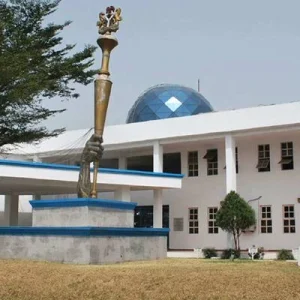
The House of Representatives yesterday opened scrutiny of allegations surrounding the repatriation of trafficked Nigerian girls from the Republic of Mali, as lawmakers began a comprehensive review of Nigeria’s response to human trafficking and the effectiveness of existing mechanisms for rescuing, rehabilitating and reintegrating victims across West Africa.
The meeting, convened by the House Committee on Humanitarian Services, was aimed at identifying policy and operational gaps in Nigeria’s anti-trafficking framework, strengthening collaboration among relevant institutions, and developing practical recommendations to improve the repatriation, rehabilitation and reintegration of trafficked Nigerians returning from Mali and other West African countries.
It brought together lawmakers, government ministries and agencies, security institutions, development partners, civil society organisations and migration experts, reports Daily Independent.
Central to the deliberations was a presentation by the National Council of Child Rights Advocates, Nigeria (NACCRAN), which raised allegations of irregularities in the repatriation of trafficked Nigerians from Mali, including claims of abuse, lack of transparency in the handling of rescued victims and misconduct by some officials of the Nigerian Embassy in Bamako and their alleged collaborators.
Presenting the organisation’s findings, NACCRAN’s Operations Consultant on Diaspora Issues, Prince Adefioye Gbolagade Simeon, told the committee that he spent 11 months in Mali investigating reports of Nigerian girls trafficked into prostitution in Mali, the Republic of Benin, Togo, Burkina Faso and Senegal.
According to him, the mission was undertaken in 2022 after the organisation received distress reports about the growing number of underage Nigerian girls trafficked to the sub-region for sexual exploitation.
Simeon alleged that the repatriation process lacked transparency, claiming that rescued victims were often taken to the Nigerian Embassy in Mali and kept there for extended periods while awaiting repatriation through the International Organisation for Migration (IOM), despite funds allegedly being collected to facilitate their transportation back to Nigeria.
“Our investigation revealed that the rescued girls were often kept around the Embassy while awaiting repatriation through the International Organization for Migration (IOM). Questions regarding the utilisation of these funds were never satisfactorily answered,” he said.
He further alleged that several rescued girls suffered severe physical and emotional abuse after resisting prostitution, adding that documentary evidence had been submitted to support the claims.
The petitioner also raised concerns over the documentation of Nigerians residing in Mali, alleging that migrants paid between 10,000 and 15,000 CFA Francs for identification cards, many of which were reportedly rejected at border checkpoints.
Simeon further accused certain individuals allegedly working with officials of the Nigerian Embassy of exploiting vulnerable Nigerians under the guise of facilitating rescue operations.
He told the committee that petitions submitted to the Federal Ministry of Foreign Affairs, the Federal Ministry of Justice, the Federal Ministry of Women Affairs, the National Human Rights Commission and the Office of the Senate President yielded little progress.
According to him, attempts to raise concerns with embassy officials were met with intimidation.
He alleged that during one encounter, the Consular Officer stated that “neither the House of Representatives nor any political office appointed him” and warned that “any action taken against him would result in our arrest and detention.”
Simeon, however, commended the intervention of the House Committee on Humanitarian Services, saying its engagement led to the deployment of a Federal Ministry of Foreign Affairs fact-finding team to Mali in July 2025 and paved the way for the successful repatriation of more than 10 underage Nigerian girls between September and December 2025.
He disclosed that on September 24, 2025, victims, including Joy Alex and Christabel Gideon, were formally handed over to the National Agency for the Prohibition of Trafficking in Persons (NAPTIP), while others were subsequently reunited with their families.
He urged the committee to direct the Federal Ministry of Foreign Affairs to formally introduce NACCRAN to Nigerian missions across West Africa to facilitate humanitarian operations, investigate allegations surrounding repatriation activities at the Nigerian Embassy in Mali, strengthen collaboration among relevant agencies and civil society organisations, and develop a comprehensive policy framework to protect Nigerian girls and women from trafficking and exploitation across the sub-region.
The allegations were presented by NACCRAN before the committee and had not been independently verified by the House of Representatives at the time of the meeting.
In her welcome address, Chairperson of the House Committee on Humanitarian Services, Hon. Tolulope Akande-Sadipe, described human trafficking as one of the gravest humanitarian and human rights challenges confronting Nigeria, noting that thousands of Nigerians, particularly women, children and young people, continue to fall victim to trafficking, forced labour, sexual exploitation and other forms of modern slavery across West Africa and beyond.
“Behind every statistic is a human story: a mother separated from her children, a young person whose dreams have been exploited, or a survivor whose hope has been diminished by circumstances beyond their control.
“These realities remind us that trafficking is not merely a migration issue; it is a grave violation of human rights and an assault on human dignity that demands a coordinated national response.”
She stressed that bringing victims home should not be viewed as the end of government’s responsibility.
“The true measure of our success lies not simply in repatriation, but in the quality and sustainability of the support we provide after survivors return. Without comprehensive rehabilitation and meaningful reintegration, many survivors remain vulnerable to poverty, social exclusion and, tragically, re-trafficking.”
Akande-Sadipe said international best practice requires a survivor-centred approach that combines safe and dignified repatriation with healthcare, psychosocial support, legal assistance, education, vocational training and sustainable livelihood opportunities.
She reaffirmed the commitment of the House of Representatives to strengthening the legislative, policy and oversight framework needed to improve institutional coordination, accountability and support for agencies responsible for protecting vulnerable Nigerians.
The committee chair urged stakeholders to move beyond identifying problems and focus on practical, survivor-centred solutions, saying Nigeria must build a coordinated system that restores hope, protects human dignity and prevents victims from being re-trafficked.