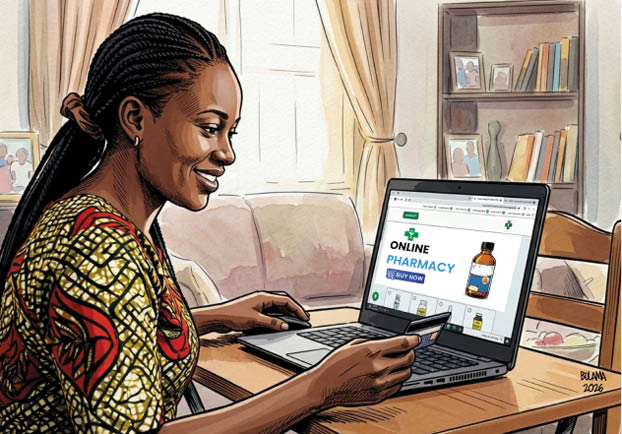
A social media user scrolling through Facebook encounters a sponsored post claiming to offer a “natural cure” for diabetes.
On Instagram, another advertisement guarantees permanent relief from infertility within weeks.
A TikTok video shows dramatic before-and-after images of a woman who allegedly lost significant weight after taking a herbal mixture.
On X, a thread promotes a product said to cleanse the body of infections and restore overall health.
Within seconds, users are invited to send a direct message, click a WhatsApp link, or place an order.
Across Nigeria’s digital space, such advertisements have become increasingly common, reports Weekend Trust.
Social media platforms have evolved beyond spaces for social interaction into thriving marketplaces where health products are promoted directly to millions of consumers.
While some products may be legitimate, experts warn that a significant number are marketed without proper regulatory oversight, scientific backing or verifiable information about their safety and effectiveness.
The growing presence of these products online is raising concerns among health care professionals, regulators and consumer advocates who fear that vulnerable Nigerians may be exposed to misinformation, dangerous self-medication and potentially harmful substances.
A growing digital marketplace
The rise of digital marketing and artificial intelligence has transformed how pharmaceutical and health-related products are advertised globally, and Nigeria is no exception.
Currently, platforms such as Facebook, Instagram, TikTok and X (formerly Twitter) have become major channels through which drugs, herbal remedies and dietary supplements are marketed directly to consumers.
Unlike traditional media, where advertisements are expected to pass through strict checks, social media allows almost anyone to promote products with little supervision. This has led to an increase in the number of individuals and businesses marketing health-related products online, many of whom operate outside regulated systems.
A simple search using phrases such as “natural cure, herbal treatment or fast relief” produces dozens of results within minutes. Many of the advertisements claim to address conditions ranging from infertility and infections to diabetes, hypertension and obesity.
Several of the posts rely heavily on testimonials, dramatic personal stories and promises of quick results. Others feature images purportedly showing patients before and after treatment.
However, most of them provide little evidence regarding clinical testing, product composition or regulatory approval.
Further observations showed that the comment sections of such posts have become active spaces where users seek help for different health challenges. Many commenters went beyond the condition being advertised, asking the sellers to recommend treatments for other ailments.
This suggests that a growing number of people are turning to social media vendors for medical advice, often without consulting qualified health professionals.
For many health care professionals, this trend is deeply concerning.
Consumers share their experiences
Health care access remains a challenge for many Nigerians due to financial constraints, long waiting times and shortages of medical personnel in some areas.
As a result, advertisements promising quick, affordable and natural solutions often resonate with consumers.
For a 32-year-old entrepreneur, Emmanuella Okeke, social media appears to offer hope.
After struggling with weight loss concerns, she purchased a herbal supplement advertised on Facebook.
“The advert had many positive comments and testimonials. The seller said it was completely natural and had no side effects,” she recalled while speaking with our correspondent.
Within days of using the product, she experienced severe stomach discomfort.
“I later stopped taking it because I became worried. Looking back now, I realise I never actually knew what was inside the product.”
For Ibrahim Musa, a civil servant, an Instagram advertisement offering treatment for chronic joint pain seemed convincing.
“The video looked professional, and the comments appeared genuine, so I placed an order immediately,” he said.
But after several weeks of use, he noticed no improvement.
“When I asked questions, the seller stopped responding. Eventually, the account disappeared,” he said.
Similarly, Esther Adeolu said she purchased fertility supplements promoted through TikTok.
“The seller promised excellent results and showed many testimonies from women who claimed they became pregnant after using the product,” she said.
Months later, she sought help from a fertility specialist.
“The doctor explained that infertility could have many causes and that no responsible practitioner would guarantee success the way the advertisement did.”
Another consumer, Adewale Johnson, said he bought an online remedy for high blood pressure after seeing repeated advertisements.
“The seller told me that I could stop my prescribed medications. Thankfully, I discussed it with my doctor before making any changes,” he noted.
Medical experts said such advice could have serious consequences for patients managing chronic illnesses.
‘Medical advice being replaced by marketing’
In a chat with our correspondent, Grace Jegede, a public health physician based in Abuja, said the growing reliance on social media for medical guidance represented a dangerous shift.
“Many people now receive medical information from individuals whose qualifications cannot be verified. What worries health care professionals is that marketing messages are increasingly being mistaken for medical advice,” she said.
According to Jegede, symptoms that require proper diagnosis are often reduced to simplistic explanations by online vendors.
“A persistent headache could be a sign of stress, infection, hypertension or something much more serious. Yet some online sellers offer a single product as a solution without any medical assessment whatsoever,” she added.
She warned that self-diagnosis based on social media content could lead to delayed treatment and worsening health outcomes.
Investigations into many online pharmaceutical and herbal product advertisements revealed a recurring pattern: Product labels are often partially displayed, scientific names of ingredients may be omitted, manufacturing locations are sometimes unclear, and in certain cases, sellers provide little information beyond broad claims about effectiveness.
Dr Adeniyi Benson, a medicine specialist, described the situation as troubling. He said, “Every medicine has benefits, risks, contraindications and potential interactions. When sellers fail to disclose these details, consumers are making health decisions without adequate information.”
Benson explained that even products marketed as herbal or natural could pose significant health risks.
“There is a misconception that natural automatically means safe. That is not true. Many natural substances can cause adverse reactions, especially when combined with prescription medications,” he explained.
Regulatory challenge
The National Agency for Food and Drug Administration and Control (NAFDAC) is responsible for regulating drugs, food products, cosmetics, medical devices and related advertisements.
Regulations require advertisements for health-related products to receive approval before publication.
However, the sheer volume of content being uploaded daily presents significant monitoring challenges.
Unlike television or newspapers, where advertisements are relatively easier to track, digital content can be created and shared rapidly across multiple platforms. Accounts can be deleted and recreated within hours. Anonymous operators can target consumers without revealing their identities. These realities have complicated enforcement efforts.
The Director-General of the NAFDAC, Prof Mojisola Adeyeye, has repeatedly warned that the sale and distribution of medicines in unapproved locations remain strictly prohibited, stressing that offenders will face heavy sanctions.
She urged Nigerians to stop patronising drug hawkers and assured that the agency would sustain its clampdown until all violators are brought to justice.
‘Digital platforms have outpaced regulation’
A community health practitioner, Dr Aliyu Isah, believes that regulators worldwide are facing similar challenges.
“The digital environment evolves much faster than regulatory systems. Social media platforms allow advertisements to spread across borders almost instantly,” he said.
According to him, technology has created opportunities for legitimate health communication but has also enabled misinformation to flourish.
“The concern is not only about fake products. Even genuine products can be promoted irresponsibly if claims are exaggerated or misleading,” he revealed.
He called for stronger collaboration between regulators, technology companies and health care institutions.
One of the most powerful tools used by online vendors is personal testimony. In this case, videos featuring satisfied customers often generate thousands of views. Some contain emotional stories about recovery from chronic illnesses, others feature screenshots of conversations allegedly showing successful outcomes.
Health care professionals caution that testimonials are not substitutes for scientific evidence.
Dr Abdulmojeed Sani, a pharmacist, explained that anecdotal experiences could be misleading.
“A single positive experience does not prove effectiveness. Medical products must undergo rigorous testing to establish safety and efficacy,” he said.
He noted that some testimonials may be genuine while others could be exaggerated, selective or entirely fabricated.
“Consumers should ask whether there is credible scientific evidence supporting the claims being made,” he added.
Another emerging trend is the use of social media influencers, where individuals with large followers are increasingly being recruited to promote health products. Their endorsements can significantly boost sales, particularly among younger audiences.
The challenge, experts say, is that followers often trust influencers more than official institutions.
“When a popular personality recommends a product, many people assume that it has already been verified. Unfortunately, that assumption may not always be correct,” Dr Sani said.
When customers become patients
For some Nigerians, the consequences extend beyond financial losses.
Medical practitioners report encountering patients whose conditions worsened after relying on unverified products.
Dr Grace Ekanem, a physician, recalled treating individuals who delayed seeking professional care.
“Some patients spend months trying various products purchased online before eventually visiting a hospital. By then, their conditions may have progressed significantly,” she noted.
She said diseases such as hypertension, diabetes and infections often required timely diagnosis and evidence-based treatment.
“Delays can increase complications and reduce the chances of successful management.”
The popularity of online pharmaceutical products also reflects broader issues surrounding public trust.
Some consumers express frustration with health care costs, and others cite difficulties accessing specialists. These concerns can make alternative solutions appear attractive. Yet experts stress that health decisions should be based on evidence rather than persuasive advertising.
For Ngozi Eze, a consumer, the lesson came after purchasing a herbal detox product promoted on Facebook.
“The advert made it sound like a miracle solution. I later realised that I had relied more on marketing than medical advice,” she noted.
She now consults health care professionals before using any new product.
Experts agree that public education remains one of the most effective tools against misleading health advertisements.
Consumers are encouraged to verify product registrations, seek advice from qualified professionals and approach extraordinary claims with caution.
Warning signs include promises of instant cures, guarantees of success, secret formulas and products claimed to treat multiple unrelated conditions simultaneously.
Health care professionals also recommend checking whether advertisements provide clear information regarding ingredients, dosage and potential side effects.
The road ahead
As Nigeria’s digital economy continues to expand, social media will remain an important platform for communication and commerce.
The challenge lies in ensuring that technological innovation does not come at the expense of public health.
Regulators face the difficult task of monitoring an ever-changing online environment.
Technology companies are under increasing pressure to improve oversight of health-related advertisements.
Health care professionals continue to advocate evidence-based medicine.
Consumers must navigate a digital landscape where persuasive marketing often competes with scientific facts.
The growing presence of unregulated pharmaceutical products on social media highlights the complex intersection of technology, commerce and health care.
While digital platforms have created unprecedented opportunities for information sharing and business growth, they have also opened new avenues for misinformation and exploitation.
For many experts, the solution will require a combination of stronger regulation, improved platform accountability and greater public awareness.
Until then, millions of social media users will continue to encounter advertisements promising quick cures and miracle treatments, often with little way of knowing whether the claims are supported by science or simply another click away from becoming a costly mistake.