

•Governor Umo Eno
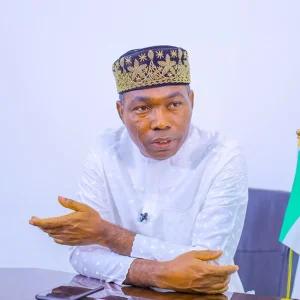
Someone said to me recently that Governor Umo Eno of Akwa Ibom State is the most documented and chronicled Governor in Nigeria. My answer to him was: “He deserves it”. The long list of his national and international awards as a governor speaks volume.
The story of his stormy candidacy and first year in office is told in a 400-page book called, AND IT CAME TO PASS, while the story of his two years as governor is told in a different book: a 556-page book called, THE GOLDEN FOOTPRINTS.

The importance of keeping records of political and governance footprints cannot be overemphasised. Basically, accurate documentation of the present is a love letter to the future.
It is crucial for understanding the past, informing present decisions, and shaping the future. It provides a comprehensive account of political processes, allowing for analysis, accountability, and the preservation of historical context.
Accurate and comprehensive record-keeping and chronicle of events ensures that crucial evidence is preserved, enabling verifiable documentation of decisions, actions, and the actors involved.

Here’s why records of political footprints are important:
Historical Context:
Records provide a detailed account of past political events, enabling a deeper understanding of how decisions were made, the motivations behind them, and the consequences that followed.
Accountability and Transparency:
Record-keeping demonstrates what actions were taken, who was involved, and what decisions were made. This supports transparency and holds political actors accountable.
Informed Decision-Making:
Historical records can be used to analyze past successes and failures, informing current policies and strategies.
Conflict Resolution
Records can provide a basis for interpretation and resolution in future conflicts, as they document the reasoning behind past decisions and negotiations.
Preservation of Evidence:
Records ensure that crucial evidence is preserved, especially in areas like elections and legal matters, where accurate documentation is vital for verification and accountability.
Education and Learning:
Records of political events serve as valuable resources for education and research, helping future generations understand the complexities of political systems.
Monitoring and Evaluation:
Records can be used to assess the effectiveness of policies and programmes, allowing for adjustments and improvements.