

•An abattoir in Lagos
The Lagos State government has called on abattoir and slaughterhouse operators to adopt sustainable waste management practices and explore opportunities to convert slaughtering by-products into economic resources.
The Permanent Secretary, Office of Environmental Services, Lagos State Ministry of the Environment and Water Resources, Dr Gaji Tajudeen, made the call at a one-day workshop for abattoir operators held at ABIS Farmers Market, Ajah, Lagos, reports The Nation.
Themed “Red to Green: From Waste Disposal to Resource Recovery,” the workshop focused on sustainable waste management, public health protection and opportunities to create value from waste generated through slaughtering and meat-processing activities.
Tajudeen, represented by the Director, Public Sanitation Utility, Rahman Fagbolade, said abattoirs and slaughterhouses play an important role in the state’s food production system, support livelihoods and contribute to economic activities.
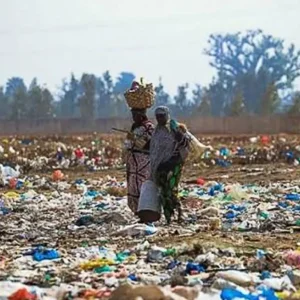
However, he noted that slaughtering activities generate various forms of waste, including blood, paunch and rumen contents, bones, horns, hooves, faecal matter and wastewater.
According to him, poor management of such waste could result in environmental pollution, poor sanitation, blocked drainage channels, offensive odours and public health risks.
He said the state government would continue to ensure that abattoirs and slaughterhouses operate in line with established environmental and sanitation standards.
Tajudeen added that enforcement alone was not sufficient to achieve sustainable compliance, stressing the need for continuous engagement, education and capacity building among operators.
He said the workshop was organised to shift attention from conventional waste disposal to resource recovery and waste-to-wealth opportunities.
The Permanent Secretary said blood, paunch and rumen contents, wastewater and faecal matter could be processed to produce biogas and organic fertiliser, while bones, horns and hooves could be processed for further value addition.
He said proper segregation, processing and management of abattoir waste could create opportunities for enterprise development, job creation and additional income while supporting the development of a circular economy.
Tajudeen identified regulation, education, innovation and collaboration as key to achieving sustainable waste management in the abattoir sector.
He urged operators to see compliance with environmental standards not only as a regulatory requirement but also as a way to protect public health, improve consumer confidence and sustain their businesses.
He also encouraged young people, farmers and other stakeholders to explore emerging opportunities in resource recovery and waste-to-wealth initiatives.
Tajudeen said achieving a cleaner and healthier Lagos required the collective efforts of government, businesses, communities and individuals.
In his lecture, titled “From By-products to Business: Unlocking the Economic Value of Bones, Horns, Hooves and Other Abattoir By-products,” the guest lecturer, Mr Muyiwa Semowo, urged operators to adopt innovative methods of turning abattoir waste into economic opportunities.
Semowo said abattoir by-products could be processed into useful materials for industries including agriculture, manufacturing, pharmaceuticals, cosmetics and animal feed.
He stressed the importance of proper segregation, handling and processing of the materials to improve their quality and market value.
According to him, adopting a circular economy approach would help reduce environmental pollution and improve sanitation while creating businesses, generating employment and increasing operators’ income.