


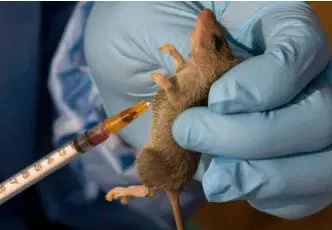
•Lassa fever
The Nigeria Centre for Disease Control and Prevention, NCDC, has raised fresh alarm over the worsening Lassa fever outbreak after the disease claimed 221 lives in six months, with new infections increasing steadily for three consecutive weeks and the fatality rate remaining significantly higher than last year’s level.
The latest epidemiological reports for Weeks 24, 25 and 26 from the NCDC confirmed a surge in infections.

According to the report, the infection rose from 13 cases in Week 24 to 22 in Week 25 before increasing further to 31 in Week 26.
The sustained increase in confirmed cases signals renewed transmission across affected states despite ongoing surveillance and response measures.
By the end of Week 26, covering June 22 to June 28, 2026, Nigeria had recorded a cumulative 922 confirmed cases and 221 deaths.
The reports placed the case fatality rate at 24.0 per cent, significantly higher than the 18.7 per cent recorded during the corresponding period in 2025.
According to the reports, the latest 31 confirmed cases were recorded in Ondo, Taraba, Benue and Bauchi states.
Ondo and Bauchi remained among the country’s major hotspots as the outbreak continued to spread within known endemic areas.
Earlier reports showed that Week 25 recorded 22 confirmed cases in Ondo, Taraba, Benue and Bauchi states.
Week 24 recorded 13 confirmed infections from Ondo, Edo, Taraba, Benue and Bauchi states.
Despite intensified surveillance and response efforts, the disease has spread across 23 states and 111 local government areas, reinforcing concerns over its continued public health threat.
The NCDC disclosed that 85 per cent of all confirmed cases reported this year originated from Bauchi, Ondo, Taraba, Benue and Edo states.
The concentration of infections within these five states underscores their continued prominence as the country’s major Lassa fever endemic areas.
The agency also revealed that young adults aged between 21 and 30 years remained the most affected age group throughout the outbreak.
The reports further showed that healthcare workers continued to face occupational risks from the disease.
One healthcare worker was infected during Week 24, none was affected in Week 25, while another healthcare worker contracted the disease in Week 26.
The cumulative figures reflected the steady progression of the outbreak during the three-week reporting period.
By Week 24, Nigeria had recorded 868 confirmed cases and 216 deaths, representing a case fatality rate of 24.9 per cent.
The corresponding fatality rate during the same period in 2025 stood at 18.9 per cent.
By Week 25, confirmed cases had increased to 891 while deaths rose to 219.
Although the fatality rate declined slightly to 24.6 per cent in Week 25, it remained considerably higher than the 18.6 per cent recorded during the corresponding period last year.
Researchers have continued to warn that the persistently high fatality rate reflects delays in case detection, late presentation of patients for treatment and continued exposure to infected rodents carrying the Lassa virus.
The NCDC has persistently enjoined Nigerians to maintain proper environmental hygiene and store food safely to prevent contamination by rodents.
The agency also advised residents to avoid contact with rat urine and faeces and seek immediate medical attention if symptoms including fever, weakness, headache or unexplained bleeding develop.
Healthcare workers were equally advised to maintain strict infection prevention and control measures while managing suspected cases to reduce the risk of hospital-based transmission.
Lassa fever is an acute viral haemorrhagic disease endemic in Nigeria and several West African countries, transmitted mainly through contact with food or household items contaminated by infected multimammate rats, although person-to-person transmission also occurs, particularly in healthcare settings.