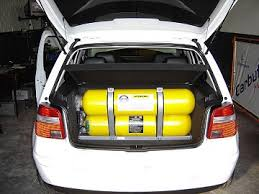
Despite billions of naira in investment and more than 100,000 vehicle conversions, long queues, inadequate infrastructure and safety concerns are testing confidence in the federal government’s compressed natural gas (CNG) transition agenda.
When President Bola Tinubu removed Nigeria’s decades-old petrol subsidy in May 2023, it marked one of the most consequential economic decisions in recent history, reports Daily Independent.
But while the move brought immediate pain through soaring fuel prices, it also came with a promise – a transition to compressed natural gas (CNG), which the government described as a cheaper, cleaner and more sustainable alternative for millions of motorists.

Nearly three years later, the programme has become one of the flagship policies of the Tinubu administration. Government officials speak of unprecedented investments, thousands of jobs and a new energy future. Yet for many drivers spending nights at filling stations and mechanics navigating unfamiliar technology, the reality has proved far more complicated.
A Programme Built On Big Ambitions
The Presidential Initiative on CNG and Electric Vehicles (Pi-CNG & EV) says more than 100,000 vehicles have been converted to run on natural gas. The initiative, which initially reported over $200 million in investments in 2024, now states on its website that it has secured more than $2 billion in private sector investments and created about 10,000 jobs.
Officials have repeatedly portrayed the programme as a transformational shift capable of reducing Nigeria’s dependence on expensive petrol imports.
Speaking at a forum, the Executive Chairman of the Pi-CNG & EV, Ismaeel Ahmed, described the rapid expansion of infrastructure as evidence of the Tinubu administration’s long-term commitment to cleaner and more affordable transportation.
On paper, the economics appear persuasive. According to government estimates, motorists can reduce their fueling expenses by as much as 75 percent after switching to CNG. A driver who previously spent N80,000 weekly on petrol could spend about N20,000 using natural gas.
For commercial operators grappling with rising inflation and shrinking earnings, such savings are difficult to ignore.
Officials of transport unions, including the Road Transport Employers’ Association of Nigeria (RTEAN) and the National Union of Road Transport Workers (NURTW), have thrown their weight behind the federal government’s compressed natural gas (CNG) initiative, maintaining that while the programme is still evolving, it is already delivering tangible benefits to operators.
They argued that critics should recognise that large-scale reforms take time to mature and stressed that efforts to address the country’s transport and energy challenges cannot yield instant results.
A senior RTEAN official, Babatunde Karim, said feedback from drivers and transport operators indicated that the switch to CNG had significantly reduced daily running costs, with fuel expenses on some routes dropping sharply compared with petrol.
He described the savings as a major relief for operators struggling with rising costs, but called on the authorities to address persistent challenges relating to gas supply and low pressure at some refueling stations to ensure the long-term success of the scheme.
Across major cities in Nigeria, such as Lagos, Abuja, Kano, Port Harcourt, among several other states, vehicle owners have discovered that the initiative comes with a different burden – endless queues.
Drivers frequently spend several hours waiting to refill their tanks. In some cases, they spend the night at filling stations, only to return home without obtaining gas.
Speaking with our correspondent on condition of anonymity, a Lagos-based commercial bus driver who converted his Hiace bus in 2025, said the frustrations have become a regular part of life.
“The day I converted this bus, I thought I had solved my problem. The savings are real – I will not lie to you. But the suffering at the station has replaced the suffering at the petrol pump,” he lamented.
“Last week, I came at 6a.m. and left at 11p.m. without gas. My conductor had to borrow money so we could buy petrol and avoid losing a day’s work. We are going round in circles. The government needs to fix the stations before they keep telling people to convert. You cannot ask a man to buy a new plate and then not give him food to put on it.”
Another commercial driver, Akande Olawale, expressed similar frustrations. He said the daily struggle had become so exhausting that he was contemplating abandoning the transport business altogether.
“I may leave this commercial driving life for farming,” he said. “I am getting older and can’t keep pushing these daily struggles.”
Infrastructure Struggling To Catch Up
The difficulties experienced by motorists are reflected in the country’s infrastructure numbers.
According to information released by the PCNGI, out of 63 mother and compression stations currently under development, only 28 have become operational. Similarly, of more than 175 daughter stations being developed nationwide, just 72 are presently active. These are concentrated mainly in states with pipeline infrastructure and high vehicle density.
Industry insiders say the problem extends beyond demand. One fuel attendant, who spoke with our correspondent anonymously, attributed the shortages largely to logistics challenges, including inadequate transportation facilities and poor road conditions.
According to him, gas supplied to Abuja, for example, is transported by road from Kogi State, hundreds of kilometres away.
As more motorists embrace CNG, existing infrastructure is increasingly being stretched beyond capacity.
New Technology, New Challenge
Away from the queues, another concern is emerging – the shortage of skilled technicians. Conversion centres are springing up across the country, but industry experts warn that the quality of installations varies considerably.
A Lagos-based mechanic, popularly known as “Pablo” with nearly two decades of experience, and who underwent government-sponsored CNG training last year, believes the industry is expanding faster than expertise.
“In this country, when something new comes, everybody rushes to do it before they understand it. That is what is happening with CNG,” he said.
“I attended the training and it was useful, but it lasted only five days. Five days to understand an entirely new fuel system.”
He fears many technicians are learning by imitation rather than through proper certification.
“Some of my colleagues never attended any training. They simply copy what others are doing. But CNG cylinders are not like petrol tanks. Poor installation or maintenance can cost lives.
“The government keeps counting conversion centres, but nobody is counting how many are doing the job properly. That is the number I want to see.”
Experts have repeatedly warned that weak safety standards and inadequate public awareness could undermine confidence in the technology if not properly addressed.
Meanwhile, concerns about possible cylinder explosions continue to discourage some motorists from embracing the system. For many transport operators, cost remains another obstacle.
Depending on engine size, vehicle conversion costs range between N1 million and N1.7 million. Although government subsidies of up to N750,000 are available for some transport operators, the initial financial commitment remains beyond the reach of many low-income drivers.
Regulator’s Defence
Regulators insist that concerns over safety and infrastructure are receiving attention.
The Nigerian Midstream and Downstream Petroleum Regulatory Authority (NMDPRA) says it is intensifying oversight across the growing gas value chain to guarantee safety, efficiency and investor confidence.
The Chief Executive of the Authority, Mallam Rabiu Abdullahi Umar, during his Senate screening, said the NMDPRA under his leadership would be “firm in regulation, fair in conduct, and fast in execution,” stressing that the agency would protect standards, remove bottlenecks and promote professionalism across the sector.
He added: “Energy security is not measured only by volumes in storage. It is measured by whether fuel is available when and where Nigerians need it. We will build a supply architecture that is visible, reliable, and national in reach.”
For Ismaeel Ahmed, Chairman of the Pi-CNG, criticism of the programme overlooks the scale of progress already achieved.
Rejecting suggestions that the initiative is merely politically driven, he points to the more than $2 billion committed by private investors as evidence that the market itself believes in the transition.
He has expressed confidence that every state in the federation will have a CNG footprint by the end of 2026, ahead of the broader target of nationwide coverage by 2027.
Under the government’s long-term roadmap, Nigeria hopes to establish 2,322 CNG stations, create 3,000 conversion centres, convert one million vehicles and generate 75,000 direct jobs by 2027.
Nigeria possesses one of the largest natural gas reserves in the world, giving it a unique opportunity to leverage domestic resources to reduce transport costs and strengthen energy security.
But analysts say the success of the CNG revolution will ultimately depend less on grand announcements and more on practical realities. They argue that inadequate infrastructure, high conversion costs and bureaucratic bottlenecks could slow the pace of adoption.
Speaking at a forum recently, a dynamic leader in sustainability, climate advocacy, and social entrepreneurship, Emmanuel Kilaso, warned that many rural and semi-urban communities remain cut off from CNG facilities, limiting the programme’s reach.
He said most of the facilities, designed for storage and refilling, are concentrated in Lagos, Ogun, Abuja, Edo, Oyo and Rivers states, with growing networks in Kwara, Kogi, Ekiti, Abia, Enugu and Adamawa, noting that the uneven distribution of stations, particularly the limited coverage in the North-East and parts of the South-East, has contributed to long queues and refueling difficulties experienced by some CNG vehicle owners.
Dr. Ayodele Oni, a leading energy and natural resources lawyer in Nigeria, and a Partner at Bloomfield LLP, believes the issue boils down to one factor.
“One of the key success factors in any fuel-switching programme is consumer confidence in fuel availability,” he said.
At present, that confidence remains fragile.
Nigeria undoubtedly possesses the gas reserves, the political ambition and increasingly the private capital to power a successful transition. But unless infrastructure expansion keeps pace with adoption, the country’s CNG revolution risks being remembered for the promise it offered.
For now, the future of Nigeria’s alternative fuel experiment hangs somewhere between hope and hardship.