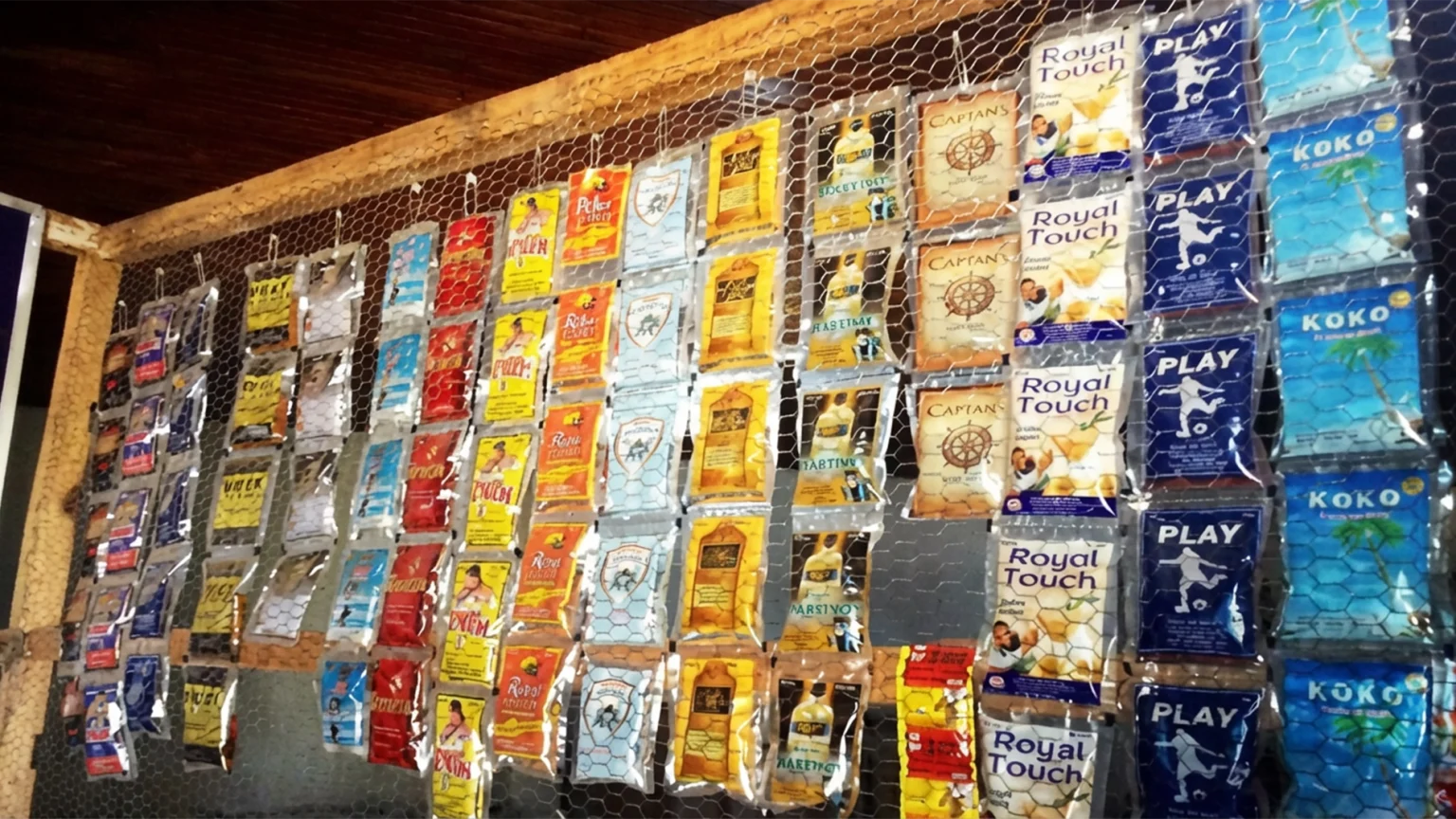
•Sachets of alcoholic drinks
The Federal Ministry of Health and Social Welfare has informed the Federal High Court in Lagos that the National Agency for Food and Drug Administration and Control (NAFDAC) is legally empowered to enforce the ban on the production and sale of alcoholic beverages packaged in sachets, PET bottles, and glass containers below 200ml.
According to a counter-affidavit filed on February 23, 2026, the ministry, through its counsel, Jumoke Motilayo Falaye, said it neither interferes with nor controls the agency’s enforcement decisions, stressing that the ministry is not an enforcement body of the federal government.

The ministry explained that NAFDAC is a statutory agency established under the NAFDAC Act with clearly defined regulatory and enforcement powers over food, drugs and related products, including alcoholic beverages, reports The Guardian.
It argued that it lacked the authority to direct, prevent, or halt NAFDAC from carrying out its statutory mandate. The ministry also stated that the Minister of Health and Social Welfare had not granted any further extension of the moratorium on enforcing existing regulations, including the sachet alcohol prohibition.
According to the document, NAFDAC’s enforcement powers are derived from Sections 5 and 30 of the NAFDAC Act and other applicable regulations
The suit, marked FHC/L/CS/2568/25, was instituted by Socio-Economic Rights and Accountability Project (SERAP) against the Minister of Health and Social Welfare as the first defendant and the Attorney-General of the Federation, representing the Federal Government and the Office of the Secretary to the Government of the Federation, as the second defendant.
The court has not fixed a date for the hearing.
Meanwhile, the House of Representatives has concluded plans to review the National Tobacco Control Act to address regulatory gaps around emerging nicotine products, particularly vape devices, as part of efforts to curb illicit drugs and harmful substances.
This was disclosed during a courtesy visit by the House Ad-hoc Committee on Drugs and Illicit Trafficking to the headquarters of the Nigeria Customs Service (NCS) in Abuja.
The Chairman of the committee, Timehin Adelegbe, said the existing tobacco control framework did not sufficiently contemplate new products such as electronic cigarettes and vape devices, stressing the need for legislative reforms to strengthen border controls and enforcement mechanisms.
“We must examine whether the laws are adequate. Are bonded warehouses complying with regulations? Do we have sufficient personnel at our borders? These are areas we must holistically address,” Adelegbe said.
The lawmaker clarified that the visit was not an investigation but aimed at fostering collaboration between the National Assembly and Customs to tackle the proliferation of illicit drugs, prohibited pharmaceuticals, and unregulated tobacco products.
He urged Customs to collaborate with the committee to ensure the initiative’s success.
Responding, the Deputy Comptroller-General of Customs in charge of Enforcement, Investigation and Inspection, Timi Bomodi, who received the delegation on behalf of Comptroller-General, Bashir Adewale Adeniyi, reaffirmed the service’s commitment to combating illicit trade.
He said customs had introduced mandatory drug testing for its personnel as part of a zero-tolerance policy, while also signing Memoranda of Understanding with the NDLEA and NAFDAC to strengthen collaboration on drug control and pharmaceutical imports.