


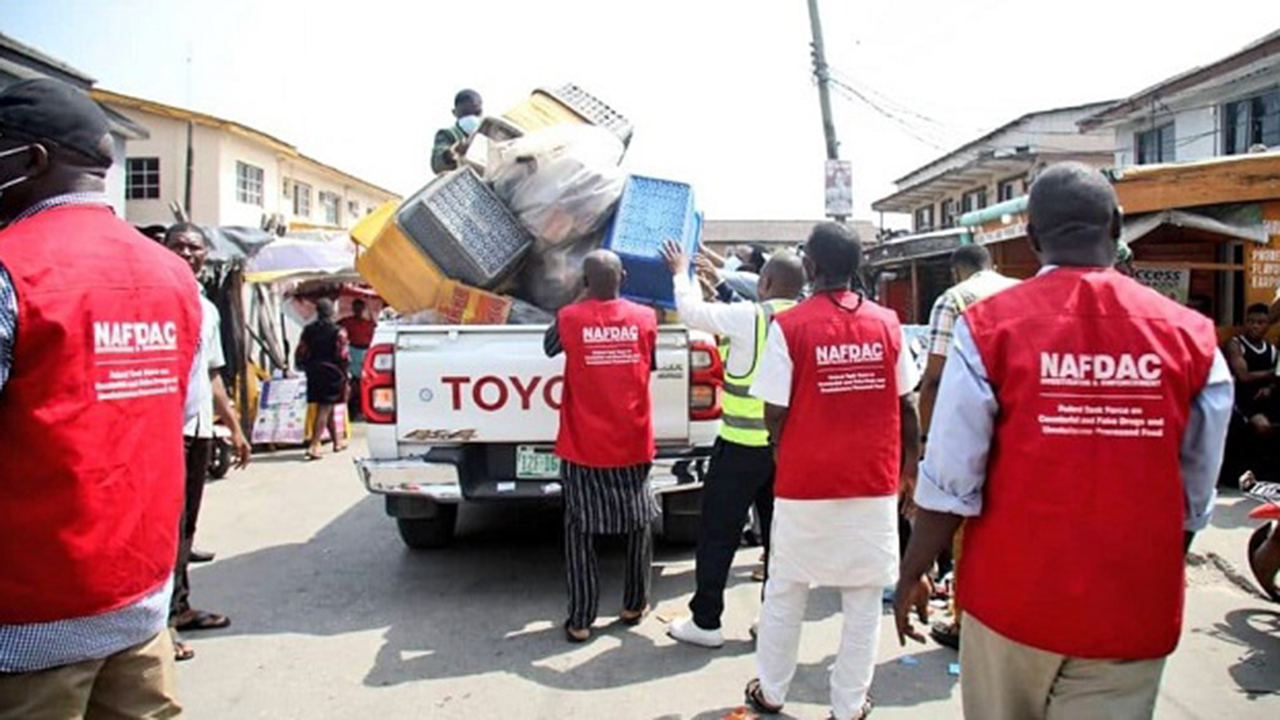
The National Agency for Food and Drug Administration and Control (NAFDAC) has intensified its war against counterfeit and substandard products, destroying regulated goods worth more than N1.5 trillion in a coordinated nationwide operation, while securing 64 convictions against offenders.
Director-General of NAFDAC, Prof. Mojisola Adeyeye, disclosed this today in Lagos, following growing public concern over the proliferation of suspected fake and dangerous food, drugs, cosmetics and other regulated products in Nigerian markets, reports Daily Independent.
Adeyeye, who described counterfeiters as “merchants of death”, said the agency had moved beyond seizures to prosecution and imprisonment, with 64 offenders convicted and sentenced to between one and seven years in prison without the option of a fine.

She said the convictions included five-year jail terms for counterfeiting Global Fund Artemether and codeine-based cough and cold syrup, while another offender received seven years for producing fake antibiotics.
Others were jailed for fake ointments and condoms.
The NAFDAC boss said simultaneous raids at Idumota in Lagos, Onitsha and Ariaria International Market in Aba between February and March 2025 resulted in the seizure and destruction of more than 137 40-foot truckloads of counterfeit and substandard products valued at over N1.5 trillion.
The scale of the destruction, she said, formed part of a wider enforcement campaign that has seen NAFDAC seize or destroy more than N1.54 trillion worth of fake and substandard products nationwide since 2023.
The agency has also continued targeted operations against counterfeit medicines and other unsafe products. In February 2026, it destroyed fake, expired, counterfeit and banned medicines worth more than N15 billion in Ibadan, including Analgin, Co-codamol, codeine syrups, Tramadol, Oxytocin and expired vaccines.
Another N1.8 billion worth of counterfeit medicines, banned sachet alcohol below 200ml, narcotics, antibiotics, antimalarials, counterfeit milk, skin-lightening creams, fake insecticides and medical devices was destroyed in Kuje, Abuja, in March 2026.
NAFDAC said these pharmaceutical-related destruction exercises, including the N11 billion worth of expired and unregistered drugs destroyed in Ibadan in December 2024, amounted to N27.8 billion.
The enforcement drive has also produced arrests. Four people were arrested in February after more than 10 million doses of counterfeit malaria medicines and cosmetics worth about N3bn were seized at the Lagos Trade Fair Market.
Five others were arrested in Abuja in June over counterfeit cosmetics valued at N35 million, while 19 drug hawkers and shop owners were arrested during March enforcement operations at motor parks in the Federal Capital Territory.
A July raid also led to the arrest of a suspect after counterfeit health products, including fake Oral B toothpaste, were uncovered.
Adeyeye said NAFDAC’s enforcement efforts extended beyond raids, with its Post-Market Surveillance Directorate visiting 6,233 facilities and mopping up 7,210 brands and products nationwide between May and July 2026.
Food and Water accounted for the largest number of products removed, with 3,633 products recovered from 1,808 facilities, while Drugs and Herbals recorded the highest number of facilities visited, with 2,084 facilities yielding 2,459 products.
The agency also uncovered the counterfeiting of CWAY dispenser bottles, involving three companies allegedly refilling empty 19-litre bottles bearing the identity of a registered water company with water from unapproved sources and supplying them to hotels and supermarkets. The operators were heavily sanctioned.
Adeyeye, however, said the continued presence of suspected counterfeit products did not mean regulatory surveillance was absent, stressing that NAFDAC could not create “a society entirely free of criminals and criminal-minded individuals”.
She said some fresh farm produce and traditionally packaged staples fell outside NAFDAC’s exclusive regulatory control, urging sub-national authorities to join the agency in safeguarding such products.
“Fakers are not ghosts; they exist within our communities, neighbourhoods, and business premises,” Adeyeye said, describing the fight against counterfeiting as a collective responsibility involving NAFDAC, sister agencies and the public.
She urged Nigerians to report suspected non-compliant products directly to NAFDAC rather than relying solely on social media, stressing that the agency would maintain zero tolerance for fake and unsafe regulated products.
Adeyeye said NAFDAC had previously advocated stricter penalties under the NAFDAC Act and the Counterfeit and Fake Drugs Act, including death or life imprisonment for those who manufacture and sell fake regulated products.