•Wike and Onaiyekan
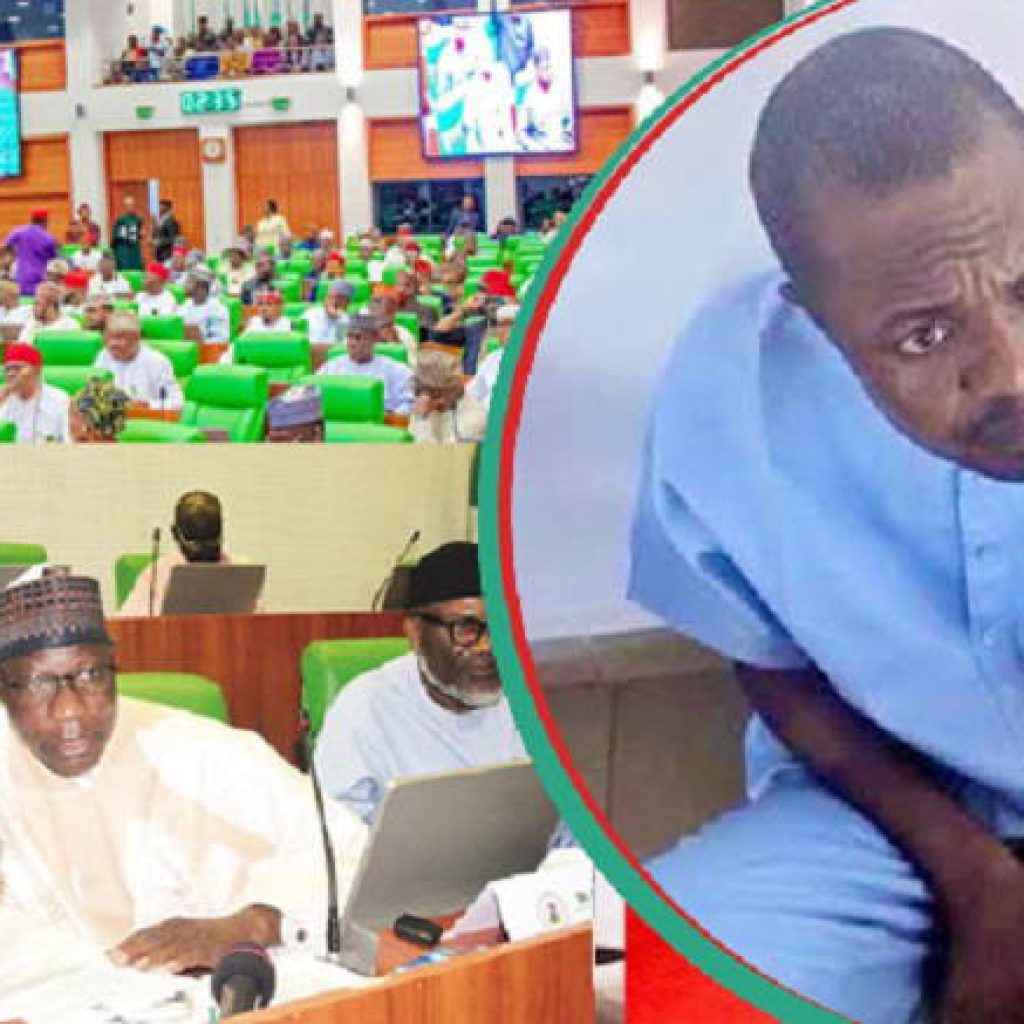
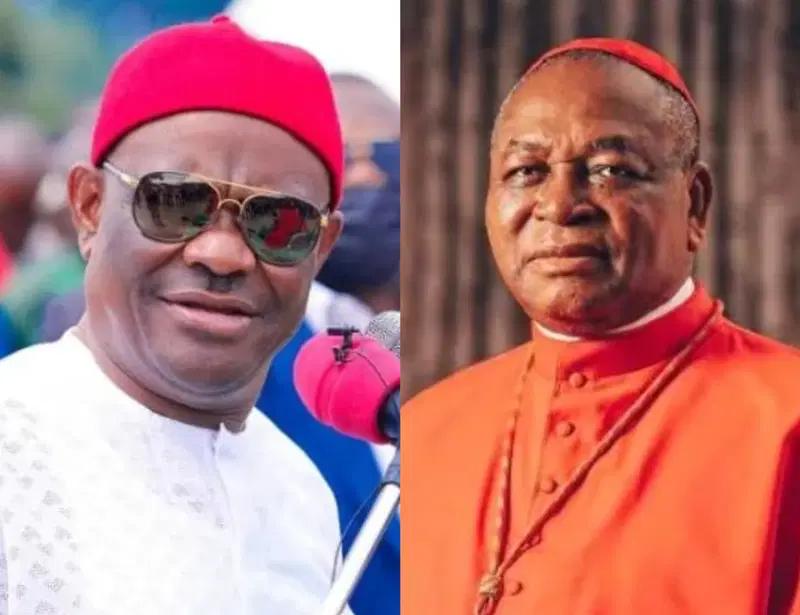
Minister of the Federal Capital Territory FCT, Nyesom Wike, said yesterday the Archbishop Emeritus of the Catholic Archdiocese of Abuja, John Cardinal Onaiyekan, was not neutral during the 2023 general elections, dismissing suggestions that the cleric’s recent criticisms of the Presidency was impartial.
His statement elicited strong reactions from the Northern Youth Council of Nigeria, NYCN, which did not only declare its support for Cardinal Onaiyekan, but also said the cleric merely reflected the hardship confronting millions of Nigerians currently, reports Vanguard.

Onaiyekan and the Catholic Bishop Conference of Nigeria, CBCN, also drew support from the Middle Belt Forum, MBF, a socio-cultural and political organization representing the minority ethnic nationalities in the central zone of the country, in the current face-off between the CBCN and the federal government.
Recall that Onaiyekan had in an interview with Arise TV, said the CBCN in its meeting with President Bola Tinubu last Friday, drawn the attention of the President to the hardship currently facing Nigerians as a result of policies of his government and the fact that his administration appeared focused on winning a second term in 2027.
This, however, didn’t sit well with the Presidency as presidential spokesman, Daniel Bwala, said Cardinal Onaiyekan’s remarks did not reflect the opinions of all Christians in Nigeria, alleging that the Catholic Church is rooting for Peter Obi of Nigeria Democratic Congress, NDC, for the 2027 election.
Speaking in his monthly media parley monitored in Abuja yesterday, Wike argued that religious leaders needed to show more balance in their public commentaries, stating that one-sided criticism of government, without any acknowledgment of its achievements, will inevitably be read as political.
“I am aware of the position of Cardinal Onaiyekan; all of us know, it’s not hidden, whom he supports; everybody knows that,” he said.
The minister maintained that while government should not be shielded from criticism, credit should also be given where it was due.
He added: “It is not every time you say things are bad; nobody has heard you say government has done this well. Commend government when government has done well in certain areas; criticise government and say, look, you have done this well, but you should improve in these other areas.’’
Wike said where a public figure’s interventions are consistently negative, government would rightly conclude the criticism was rooted in opposition rather than objectivity.
On the claim that the bishops’ position was non-partisan, the minister rejected the argument, pointing to what he described as open political alignment by religious leaders during the last presidential poll.
“Don’t tell me they’re not partisan. You know what happened in the 2023 elections. People took sides, religious leaders took sides, it was very open.
“I would be stupid to sit here for anybody to tell me this person is impartial. No. We know ourselves in this country; we know who belongs to where. Who did they support in 2023? It was very obvious,” he added.
…Queries Catholic Bishops over remarks on INEC’s neutrality
He also faulted the Catholic Bishops over their call on the Independent National Electoral Commission, INEC, to maintain neutrality in the 2027 elections, asking the clerics to remain objective in their assessment of the electoral umpire.
“How did the Catholic Bishops come to the conclusion that INEC is biased? What are your facts? What happened for you to prove? Now, if you are taking that kind of position, it is delicate because that association is a strong association.
“Now, when you come to the public to make that kind of accusation that the electoral umpire is biased, you must have your facts. This is why we say they are biased. Look at this, look at that.
‘’But if you just come to the general public and say, ‘INEC is biased’, you are sending a signal to the public because people will say, ‘for a whole Catholic Bishops to say INEC is biased, then something is wrong. We must be very careful about it, and that’s why President (Tinubu) say, ‘No, no, you can’t say they are biased.’”
Northern youths tackle Wike, say Onaiyekan spoke truth on hardship
Reacting to the development yesterday, the Northern Youth Council of Nigeria, NYCN, declared its support for Cardinal Onaiyekan, saying the cleric merely reflected realities confronting millions of Nigerians.
In a statement signed yesterday by the National President, Isah Abubakar, the group said Cardinal Onaiyekan’s remarks on economic hardship, inflation and insecurity represented the concerns of ordinary Nigerians and should not be dismissed.
The youth council said the Cardinal, whom it described as a respected elder statesman and moral voice, demonstrated courage by presenting what it called the “daily lived realities” of Nigerians to the President during the meeting with the Catholic Bishops’ Conference of Nigeria.
The NYCN expressed concern over what it described as attempts by presidential aides to criticise the cleric instead of addressing the issues he raised.
It argued that public officials should focus on responding to citizens’ concerns rather than questioning those who speak out on national challenges.
The group further commended Cardinal Onaiyekan for what it described as his commitment to speaking truth to those in authority, saying his intervention reflected patriotism and concern for the country’s future.
It also urged religious and traditional leaders across the country, irrespective of faith, to continue speaking on issues affecting the welfare of citizens and national development.
According to the group, faith leaders should place the interests of Nigerians above personal considerations and continue to advocate justice, accountability and good governance.
The NYCN maintained that the Cardinal’s comments resonated with many Nigerians and reaffirmed its support for his position, while calling on government to pay attention to concerns raised by citizens over the country’s economic and security situation.
Onaiyekan spoke out of concern for Nigeria, not malice – Catholic Laity
On its part, the Catholic Laity Council of Nigeria, CLCN, said Cardinal Onaiyekan commented on President Bola Tinubu’s meeting with Catholic bishops out of concern for Nigeria.
The Catholic laity are ordinary and baptized members of the Catholic Church, which make up a vast majority of Catholics globally.
The laity, in a statement by its National Pesident and Secretary-General, Ambrose Obioha and Francis Olayinka Ojo, said Onaiyekan’s remarks were intended to “call the nation to conscience” rather than embarrass the Federal Government.
The Council said the Catholic Church has a moral obligation, rooted in the gospel and social teaching, to speak truth to power, defend the vulnerable and hold leaders accountable.
According to the council, such interventions should not be construed as an abuse of privilege but as part of the church’s pastoral responsibility.
The laity council also said while it respected the sanctity of private engagements, discussions on issues affecting the lives and welfare of Nigerians cannot remain permanently behind closed doors.
The council urged the presidency and the Catholic Church to sustain dialogue in national interest.
The group also declared its solidarity with Onaiyekan and the CBCN, calling on Nigerians to pray for the country’s leaders and support policies that promote security, justice and economic relief.
The statement read: “We know Cardinal Onaiyekan to be a man of peace, dialogue and integrity. His intervention was not to embarrass government, but to call the nation to conscience.
“A disagreement over facts, as the presidency rightly noted, should not be read as arrogance. Neither should a pastoral reflection be read as a breach of trust.
“When national issues of economy, security and justice are discussed, the people have a right to know the direction of leadership.
“Cardinal Onaiyekan did not reveal secrets. He shared the moral concerns of the Church and the response of government, which is in the public interest.
“CLCN believes that government and Church must continue to work together for the common good. We urge both the presidency and the Church to sustain the channels of dialogue. Nigeria needs moral voices now more than ever.”