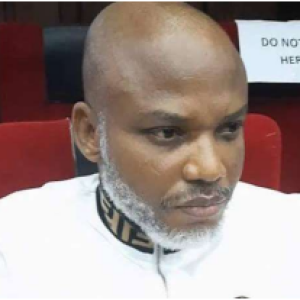
•Bayo Ojulari
The Group Chief Executive Officer of NNPC Limited, Bayo Ojulari, has given the current output of oil and gas production in the country to be in the threshold of 1.7 million barrels per day, with a possibility to increase further by 2026.
Ojulari, who met with President Bola Tinubu, yesterday, shortly before he departed Lagos for Europe ahead of his Abu Dhabi summit, also hinted that work on the Ajaokuta-Kaduna-Kano gas pipeline has reached a major milestone and should support power and industrial growth in the north when completed.
Commenting on market forces in the downstream oil sector, the NNPCL boss said the ongoing drop in petrol prices across the country will benefit ordinary citizens, while acknowledging the pressure it is placing on marketers and industry players.
According to Ojulari, the gradual movement from full dependence on imported fuel to increased local refining are some of the factors playing out in the downstream sector.
“Where there is healthy competition, the buyers are the ultimate beneficiaries. And I think for us, we need to keep our minds that the market will stabilise.
“After a while, there’ll be some tension, because we’re going through a major transition,” Ojulari said.
Recall that in recent times, Nigerians have seen significant drop in fuel prices part of which had been necessitated by competition between Dangote Refinery, NNPCL and independent marketers. As at the most recent statistics, pump prices that stood above N1,200 per litre in November 2024 have dropped to as low as N739 per litre in some areas by December 2025.
“At the end of the day, I can tell you that Nigerians on the street are going to be the beneficiaries,” Ojulari added.
He admitted that NNPCL no longer controls fuel pricing or regulation following the Petroleum Industry Act.
According to him, regulatory functions now rest squarely with the NMDPRA and NUPRC, while NNPCL operates purely as a business.
“The first thing you have to know is that the PIA did something fundamental. Before the PIA in 2021, which rolled in 2022, everything was under NNPC, including some regulations. The PIA divided the roles of regulation from what I will call the business,” he stated.
“So it’s very important that Nigerians understand that post-PIA, we as NNPC are not regulators.”
The NNPCL boss also revealed that the company now raises its own funds and no longer receives government allocations.
He described NNPCL as “the supplier of last resort,” working with other players, including Dangote Refinery, to ensure fuel availability.