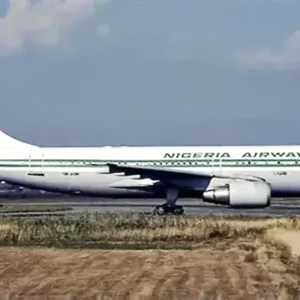


•Fueling an aircraft
Nigeria’s aviation industry is grappling with a quiet but potentially catastrophic menace: the growing proliferation of jet fuel sold through black market channels.
Beneath the surface of busy airports and rising passenger numbers lies a dangerous trade in substandard aviation turbine kerosene (Jet A-1), often disguised as cheaper alternatives but carrying grave safety implications, reports Daily Independent.

Industry experts warn that compromised fuel quality can damage aircraft engines, increase maintenance costs, and, in extreme cases, endanger lives.
What appears as a short-term commercial advantage for some operators ultimately poses systemic risks to airlines, regulators and passengers alike, eroding trust in a sector where safety margins must never be negotiable.
The alarm was first sounded openly at an aviation colloquium organised by CITA Energies held in October, last year, where regulators, fuel suppliers, airline operators and energy experts gathered to examine the state of Nigeria’s jet fuel supply chain.
It was during this forum that stakeholders spoke candidly about the existence of a parallel market trading in uncertified fuel.
While they stopped short of naming offenders, their message was unequivocal: the black market is real, it is growing, and the industry must confront it head-on or face long-term consequences that far outweigh any perceived savings.
A Market Where Cheap Can Become Costly
In an exclusive interview with Dr. Thomas Ogungbangbe, Chief Executive of CITA Energies Ltd., it was learnt that his concerns for the seemingly flourishing jet fuel black market are rooted in decades of experience in the downstream energy sector.
According to him, the problem is not merely price competition but quality compromise. Some operators, he explained, source products from modular refineries that are not licensed to produce aviation-grade fuel, or recycle household kerosene and present it as Jet A-1.
“If you think you are buying cheaper products, you may pay for it when you go for your check, even in multiple folds,” he warned.
“There are companies in the habit of selling household kerosene in place of aviation turbine kerosene because they can get it cheaper. These modular refineries are not even licensed to make anything for jets. Yes, the carbon chains may look similar, but aviation fuel is about precision.”
To illustrate, he used a vivid analogy: “Let’s say you have flour. You want to make a doughnut, I want to make a cake, somebody wants to make bread. Basically, we have the same flour, but the outcome is completely different. That is exactly what happens with fuel. Using the wrong specification for aviation is like baking bread when what you need is cake.”
Such practices, he stressed, allow unscrupulous suppliers to undercut legitimate marketers who invest heavily in certified imports or refinery-produced fuel, creating an uneven playing field that rewards non-compliance.
The Temptation
At the colloquium, some stakeholders echoed similar concerns. Airline representatives admitted that intense cost pressures – driven by foreign exchange volatility, high operating costs and thin margins – make cheaper fuel tempting. However, they warned that this temptation is precisely what fuels the black market.
Dr. Ogungbangbe was blunt in his assessment of the moral hazard involved.
“I wouldn’t be part of a company, having been in the industry for decades, to make more money than is normal by cutting corners. I will not do it, because I know what it means down the line. It is like body language becoming body odour – you may ignore it at first, but eventually everyone notices.”
According to him, the consensus at the colloquium was that awareness is the first line of defence. By informing airlines of what is happening in the market, suppliers and regulators can help them make informed decisions, rather than being lured by artificially low prices that mask long-term risks.
Dangote Refinery And The Illusion of Security
The commissioning of the Dangote Petroleum Refinery was widely hailed as a turning point for Nigeria’s energy independence, including aviation fuel supply. With the capacity to meet not only Nigeria’s jet fuel demand but also that of West Africa, the refinery has significantly reduced reliance on imports.
Yet, as Dr. Ogungbangbe noted, local capacity does not automatically eliminate malpractice.
“The local refinery has shown competence, depth, capacity, ability and reliability to deliver all the jet fuel needs,” he said.
“But how individual companies want to run their businesses may differ. We practise capitalism. If I have a relationship in Rotterdam or Hong Kong and the price works better for me, what stops me from doing that?”
This globalised trading environment, combined with the fact that jet fuel transactions are largely dollar-denominated, creates arbitrage opportunities that some players exploit – legally or otherwise.
Why The Black Market Persists
Several structural issues continue to sustain the black market, even in an era of improved local supply. Financial weakness among some marketers limits their ability to buy certified fuel in bulk, pushing them towards cheaper, illicit sources. Market fragmentation – with many marketers competing for a relatively small number of airlines – intensifies price wars.
Currency pressures further complicate matters, as access to dollars remains uneven across the industry. These pressures, when combined, create incentives to “bend the rules”, as Dr. Ogungbangbe puts it, in a market where commercial lushness and high margins make non-compliance attractive.
Global Standards, Local Responsibilities
International bodies such as the International Civil Aviation Organisation (ICAO) and the International Air Transport Association (IATA) have long emphasised that fuel quality is a non-negotiable pillar of aviation safety.
ICAO’s Annex 6 and IATA’s Guidance Material on Aircraft Fueling underline strict requirements for fuel testing, traceability, storage and handling, warning that the use of contaminated or off-spec fuel can lead to engine flameouts, corrosion and catastrophic failure. Both bodies recommend severe penalties for operators found to be complicit in fuel quality violations, including suspension of operating licences.
In Nigeria, these global standards are mirrored locally. The Nigerian Midstream and Downstream Petroleum Regulatory Authority (NMDPRA) is mandated to license, inspect and sanction fuel producers and marketers. Dr. Ogungbangbe acknowledged its efforts, noting that the regulator “is looking seriously at this issue and has been giving sanctions. They have done very well in trying to put industrial rights in place.”
Complementing this role is the Nigerian Civil Aviation Authority (NCAA), which enforces aviation safety regulations, including Part 18 requirements on fuel storage, handling and quality assurance at airports. The NCAA’s oversight ensures that only certified fuel reaches aircraft, at least within formal supply chains.
The Cost of Looking Away
Despite these frameworks, enforcement remains a challenge, particularly outside major hubs. Industry analysts argue that stronger collaboration between the NMDPRA and NCAA, coupled with financial vetting of fuel marketers, could shrink the space for black market operations.
Ultimately, the jet fuel black market is not just an energy or commercial issue; it is an aviation safety concern with national and regional implications. As Nigeria positions itself as a West African aviation hub, the integrity of its fuel supply chain will be scrutinised more than ever.
Dr. Ogungbangbe’s message is clear: We must keep telling the airlines what is happening. Awareness, regulation and ethics must work together. Because when it comes to aviation, the cost of compromise is simply too high.
In the contest between black gold and safe skies, Nigeria’s aviation future depends on choosing the latter, decisively and collectively.