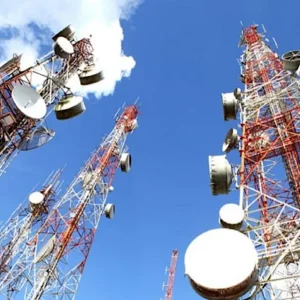


•Telecom mast
Stakeholders across Nigeria’s telecommunications, technology and infrastructure sectors will converge on Lagos for the second edition of the Rural Connectivity Summit to examine the factors keeping more than 23 million Nigerians offline and explore practical pathways to extend connectivity to underserved communities.
Organised by Business Metrics Limited (BML), the Summit will hold on Tuesday, October 13, 2026 in Ikeja, under the theme “Rural Inclusion at Scale: Connecting the Next 25 Million Users for Frontier Market Growth.”

Key government agencies driving Nigeria’s connectivity and digital inclusion agenda have keyed into the Summit, bringing their perspectives to a wider stakeholder conversation on practical pathways for connecting the next 25 million Nigerians and opening new markets in underserved communities.
The Executive Vice Chairman and CEO of the Nigerian Communications Commission (NCC), Dr Aminu Maida, will deliver the keynote address, while Prof. Ibrahim Adeyanju of Galaxy Backbone, Dr Abba Aliyu of the Rural Electrification Agency and Engr Jane Egerton-Idehen of Nigerian Communications Satellite Limited will lead high-level engagements.
According to Omobayo Azeez, Team Lead at BML and Convener of the Summit, the event will examine the business value of Nigeria’s unconnected population and innovative models for last-mile deployment, alongside infrastructure sharing, investment partnerships and financing options for rural broadband expansion.
Discussions will also explore the role of MVNOs, government rural connectivity initiatives, digital inclusion across financial services, education and healthcare, satellite investment, and policy and regulatory frameworks for accelerating connectivity.
The urgency of the conversation is underscored by the number of Nigerians still outside meaningful connectivity. Industry estimates put the population without access at more than 23 million, while millions more remain in communities where connectivity is limited or inadequate.
The quality of available connections also highlights the gap. NCC industry statistics show that 2G still accounted for 36.54 per cent of mobile-generation market share in July 2026, even as 4G and 5G adoption gained traction in urban centres.
The figures point to a significant divide between communities yet to gain reliable access and urban centres where higher-capacity networks are increasingly available.