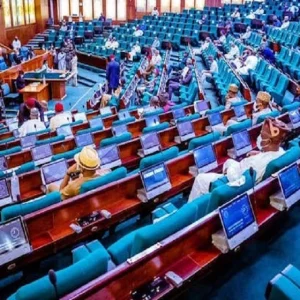
•CORAN members, yesterday
The Crude Oil Refinery Owners Association of Nigeria, CORAN has advised the federal government to consider total implementation of the Naira-for-Crude policy and a progressive ban on petroleum product imports to rescue local refineries and reposition Nigeria as Africa’s refining hub.
Its President, Momoh Oyarekhua, said this in his welcome address at the 3rd Nigeria Oil Refining Summit held in Lagos yesterday.
He demanded a fresh domestic crude pricing template that recognises crude quality, delivery point, avoided international logistics costs and actual domestic evacuation expenses, to make supply to local refiners fair and commercially viable, reports Daily Independent.
According to him, Nigeria also needs robust enforcement of the Domestic Crude Supply Obligation under Section 109 of the Petroleum Industry Act, while preserving workable commercial arrangements between producers and refineries.
He also suggested crude swaps and nearness-based supply arrangements that would allow crude-producing assets located close to domestic refineries to supply those facilities directly without unnecessary transportation through distant export infrastructure.
He advised the government to float a Refinery Development Financing Framework that will provide long-tenor financing, guarantees and refinancing mechanisms for new refinery construction and capacity expansion.
According to him, the initiative should be matched by the development of shared petroleum-product infrastructure, especially pipelines, depots, storage terminals, jetties, rail evacuation and other common-carrier facilities that will reduce costs and improve distribution.
He hinted hat the country should consider the creation Iof strategic petroleum-product reserves capable of cushioning temporary refinery shutdowns, maintenance periods and international supply disruptions, to ensure energy security is not compromised.
He is demanding regulatory and fiscal incentives for refinery expansion, particularly investment in conversion units capable of increasing domestic production of Premium Motor Spirit, aviation fuel, cooking gas and other essential products, as well as a clear domestic refining roadmap that establishes national targets for refining capacity, domestic market share, petroleum-product imports and eventual export capacity.
He suggested that Nigeria should not continue exporting crude, exporting jobs and importing the same petroleum products at considerable economic cost, adding that the country’s crude must increasingly power its refineries, its refineries must increasingly supply its market, and the country must ultimately become a refining hub for Africa.
According to him, achieving these objectives need stringent collaboration among producers, regulators, refiners, marketers, financiers, host communities and the media to build a more competitive and sustainable refining sector that serves Nigeria’s long-term interest.
Acknowledging the strides that have been made in domestic refining, with local refining increasingly transforming Nigeria’s fuel supply shape, he said the development demonstrates a leeway when there is synergy between investment, policy and industry.
In his address, the Chairman of Independent Petroleum Producers Group (IPPG), Adegbite Falade, said Nigeria can reliably feed its refineries if it increases production, protect evacuation infrastructure, match crude grades to refinery
configurations and create a domestic crude market in which commercial terms are
competitive, transparent and investable
He added: “Put simply, the feedstock required to power Nigeria’s refining sector will increasingly flow from our fields and terminals. Our
collective responsibility now is to ensure that our statutory policy continues to convert into commercial reality.
“To achieve that, allow me to outline four clear priorities: First, we must grow the production base. Nigeria cannot refine barrels that are not produced. The answer to rising domestic refining demand is not merely to redistribute a limited pool of crude. The answer is to create more barrels.
“Second, we must protect and modernise evacuation infrastructure. The progress made in reducing crude theft and pipeline sabotage must be protected. But security is only the first step. Nigeria needs dedicated crude evacuation corridors, secure pipelines, adequate terminal capacity, sufficient storage, functional jetties and efficient marine logistics.