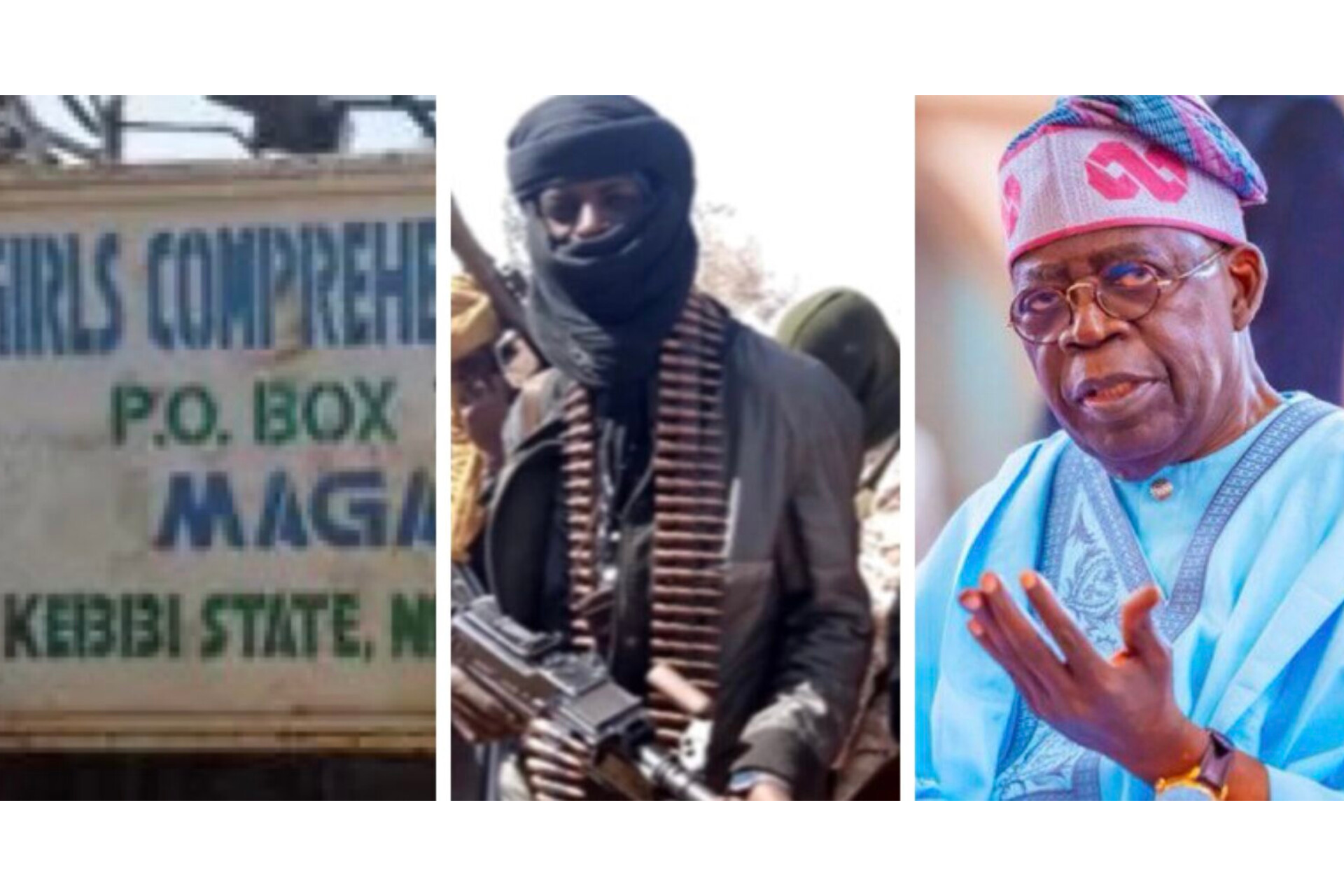
•Attacked school signpost, terrorists and Tinubu
Following increasing terror attacks on Schools and places of worship in parts of the country, especially the North, stakeholders, including seasoned politicians, activists and clerics, have called for surveillance over these targets to considerably forestall future attacks.
In separate interviews with our correspondent at the weekend, these leaders of thought also suggested diverse military and civil responses to the new wave of attacks which seek to cripple education and spirituality in the country, reports Sunday Independent.

Chief Emeka Charles Kalu, a seasoned politician and former chieftain of the Peoples Democratic Party (PDP), in a chat with our, raised the alarm over the rate of terror attacks, brutal killings, abductions and unprovoked invasion of worship centres and schools in the last few days.
He lamented the renewed wave of terror attacks, especially in the Christian dominated areas of Northern Nigeria by the Boko Haram and ISWAP insurgents.
Kalu, President of ECK Foundation and Director-General, Global Initiatives For Good Governance (GIGG), added that activities of suspected terrorists had truly become a matter of particular concern, not only on Nigeria as a nation, but the entire global society.
He pointed at the recent invasion of the Government Comprehensive Girls College, Maga, Kebbi State, by terrorists, resulting in the brutal killing of the school’s vice principal and the abduction of 25 female students as well as the mass adduction at St. Mary’s School, Papiri, Niger State.
Kalu, an aspirant to the Abia North Senate seat, stressed that such an ugly incident could trigger the reactions of the United States which has already taken its position by terming what has been happening in country as Christian genocide, and the country’s President, Donald Trump, declaring Nigeria a ‘Country of Particular Concern’, with a threat of possible military intervention.
He said: “In the last three days, a Christian worship centre was invaded in Kwara State and over five persons were reportedly killed, while the government continues to sweep the situation under the carpet to falsely mislead the world that terrorism has to the barest point been tackled in the country.”
Chief Martin Onovo, the 2015 presidential candidate of the National Conscience Party (NCP), said: “These things are very simple. The real issue is that the ruling party is the direct sponsor of insecurity and terrorism in Nigeria.
“The ruling party imported the terrorists. The ruling party pays and arms the terrorists. The ruling party protects the terrorists.
“Soft targets can easily be protected with comprehensive security strategies and plans.”
Bishop Herbert Ekechukwu, a cleric and an economist, said the protection of soft spots like schools and churches from terrorist attacks, will involve several things.
Dr. Ekechukwu said: “This will involve government agencies, community leaders and individuals, Installation of CCTV cameras and surveillance systems to monitor the environment.
“There should be increased policing and regular patrols by police, vigilantes and Neighborhood Watch.
“The affected groups should be trained and updated on security consciousness.”
He also canvassed improvement in security information and intelligence gathering, which he said will include establishment of community-based reporting systems for suspicious activities.
He added: “There is the need for collaboration among law enforcement agencies to share intelligence and joint patrols.
“Intervene, communicate, or deliver services as appropriate to prevent and reduce the likelihood of terrorism.”
Professor John Ebhomien, an All Progressives Congress (APC) chieftain, stated that in light of increasing terror attacks, protecting soft targets like schools and worship centres requires a multifaceted approach.
Ebhomien, an economist and financial expert, stated: “The federal and state governments should adopt the following measures:
“Conduct regular risk assessments to identify vulnerabilities and potential threats; enhance intelligence sharing between security agencies, local authorities, and communities.
“Implement robust access control measures, including secure entry points, ID checks, and surveillance cameras.”
“Deploy trained security personnel, including armed guards and plainclothes officers; foster strong community relationships to encourage information sharing and reporting of suspicious activities.”
He also suggested the development and regularly practice of emergency response plans, including evacuation procedures and first aid training.
“Leverage technology, such as CCTV cameras and drones, to enhance surveillance; provide regular training for staff, students, and worshippers on emergency procedures.
“Implement intelligence-led policing strategies to identify and disrupt potential threats. Most importantly build concrete fencing around schools and worship centres to prevent easy access by intruders and terrorists.”
Tola Oresanwo, Director, Administration and Programmes (CACOL), maintained that protecting soft targets like schools and worship centres in the face of rising terror attacks in Nigeria requires a mix of preventive measures, community vigilance, and stronger government action.
Oresanwo stated: “First, these institutions should implement basic security infrastructure such as perimeter fencing, controlled access points, CCTV cameras, and alarm systems.
“Trained security personnel, including vetted community vigilantes, should be stationed at entry points to monitor movements and respond quickly to threats.”