

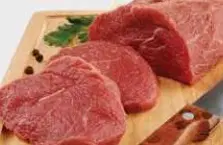
•Red meat
Nigeria is a country of paradoxes. We boast one of Africa’s largest populations, a youthful demographic, and a livestock sector that is valued at an estimated ₦30 trillion.
Yet, we also carry the grim badge of having the lowest life expectancy in the world, a mere 55 years from an average of 73.8, according to the United Nations World Population Prospects (2026).

It is a statistic so jarring that it forces us to confront uncomfortable truths about how Nigerians live, suffer, and die.
We often attribute our low life expectancy to malaria, childbirth complications, infectious diseases, insecurity, and the psychological trauma of banditry and kidnapping.
But buried beneath these headline causes is a quieter, more pervasive threat, the food we eat, especially the meat that forms a central part of our diet. Unknown to many, a lot of people die from food poisoning traceable to meat sources, or in some cases had contracted viral or bacterial diseases through wrong processing of meat and its byproducts.
This is not an exaggeration. It is a national emergency hiding in plain sight.
The hidden link between food safety and life expectancy
Life expectancy is not only shaped by dramatic events like insurgency or epidemics.
It is also shaped by the slow, daily accumulation of risks, particularly in poor nutrition, contaminated food, chronic exposure to pathogens, and preventable illnesses that chip away at health over time. Nigeria’s abattoirs, unfortunately, sit at the heart of this problem.
Across the country, abattoirs are legally under the control of local governments, which in theory, should ensure community-level easy oversight. However, in reality, it has produced a system where weak structures, poor funding, and a lack of veterinary supervision have turned many slaughterhouses into public health hazards.
The consequences are dire and far-reaching, as meat enters the food chain without proper ante-mortem and post-mortem inspection.
Diseased or even pregnant animals are slaughtered and sold without restraint. Butchers often gang up and resist veterinary directives, relying instead on dangerous traditional practices.
I am a veterinarian, trained at the University of Ibadan in the eighties. During an ambulatory rotation, at Bodija abattoir, a butcher sliced through a raised tuberculous lesion, and swallowed a piece in its raw form. His intention was not to commit suicide, it was directly to challenge our authority, although he paid dearly with illness as we later learned. That action, however, symbolized the deep cultural and systemic rot that endangers millions on a daily basis.
Hygiene and safety standards are abysmal in our abattoirs, with no care for personal protective equipment (PPE). There are open drains, where dungs are emptied, contaminated water, flies of different types, and unregulated waste disposal methods.
All these are not helped by the weak government policies, such as public-private concessioning, which prioritizes revenue over safety.
The result, is that Nigerians across the board unknowingly consume meat contaminated with tuberculosis, brucellosis, salmonella, E. coli, parasites, and dangerous chemical residues.
These illnesses may not always kill instantly, but they weaken the body, damage organs, and shorten lifespan.
The Livestock Sector: A giant calling for help
Nigeria is the largest livestock producer in West Africa. The National Bureau of Statistics estimates 54.81 million cattle, 64.93 million sheep and 138.95 million goats, 16 million pigs and 683.68 million poultry birds.
These numbers reflect enormous economic potential, with a corresponding huge public health responsibility. Unfortunately, these animals are not managed intensively and in grazing reserves or ranches for necessary support and controls to optimize their yields for Nigeria. Instead, they are “naturalized wanderers” from other countries, moving freely across borders, contracting and transmitting diseases.
With the suspension of FAO’s ECTAD support and limited national surveillance, Nigeria faces heightened vulnerability to trans-boundary animal diseases.
When diseased animals end up in poorly regulated abattoirs, the danger multiplies.
Meat Processing: Where safety should begin but often ends
Veterinarians use the term wholesomeness to describe meat that is safe for consumption.
Achieving wholesomeness requires processes that includes ante-mortem inspection, which is examining animals clinically before slaughter.
This is followed by post-mortem inspection, examining organs and carcasses after slaughter.
Then condemnation of diseased parts, by setting aside and removing unsafe meat from the food chain.
A proper disposal method preventing environmental contamination ideally concludes the stages.
In functional systems, these steps are non-negotiable, but in our country, they are optional at best with a lot of dragging and haggling.
Local governments lack veterinary personnel. In several states, veterinarians serving as area veterinary officers are made to cater for two or three local government areas. They are supported by an equally short supplied paraprofessionals.
Where veterinarians exist at all and manage to visit the abattoirs, their other equally demanding responsibilities are abandoned.
They disrespectfully face resistance from butchers who see inspection as interference and their presence as disturbance. Concessionaires also feel uncomfortable at their presence, seeing it as disruptive of normal flow of their activities, as they naturally prioritize profit over safety. Abattoir infrastructure across Nigeria is largely dilapidated, with unreliable water supply and chaotic waste disposal methods. The slaughter slabs are often open-air, competing for ownership with flies, exposed to dust, animals, and human traffic. This is not merely unhygienic, it is deadly.
The consequences of food poisoning, zoonotic infections, and chronic exposure to pathogens contribute to gastrointestinal diseases, liver and kidney damage, immune suppression, chronic inflammation, and eventually long-term organ failure.
These conditions reduce healthy life expectancy and increase mortality, especially among children, pregnant women, and the elderly.
The economic cost of unsafe meat
Beyond health, Nigeria’s abattoir crisis has economic consequences. Countries that maintain strict food safety standards will not import meat from nations with poor slaughterhouse practices.
I have warned at different fora and in previous articles, that the trade departments of foreign embassies, routinely gather intelligence on food safety in Nigeria.
Their advisory is simple, Nigerian meat is unsafe. I have seen meat-filled coolers of different sizes crated in as diplomatic cargoes, by expatriates who had short job rotations in Nigeria.
Some disguised the meat as being halal and the only type they eat, as a reason for such level of distrust in our meat. When things continue this way, it means lost export opportunities, and foreign exchange earnings, lost jobs in the livestock value chain and loss of credibility in international markets.
After all, how will a rag-wearing man promise to gift new clothes to another?. A country that cannot guarantee safe meat for its citizens cannot convince the world to buy its products.
Why meat matters for life expectancy
Life expectancy is a composite measure, that reflects how people live, what they eat, the diseases they contract, and the healthcare they receive.
It also considers the trauma they endure, and the environment they inhabit. Nigeria’s abattoirs contribute silently but significantly to this equation.
Unsafe meat increases disease burden, which reduces productivity. A reduced productivity deepens poverty, which limits access to healthcare, and a limited healthcare increases mortality. It is a vicious cycle, and if Nigeria is serious about improving life expectancy, food safety must become a national priority, not a local government afterthought.
Way forward
To break this cycle, Nigeria must adopt a multi-level implementation strategy. This should include a revision of the legal framework, such that local governments cannot continue to bear sole responsibility for abattoirs.
The states and the federal government must play stronger regulatory and supervisory roles.
Veterinarians must lead slaughterhouse operations, in order to professionalize abattoir management, while butchers should be trained and certified, not just in trade unionism. They should have basic knowledge of public health, biosecurity and biosafety measures.
The conditions of concessioning abattoirs to contractors should prioritize safety, over and above revenue generation. Nigeria needs several hygienic slaughterhouses, with modern infrastructure, running water, waste treatment systems, cold chain facilities and disease surveillance units.
To strengthen animal health systems, Nigeria should internalize its trans-boundary disease control programs, without over-reliance on foreign funding from development partners.
We should expand veterinary activities across the country. Governments should employ more veterinarians and paraprofessionals, and create more animal control posts to regulate movements in and out of our borders.
Where employment embargoes exist, government could contract statutory veterinary services like meat inspection and disease surveillance to veterinary private practitioners. Cultural practices that endanger public health must be replaced with science-based knowledge, through a structured nationwide food safety education programme. Inter-ministerial collaborations, in the One-Health framework should integrate abattoir reforms into national health planning. Food safety should be part of Nigeria’s deliberate strategy to raise life expectancy.
In conclusion, lives can be saved through safer meat, and Nigeria’s life expectancy will not rise by accident. It will rise through deliberate reforms that address both dramatic and silent killers.
Unsafe meat is one of those silent killers, ubiquitous, underestimated, and deadly. If we fix our abattoirs, we will save lives, strengthen our livestock economy, and restore public confidence in the food we eat.
More importantly, we will give Nigerians a fighting chance to live longer, and healthier lives. The time to act is now. Unsafe meat is not just a food problem, it is a national life expectancy problem.
*Dr Enahoro is former President, Nigerian Veterinary Medical Association