For millions, the history of HIV/AIDS is not just a story on the internet, in a textbook, or on a billboard; it is the story of their own lives.
Much as it is true that we have come a long way from the terrifying 1980s when this condition first came to the fore, transforming an immediate death sentence into a manageable chronic one, that success story has somehow produced a form of worrying complacency.
A quiet, yet profound, resurgence of the epidemic seems to be rearing its ugly head in some parts of the world, and here in Nigeria, it is threatening to steal futures and reverse decades of painstaking progress.
Now, the fight against HIV/AIDS is not just about governments and global health organisations anymore; it is a deeply personal one. And it is all about the choices you make, the conversations you have, and the empathy you offer. The power to halt the prevailing trend rests in our own hands.
The number of those still living with HIV globally has remained a frightening reality. Today, an estimated 40.8 million people are living with the virus. While the figures of new infections have fallen overall, there were still roughly 1.3 million new infections in 2024, and the burden remains heavy in the African Region, with 26.3 million people living with HIV (representing 65% of the global total) and the region accounting for 50% of all global new infections. In Nigeria, there are an estimated 1.9 million people living with HIV and a national adult prevalence of around 1.3%.
What is most heart-wrenching is the lopsided impact on our youth: young women and adolescent girls are consistently more vulnerable than their male counterparts. This is a stark reminder that gender inequality is a root cause of new infections. We are also struggling to protect our future, as Nigeria records the largest burden of new childhood HIV infections globally, with the majority of infections due to mother-to-child transmission during pregnancy, childbirth, or breastfeeding.
The truth is that clarity is our first weapon against the fear and stigma that still surrounds this issue.
It is, therefore, crucial to highlight the significant differences between the virus and the condition it causes.
HIV (Human Immunodeficiency Virus) is the virus itself — the initial infection. This virus is a clever retrovirus that slowly targets and dismantles the body’s security system: the CD4 T-cells. You can have HIV and live a healthy, long life, often with no symptoms, especially when you are on treatment.
AIDS (Acquired Immunodeficiency Syndrome), on the other hand, is the late-stage condition of HIV. It is not a single disease but a breakdown of the immune system so severe that it can no longer defend against opportunistic infections like certain pneumonias or tuberculosis.
Usually, the diagnosis of AIDS is based on either the development of a specific opportunistic infection or a severe drop in the CD4 cell count.
Every person with AIDS has HIV, but thanks to modern medicine, not everyone with HIV will ever develop AIDS.
HIV spreads when certain body fluids (blood, semen, vaginal, and rectal fluids) are exchanged, most commonly through unprotected sex, sharing needles, or from mother to child during pregnancy, birth, or breastfeeding. Within 2 to 4 weeks of infection, some people experience a short, flu-like illness — a fever, sore throat, rash — that is often dismissed as a minor flu, allowing the virus to silently establish itself. Without treatment, this long, chronic stage eventually leads to the advanced stage, marked by symptoms like rapid weight loss, chronic fatigue, and severe opportunistic infections.
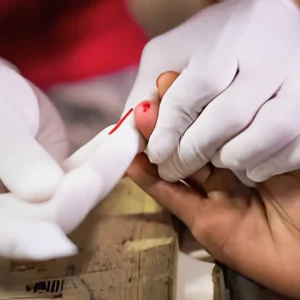
Today, the power to stop the resurgence of HIV/AIDS lies in the concept of personal responsibility. It starts with a moral imperative: Own Your Status. Getting tested is not just for you; it is an act of love for your partner, your family, and your community.
Unfortunately, the fear of the test, and the subsequent fear of stigma, keeps people from knowing their status and accessing life-saving care.
The good thing is that if you test negative, you gain peace of mind and the tools to stay negative. On the other hand, if you test positive, you gain immediate access to treatment. Your first and most vital prevention step, therefore, is knowing your status.
This responsibility extends to owning your safety by utilising the incredible biomedical tools now available.
Although abstinence is a 100% effective way to prevent HIV transmission through sex, for those who cannot embrace this for whatever reason, condoms are a simple, accessible, and highly effective barrier. For those who are HIV-negative but at high risk, PrEP (Pre-Exposure Prophylaxis) is a daily pill (or periodic injection) that puts prevention directly in your hands, making it nearly impossible to contract the virus when taken consistently.
And if you suspect an exposure to the virus, maybe through needle stick, condom failure, or rape, PEP (Post-Exposure Prophylaxis) acts as an emergency brake— a regimen of drugs that can prevent infection if taken within 72 hours.
For pregnant women with HIV, taking prescribed medication ensures the virus is suppressed. This practically eliminates the risk of passing HIV to the baby—the cornerstone of PMTCT (Prevention of Mother-to-Child Transmission).
For those already living with the virus, the greatest act of personal responsibility is adhering to Antiretroviral Therapy (ART). This medication secures your own health and, critically, protects your loved ones completely. This is captured by the powerful truth that Undetectable = Untransmittable (U=U). When someone living with HIV consistently takes the ART medication exactly as prescribed, the amount of virus in the blood (viral load) drops so low it becomes undetectable.
And a person who is Undetectable cannot transmit the virus to their sexual partners.
This fact, based on irrefutable scientific evidence, is the ultimate game-changer in both treatment and prevention.
It is important to point out here that the management of HIV is a lifetime commitment, involving regular health checkups, adherence counselling, and prompt treatment for any related illnesses.
The greatest barrier to ending the HIV/AIDS epidemic is not the virus; it is stigma. The fear of discrimination, judgement, and rejection keeps people from testing and treatment. We, therefore, need to shift our focus from judgement to support. We need to normalise testing, celebrate those who commit to their treatment, and recognise that HIV is a health issue, not necessarily a moral failure.
Ending the HIV/AIDS scourge is a shared responsibility. Let us commit to knowing our status, supporting safe choices, and championing compassion over prejudice. Our personal commitment is what will ultimately relegate this epidemic to the history books, so let us not hold back.
*Ojenagbon, a health communication expert and certified management trainer and consultant, lives in Lagos.
.