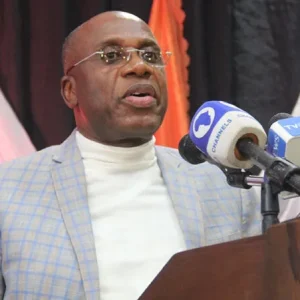
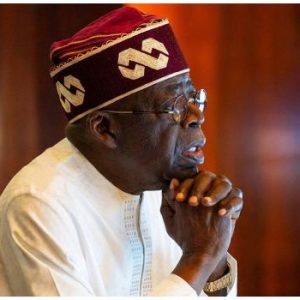
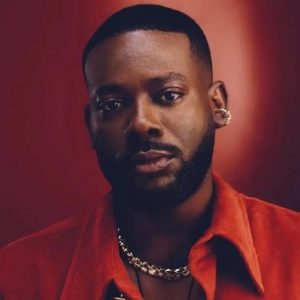
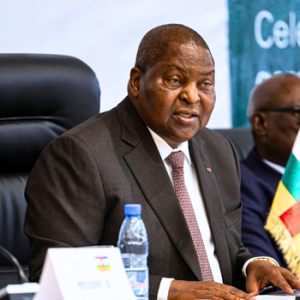
•Tinubu and Abayomi Mumuni
A chieftain of the All Progressives Congress (APC), Abayomi Mumuni, today told critics of President Bola Tinubu, amid renewed controversy over his educational records, that the Nigerian Constitution does not require presidential candidates to publicly submit or display their primary and secondary school certificates.
Mumuni was reacting to the Independent National Electoral Commission’s (INEC) publication of the personal particulars of candidates contesting the 2027 presidential and National Assembly elections, reports The Nation.
The publication sparked debate on social media after President Tinubu, in the documents made available by INEC, listed only his Bachelor of Science degree obtained in 1979, without providing details of his primary and secondary education.
Opposition parties and supporters subsequently questioned how Tinubu obtained a university degree in the United States without indicating any record of primary or secondary education in the documents published by the electoral commission.
Responding to the controversy in a statement issued today by his media aide, Rasheed Abubakar, Mumuni argued that the debate should be guided by the provisions of the Constitution rather than public assumptions or political sentiments.
According to him, the constitutional and legal requirements for presidential candidates are contained principally in the 1999 Constitution, as amended, and the Electoral Act.
He maintained that while the Constitution prescribes a minimum educational qualification for anyone seeking the office of President, it does not expressly require candidates to publicly submit or display their primary or secondary school certificates.
“The Constitution requires only that a candidate possesses the prescribed educational qualification. It does not mandate the public submission or display of primary or secondary school certificates,” Mumuni said.
The renowned security expert explained that candidates often submit educational credentials as part of their nomination process with their political parties and the Independent National Electoral Commission, but noted that such submissions do not translate into a constitutional obligation to publicly display every educational certificate.
According to him, although verification of educational credentials has become a recurring issue during election cycles, no existing law requires presidential candidates to publicly produce or prove their primary and secondary school certificates before they can qualify to contest elections.
Mumuni said the relevant constitutional provision is Section 131 of the 1999 Constitution, which, according to him, sets out the qualifications for the office of President without specifically requiring the public presentation of primary or secondary school certificates.
He said the controversy surrounding Tinubu’s educational records appeared to confuse constitutional eligibility with public expectations regarding educational documentation.
The APC chieftain urged Nigerians to focus on the constitutional requirements for qualification rather than on arguments driven by political emotions or social media narratives.