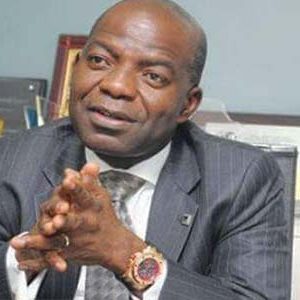


•Peter Obi and Tinubu
Integrity is not a commodity. It is the one currency that no market can mint. And no fortune can corner.
But Bayo Onanuga, Special Adviser on Information and Strategy to President Bola Ahmed Tinubu, clearly doesn’t seem to appreciate this.
When he launched his attack on Peter Obi following his defection to the African Democratic Congress, ADC , it arrived cloaked as political commentary. But then resonated unmistakably as anxiety.
Power, when secure, persuades. When unsure, it sneers. Onanuga’s rhetoric, heavy with derision and light on facts, read less like confidence and more like the nervous twitch of an establishment unsettled by a familiar ghost it failed to exorcise in 2023. A man of granite-clad integrity, Peter Obi!
By branding him “restless” and “bitter,” Onanuga sought to frame ideological consistency as instability. But many analysts saw through the gambit. “Restlessness implies lack of direction,” observed political scientist Dr. Ayo Balogun.
“What Obi has demonstrated over two decades is directional clarity, prudence, transparency, and a belief in production-led growth. That is not restlessness. It is persistence.”
Supporters of the presidency predictably rallied to Onanuga’s defence. Pro-government commentator, Sola Adeniyi, argued that Obi’s movement across parties betrayed political fickleness. But critics were quick to point out the irony.
“See, the Nigerian political ecosystem is devoid of ideology. Parties are merely platforms,” countered columnist Reuben Okeke. “Tinubu himself is a product of serial political migrations. To weaponise party movement against Obi is selective memory masquerading as principle.”
What drew sharper condemnation, however, was Onanuga’s attempt to diminish Obi’s record as Governor of Anambra State. To many Nigerians, this crossed from spin into outright historical distortion. Obi governed with an accountant’s restraint and a development planner’s foresight. He left office without debt, with substantial savings, and with traceable investments in education, health, and infrastructure aligned with then United Nations Millennium Development Goals, MDGs.
“You can disagree with Obi’s politics,” said Enugu based development Economist, Ifeoma Nwankwo, “but you cannot erase audited numbers. Obi epitomizes transparency in government. You could trace almost every one naira he spent as a governor. His record exists independently of propaganda.”
Production Versus Consumption: The Ideological Fault Line
At the core of this political clash lies a philosophical divide that goes beyond personalities: production versus consumption.
For years, Obi has argued that Nigeria’s tragedy is not merely corruption but structure. For him, it is about a nation addicted to consumption, borrowing, and waste, while starving production, savings, and value creation.
His insistence has been simple and stubborn. And it is that you cannot consume your way to prosperity.
It is a message that stands in sharp contrast to the present administration’s fiscal trajectory.
Under President Tinubu, Nigeria has borrowed at a scale unprecedented in its history. Yet critics note that the tangible results of this borrowing are elusive. Industries remain comatose, power supply erratic, manufacturing stagnant, and living standards in free fall. “Borrowing itself is not evil,” said public finance analyst, Yusuf Lawal.
“What is dangerous is borrowing without clarity, borrowing without transparency, and borrowing without visible outcomes.”
The administration’s flagship economic gamble, the removal of fuel subsidy, was sold as a painful but necessary sacrifice, a moment that would free trillions of naira for development. Nearly two years later, those promised savings have become spectral. Nigerians see the pain daily. You mention them – soaring transport fares, spiralling food prices and collapsing purchasing power, among many others. What they do not see are the savings.
“The subsidy savings are a fiscal ghost,” said civil society advocate Chiamaka Okorie.
“They are invoked rhetorically but invisible practically. No clear accounting. No transformative projects. Just more borrowing. It is incomprehensible.”
Yet, Obi’s position on loans has always been explicit. For him, loans must have clearly defined purposes, strict transparency, and measurable outcomes.
“You borrow to build productive capacity, not to postpone reckoning,” he has repeatedly stressed.
In Anambra, as governor, transparency was a practical mantra. Expenditures were traceable.
In today’s Nigeria, critics argue, loans are announced with fanfare, absorbed in opacity, and defended with abstract statistics divorced from lived suffering.
Austerity for the Poor, Opulence for Power
Perhaps the most corrosive element of this administration’s moral deficit is not economic policy alone, but the contradiction between its sermon and its lifestyle.
While Nigerians are repeatedly urged to “endure hardship,” to “sacrifice for reforms,” and to “tighten belts,” the presidency and its officials live in unmistakable opulence. Convoys stretch endlessly, foreign trips multiply. Luxury remains untouched. Children of power roam with battalions of armed escorts, insulated from the hunger and fear stalking ordinary citizens.
“This is not shared sacrifice,” remarked sociologist Hadiza Bello.
“It is enforced suffering for many, especially the ordinary people, the poor masses and yet unrestrained indulgence for the few in power and at the corridors of power.”
Even President Tinubu’s fiercest intellectual defender, Nobel Laureate and Prof of Comparative Literature, Wole Soyinka, could not stomach the abuse. At a public event, Soyinka was reportedly so disturbed by the overwhelming number of armed security personnel guarding Tinubu’s son that he personally made accelerated efforts to contact the National Security Adviser, Nuhu Ribadu, to protest what he described as an absurd and indefensible misuse of state security.
“That intervention was symbolic,” said political historian Kunle Adeyemi. “When even your ideological ally recoils at your excess, it signals moral overreach.”
Yet the presidency appeared unmoved. The message was unmistakable. Discomfort at the top is optional but obedience below is compulsory.
In other words, the suffering of the poor continues. Perhaps, Suffering And Smiling (in some cases), apologies to Fela Anikulapo Kuti.
The same grim insensitivity has been reenacted over the timing of the tax reforms’ implementation.
The president insisted on the date with iron resolve, despite widespread concern from labour groups, businesses, and civil society. The reforms, Tinubu insisted, must commence on January 1. Dialogue, dissent, and distress appear secondary to presidential will.
“Governance is not decree,” said economist Samuel Onyekachi.
“When leaders stop listening, policies become punishments.”
Why Obi Still Haunts Power
In seeking to belittle Peter Obi, Bayo Onanuga may have inadvertently underscored why Obi remains such a looming presence. Obi represents not just an opposition figure, but a rebuke; a living contrast to waste, arrogance, and moral inconsistency.
He lives modestly in a country ruled flamboyantly. He speaks of savings in a nation drowning in debt. He insists on production while the state perfects consumption. He asks questions where others issue commands.
As 2027 approaches, Nigeria’s political contest is no longer merely about parties or personalities. It is about ethos. About whether leadership should look like restraint or revelry, accountability or arrogance.
History has little patience for governments that mistake power for ultimate wisdom, noise for legitimacy, and borrowed money for progress. And it often reserves its gentlest judgment for those whose consistency survives ridicule.
Peter Obi does not shout.
He does not threaten.
He does not flaunt.
He insists.
And in a nation weary of hunger, and hypocrisy, he may yet be a fetching symbol of hope.
In the end, what truly unsettles Aso Rock is neither Peter Obi’s ambition, nor his movement across political platforms. It is his record. An unbroken ledger. A life lived in receipts, restraint, and restraint’s twin virtue — consistency.
In a political culture where power is often defended by force, and revisionism, Obi stands armed with something far more subversive: verifiable integrity.
Integrity does not shout. It does not bribe memory or bully facts. It sits patiently, immune to insults, untouched by propaganda, waiting for time to do its work. Every attack ricochets off it. Every smear collapses under its own exaggeration. Against such a shield, rhetoric is blunt and malice is exhausted.
This is why Obi persists in the national imagination. Not because he is loud, but because he is legible. Not because he threatens, but because he reminds. He is the inconvenient proof that leadership can be modest, numbers can be clean, and power can be exercised without plunder.
As 2027 inches closer, the fiercest challenge facing this administration may not come from rallies or rhetoric, but from comparison. From a quiet arithmetic of trust versus excess, record versus excuse, integrity versus indulgence. History, after all, has a way of siding with what can be audited.
And in that final reckoning, integrity, intangible yet intimidating, may just prove to be both Obi’s greatest shield and the nemesis of those who mistook power for immortality.
*George, a political affairs commentator, writes in from Abuja