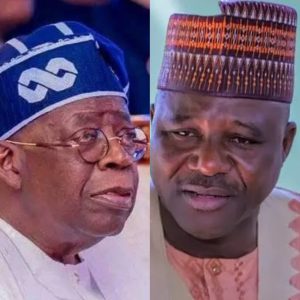


•Uzodimma, Wike and Tinubu
Imo State governor and Chairman of the Progressives Governors’ Forum (PGF), Hope Uzodimma, has shifted attention away from his public exchanges with the Minister of the Federal Capital Territory (FCT), Nyesom Wike, and his (Wike’s) controversial political platform the Rainbow Coalition, by unveiling an expanded media and grassroots mobilisation strategy to strengthen support for President Bola Tinubu’s 2027 re-election bid.
Uzodimma, who also serves as Director-General of the Renewed Hope Ambassadors (RHA), is instead focusing on building a nationwide communication network designed to take the message of the Tinubu administration’s Renewed Hope Agenda directly to communities and voters, reports Daily Independent.

The latest phase of the initiative will feature expanded media and public enlightenment activities, including a weekly television programme expected to commence in the coming days.
The RHA Director of Logistics, Shehu Bala Usman, disclosed this today, describing the initiative as part of efforts to improve public understanding of government policies and address what the organisation considers misinformation about the administration’s reforms.
According to Usman, the strategy will combine television, digital platforms and grassroots structures to strengthen communication between the government and citizens.
“It’s an effective use of digital and new media platforms to enlighten the general public of the Federal Government’s policies, counter misinformation, and connect the administration’s reforms narrative with the voters at the grassroots,” he said.
The renewed mobilisation drive comes amid recent exchanges between Uzodimma and Wike, with a group of lawyers recently urging the FCT Minister to refrain from what they described as personal attacks against the Imo governor.
The lawyers also called for better coordination among those involved in the President’s re-election campaign, citing the need to avoid possible conflicts of interest.
Uzodimma, however, has continued to focus on expanding the RHA’s national mobilisation and communication structures rather than sustaining the public disagreement.
The organisation had earlier unveiled a digital platform designed to bring together policy experts and provide regular updates on government reforms, programmes and other information about the administration.
The platform is also structured to facilitate citizen engagement and feedback, while linking the organisation’s operations across the national, state, local government, ward and polling-unit levels.
Usman said the expanded media strategy was part of Uzodimma’s broader effort to make communication a central component of political mobilisation ahead of the 2027 elections.
At a national mobilisation retreat in Abuja in June 2026, Uzodimma had warned that poor communication could lead to distorted perceptions of government policies and achievements.
He urged supporters of the administration to take its message beyond conventional political circles and engage citizens directly at the grassroots.
The governor subsequently disclosed a proposed mobilisation architecture covering Nigeria’s 176,846 polling units, with 25 canvassers assigned to each polling unit.
According to the structure announced by the governor, the arrangement would produce about 4.42 million grassroots mobilisers nationwide.
Uzodimma has also directed the RHA’s national directors and state coordinators across the 36 states and the Federal Capital Territory to intensify mobilisation, public enlightenment and communication of the Tinubu administration’s programmes.
The strategy places greater emphasis on sustained public engagement and grassroots communication, as the ruling party and its allies prepare for the 2027 presidential election.
The RHA said its media campaign would therefore go beyond conventional publicity by establishing a communication network capable of taking information about the Renewed Hope Agenda to communities, markets, campuses, wards and polling units.
Uzodimma had earlier described the 2027 election as an important test of public acceptance of the Tinubu administration’s reform agenda, stressing the need for supporters to communicate the government’s policies and achievements more effectively to Nigerians.
The governor has remained one of the prominent political figures campaigning for Tinubu’s re-election, arguing that the administration’s reforms and development initiatives provide a basis for the President to seek a second term.